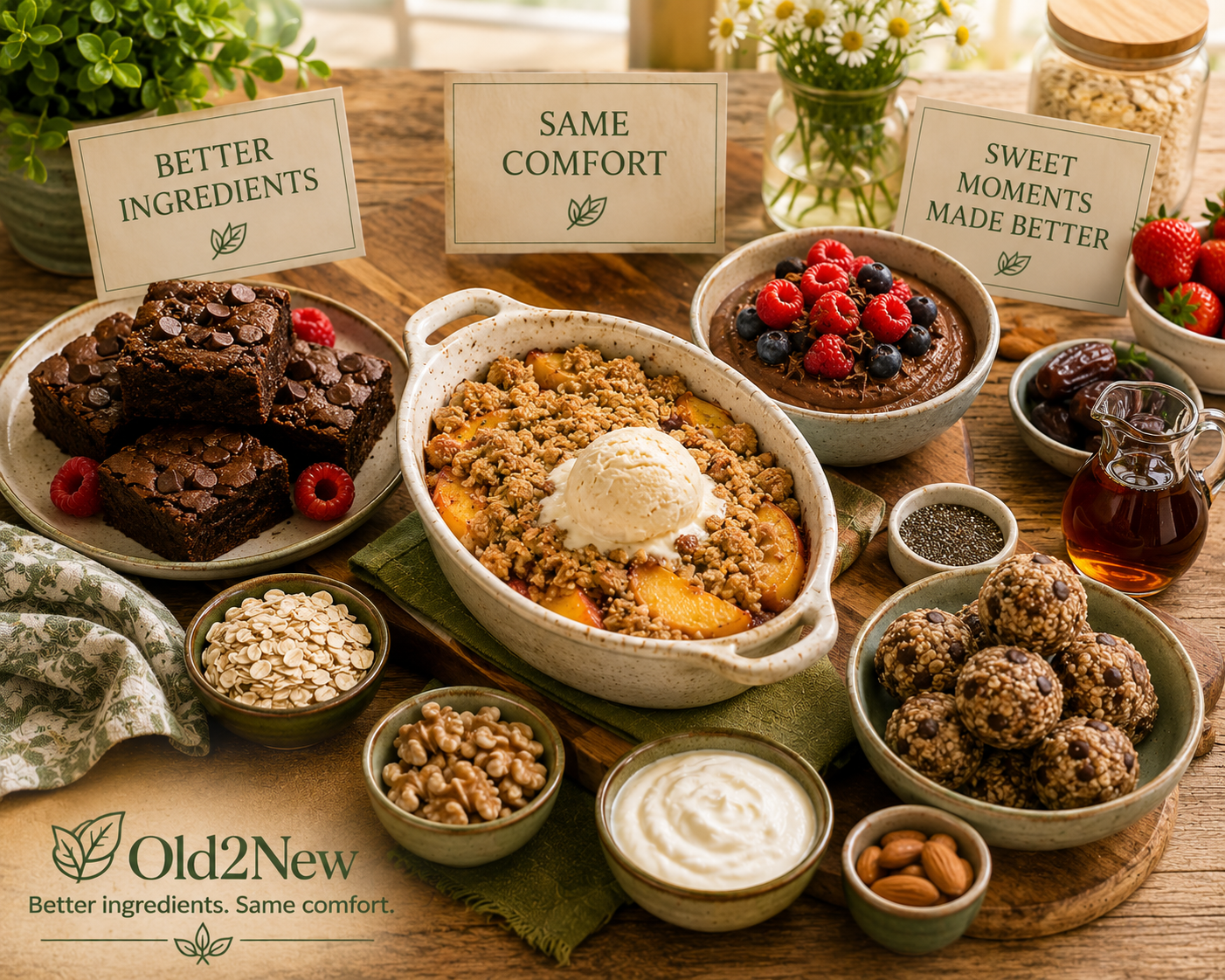
For a lot of people, dessert is the hardest thing to change.
Cookies carry memories of childhood kitchens. Cobblers taste like summer and family gatherings. Brownies show up at every celebration worth having. These aren't just foods — they're part of how people mark the moments that matter.
Which is why dessert is also the first thing most "healthy eating" plans ask you to give up.
It doesn't have to be that way.
Healthier desserts don't have to feel like a compromise. With thoughtful ingredient choices, many favorite treats can be made more nourishing without losing what makes them worth eating in the first place. The brownie should still taste like a brownie. The cobbler should still remind you of something warm and good. The cookie should still be soft, sweet, and worth looking forward to.
Recipe transformation is where that becomes possible.
Dessert Should Still Be Dessert
The biggest mistake most "healthy dessert" recipes make is trying to convince you that dessert should taste like something else.
A black bean brownie that doesn't taste like a brownie isn't a healthier version of a brownie — it's just a different food that happens to be shaped like one. A "nice cream" that doesn't satisfy the same craving as ice cream isn't a substitution — it's an apology.
The goal of dessert transformation isn't to replace the experience. It's to improve the ingredients while keeping the experience intact.
That means a transformed peach cobbler still has the warm fruit, the golden topping, the smell that fills the kitchen. It still tastes like peach cobbler. What's changed is what's inside the topping — more whole grain flour, less refined sugar, a little more protein from ingredients that behave similarly to their conventional counterparts.
The dessert is still the dessert. The ingredients simply work a little harder.
Ingredient Swaps That Work in Desserts
Dessert transformations require a bit more care than savory dishes — the chemistry of baking matters, and some swaps work better than others. These are the ones that consistently deliver:
Oat flour in place of some or all refined white flour. Oat flour has a mild, slightly sweet flavor that works beautifully in muffins, cookies, quick breads, and cobblers. It adds fiber and produces a tender, slightly dense crumb. In most recipes, it can replace 25–50% of the white flour without significant texture changes. Full replacement works well in recipes where a denser result is acceptable — many cookies and muffins fall into this category.
Greek yogurt for creaminess and protein. In cheesecakes, cream-based desserts, frostings, and creamy fillings, Greek yogurt adds protein and a tangy richness while reducing fat. Blended until smooth, it's nearly indistinguishable from the original in most applications.
Blended cottage cheese in creamy desserts. Like in savory cooking, blended cottage cheese creates a rich, protein-dense base for cheesecake-style desserts, creamy fillings, and puddings. When blended completely smooth, most people can't identify it.
Maple syrup, honey, or date paste instead of heavily refined sugar. These sweeteners have more complex flavor than white sugar, which often means you can use less while achieving the same perceived sweetness. They also provide small amounts of additional nutrients that refined sugar doesn't. The tradeoff is that liquid sweeteners affect the texture of baked goods — recipes may need slight adjustments to flour ratio.
Ripe fruit to naturally add sweetness. Mashed banana, unsweetened applesauce, and date paste can replace some of the added sugar in many baked goods while adding moisture and natural sweetness. These substitutions change the flavor profile slightly — a banana-forward cookie tastes different from an all-sugar one — so they work best when the fruit flavor complements the dessert.
Nuts and seeds for texture and nutrition. Walnuts, almonds, pecans, pumpkin seeds, and chia seeds add crunch, healthy fats, and nutrients to desserts without dramatically changing what they taste like. They're particularly effective in cookies, energy bites, granola, and as toppings for cobblers and crisps.
Dark chocolate instead of milk chocolate. Higher percentage dark chocolate has more antioxidants and less added sugar than milk chocolate. In most dessert applications, the flavor difference is an improvement rather than a compromise — darker, richer, more complex.
One Dessert Can Take Many Directions
The same dessert can be transformed differently depending on your goals — and the starting point is always the dessert you actually want.
Take peach cobbler. A high-protein version might include Greek yogurt in the batter and almond flour in the topping. A GLP-1 friendly version might emphasize protein and fiber while keeping the portion satisfying. A Mediterranean-inspired version might use olive oil in the topping, honey instead of sugar, and a sprinkle of pistachios. A diabetic-friendly version might use oat flour, reduce the sugar, and balance the sweetness with more fruit and nuts.
All four versions are still peach cobbler. All four taste like something worth eating. Each one simply works differently based on what you need from it.
This is the core idea behind recipe transformation — the dish stays, the ingredients shift to serve your goals.
Desserts That Transform Particularly Well
Some categories of dessert adapt especially well to ingredient transformation:
Brownies and bars — replacing some flour with oat flour, adding Greek yogurt or blended cottage cheese for moisture and protein, using dark chocolate, and reducing sugar are all changes that most people don't notice in the finished product. The texture stays fudgy. The chocolate flavor stays present.
Cobblers and crisps — the topping is where most of the transformation happens. Oat flour, rolled oats, nuts, a smaller amount of sweetener, and olive oil or coconut oil in place of butter can produce a topping that's more nutritious and arguably more interesting in texture than the conventional version.
Cookies — oat flour, nut butters, Greek yogurt, dark chocolate chips, and reduced sugar all work well in cookies. Oatmeal-style cookies are particularly well-suited to transformation because the oat base is already doing a lot of the work.
Energy bites and no-bake treats — these are already built around wholesome ingredients in most versions. Rolled oats, nut butter, honey or maple syrup, dark chocolate, seeds, and dried fruit are naturally high in fiber and protein. A small portion satisfies the craving for something sweet without requiring any significant transformation.
Muffins and quick breads — oat flour, Greek yogurt, mashed fruit, and reduced sugar all work well in this category. The texture difference is subtle and most people stop noticing after the first time.
Cheesecake-style desserts — blended cottage cheese and Greek yogurt can form the base of a protein-rich filling that behaves like traditional cheesecake filling in most applications.
Dessert Without Shame
Food shouldn't come with shame — and dessert especially shouldn't.
The goal of eating better isn't to remove everything enjoyable from your life. It's to make intentional choices more often than not, to build habits that last because they don't feel like punishment, and to find versions of the foods you love that fit the way you want to eat.
When you improve the ingredients in a dessert, you're not giving something up. You're giving your favorite recipe a fresh start — one that still brings comfort, still feels like a treat, and still tastes like the thing you were looking forward to.
Better ingredients. Same comfort. Still dessert.
The Bottom Line
Healthy desserts shouldn't feel like a consolation prize. They should be delicious. They should bring joy. They should still make you want to make them again.
Sometimes the best dessert isn't a brand-new recipe. It's your favorite recipe made with ingredients that work a little harder for you.
Better ingredients. Same comfort.
Frequently Asked Questions
Can desserts really be made healthier without tasting different?
The best ingredient swaps are the ones you don't notice — or that actually improve the dessert. Oat flour adds a subtle nuttiness that many people prefer. Dark chocolate has a richer flavor than milk chocolate. Greek yogurt adds a pleasant tang. The goal is always to keep the dessert tasting like itself, just with ingredients that do more for you.
What's the easiest dessert to start transforming?
Energy bites and no-bake treats are the most forgiving starting point — they're built around wholesome ingredients already, they don't require baking, and the texture is flexible. After that, brownies and cookies adapt well to ingredient swaps without significant technique changes.
Can I use oat flour in any dessert recipe?
Oat flour works well in most desserts but performs differently than all-purpose flour in baking. It produces a denser, more tender crumb. In recipes where structure matters — like layer cakes or pastry — it works best as a partial replacement (25–50%). In cookies, muffins, quick breads, and cobblers, it often works as a full replacement.
Is it possible to reduce sugar in desserts without losing the sweetness?
Yes — complex sweeteners like maple syrup and honey often deliver more perceived sweetness per volume than white sugar, so you can use less. Ripe fruit adds natural sweetness. Dark chocolate has a more intense flavor that satisfies the craving with less quantity. Reducing sugar gradually — by 25% at a time — lets you find the right balance without making a dramatic change all at once.
What's the best way to add protein to desserts?
Greek yogurt and blended cottage cheese are the most versatile protein additions in dessert applications. Both can be blended into creamy desserts, used in batter for added moisture and protein, or incorporated into fillings. Nut butters also add protein along with healthy fats and work particularly well in cookies, energy bites, and no-bake treats.
Does Old2New transform dessert recipes?
Yes — Old2New can apply ingredient swaps to dessert recipes based on your health goals. You choose what matters to you (higher protein, GLP-1 friendly, diabetic-friendly, anti-inflammatory, or your own custom preferences), and Old2New rebuilds the dessert around those goals while keeping the dish recognizable.
Continue Your Recipe Transformation Journey
- What Is Recipe Transformation? — the foundation the whole library builds on
- How to Make Comfort Food Healthier — the practical approach behind every transformation
- Healthy Ingredient Swaps That Actually Taste Good — the specific swaps and why they work
- One Recipe, Four Goals — how the same dish transforms for four different health goals
- Understanding GLP-1 Friendly Cooking — GLP-1 friendly meal principles
- High Protein Comfort Foods — how to add more protein without changing the dish
- Mediterranean Comfort Food — Mediterranean-inspired ingredient choices
- Diabetic-Friendly Comfort Food — comfort food with blood sugar in mind
- Anti-Inflammatory Comfort Food — everyday wellness through better ingredients
Old2New — There is good in everything.