Search for anti-inflammatory recipes and you'll quickly find long lists of foods to eat — and even longer lists of foods to avoid.
For a lot of people, that's where the effort stops. The lists feel overwhelming. The approved foods feel unfamiliar. And the recipes being recommended look nothing like the meals they actually want to cook.
Here's the thing: eating with anti-inflammatory ingredients in mind doesn't require replacing every meal you love. Often, it's simply a matter of choosing ingredients that support your health while keeping your favorite recipes recognizable — making better decisions inside the dishes you already want to eat, rather than abandoning them for something new.
That's the idea behind recipe transformation.
Note: Old2New provides recipe ideas and ingredient suggestions for informational purposes only. It is not intended to diagnose, treat, cure, or prevent any disease. If you have a medical condition, consult your healthcare provider or registered dietitian for personalized guidance.
What Anti-Inflammatory Actually Means in Everyday Cooking
"Anti-inflammatory" gets used in a lot of different ways — in research, in marketing, and in casual health conversations — and the definitions don't always match.
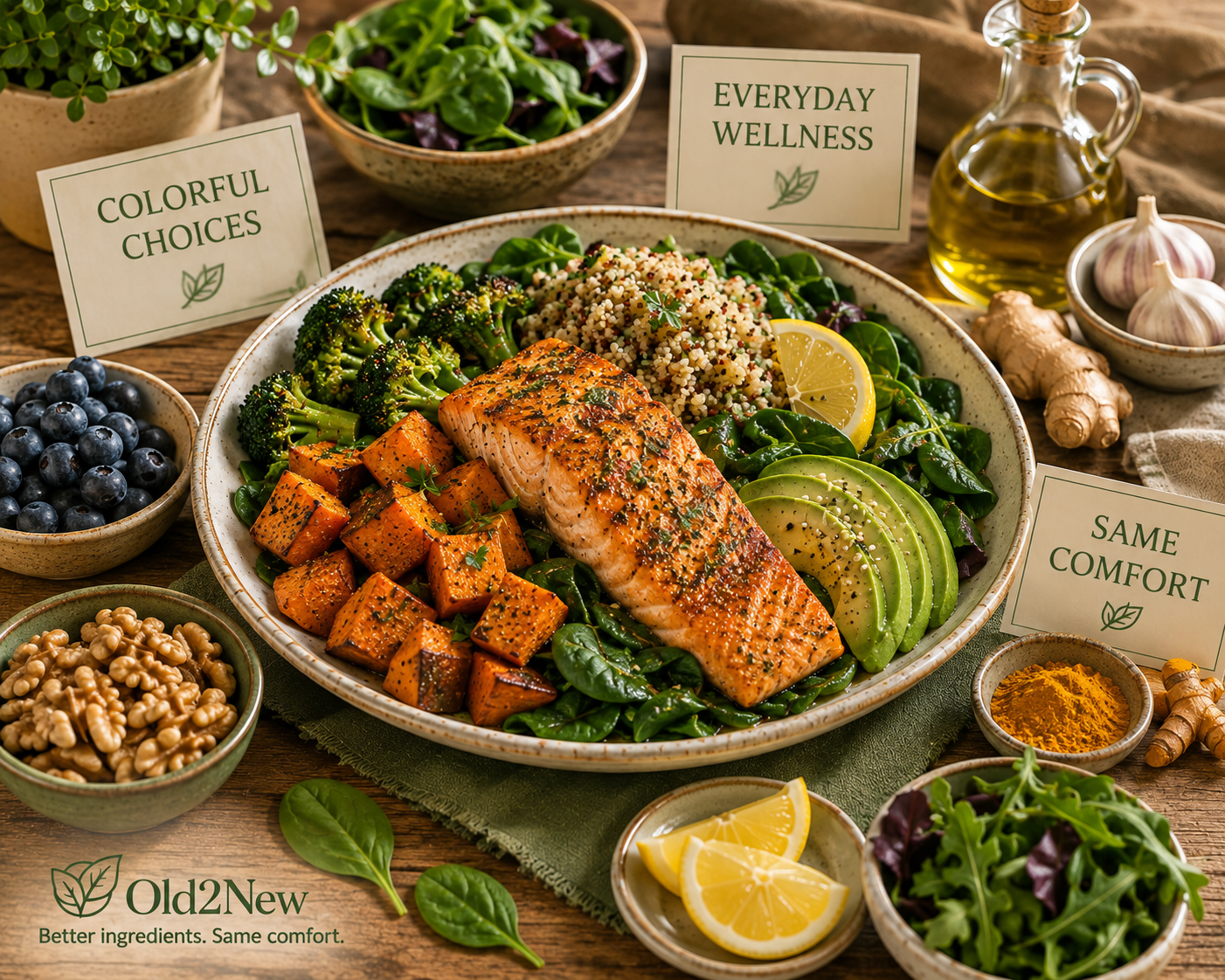
In everyday cooking, an anti-inflammatory approach generally means building meals around ingredients that are naturally rich in nutrients, fiber, healthy fats, and antioxidants. It's less about following strict rules and more about making ingredient choices that nutritional research consistently associates with supporting everyday wellness.
Ingredients that commonly show up in anti-inflammatory cooking:
- Colorful vegetables — the more varied the colors, the wider the range of antioxidants and phytonutrients
- Fresh and frozen fruits — berries especially, but most fruit contributes something useful
- Olive oil — the cornerstone fat in Mediterranean and anti-inflammatory eating, used for cooking and finishing
- Nuts and seeds — walnuts, almonds, flaxseed, chia seeds, and others provide healthy fats and nutrients
- Beans and legumes — high in fiber and plant-based protein, consistently associated with positive health outcomes
- Whole grains — more fiber and nutrients than refined grains, with a different effect on blood sugar
- Fresh herbs and spices — turmeric, ginger, garlic, rosemary, and many others add flavor and compounds associated with wellness
- Fatty fish like salmon, sardines, and mackerel — rich in omega-3 fatty acids
The goal isn't perfection. It's building meals around these kinds of ingredients often enough that they become part of your regular cooking — not a special occasion.
Your Favorite Recipes Can Still Be Part of the Plan
The biggest misconception about anti-inflammatory eating is that it requires starting over — learning new recipes, buying unfamiliar ingredients, and giving up the comfort foods that have been part of your life.
It doesn't.
Most comfort foods have room for anti-inflammatory ingredients without losing what makes them worth eating. The dish stays recognizable. The ingredients simply become more intentional.
A pasta dish can include olive oil instead of a more processed fat, a handful of vegetables stirred into the sauce, and whole grain pasta that adds fiber without changing the character of the meal.
A soup can include a wider variety of vegetables, beans for extra fiber and protein, and fresh herbs that add both flavor and beneficial compounds.
A casserole can be built with olive oil, more vegetables layered throughout, and whole grain components that improve the nutritional profile without changing what the dish fundamentally is.
A stir-fry can include more colorful vegetables, a sauce built around ginger and garlic, and a protein like salmon or edamame that fits naturally into the dish.
None of these changes require learning a new cuisine or acquiring unfamiliar cooking skills. They're ingredient decisions — made inside recipes you already know how to cook.
Small Changes That Move a Dish in an Anti-Inflammatory Direction
The most sustainable approach to anti-inflammatory cooking isn't a complete overhaul. It's making one or two better choices per meal, consistently, until those choices become habit.
Olive oil instead of more heavily processed fats. In most savory cooking, olive oil works as well as butter or vegetable oil while providing a more beneficial fat profile. Use it for sautéing vegetables, finishing pasta, roasting, and making dressings.
More colorful vegetables throughout. The easiest single improvement in most recipes is simply adding more vegetables — spinach into pasta sauce, bell peppers into a stir-fry, zucchini into a casserole. Each color tends to bring different beneficial compounds. More variety is generally better than more of one type.
Beans or lentils for fiber. Folding beans or lentils into a soup, chili, pasta dish, or casserole adds fiber and plant-based protein. In most dishes, they improve the flavor and texture alongside the nutrition.
Herbs and spices in place of relying only on salt. Turmeric, ginger, garlic, rosemary, oregano, and basil all contribute flavor while providing compounds that research associates with everyday wellness. Using them generously reduces the need for salt while making the dish more interesting.
Whole grains where they fit. Whole grain pasta, brown rice, farro, barley, and whole grain bread all contribute more fiber and nutrients than their refined counterparts. The transition takes some adjustment, but most people stop noticing after a few uses.
Fatty fish occasionally. Salmon, sardines, mackerel, and trout provide omega-3 fatty acids that are consistently associated with anti-inflammatory benefits. Using them occasionally in pasta dishes, grain bowls, or as a protein in place of other options shifts the nutritional profile meaningfully.
Nuts and seeds as toppings. Walnuts, almonds, pumpkin seeds, and sunflower seeds added as toppings to soups, salads, grain dishes, or casseroles add texture, healthy fats, and nutrients without changing the character of the dish.
Anti-Inflammatory Cooking Combines Well With Other Goals
One of the practical advantages of an anti-inflammatory approach is that it overlaps naturally with most other health goals — which means you don't have to choose between them.
Anti-inflammatory and Mediterranean — these eating patterns have significant overlap. Both emphasize olive oil, vegetables, whole grains, legumes, herbs, and fish. A Mediterranean transformation often is an anti-inflammatory one.
Anti-inflammatory and high protein — anti-inflammatory ingredients include many high-protein options: legumes, fatty fish, nuts, seeds, and Greek yogurt. Combining these goals usually produces recipes that are both protein-dense and built around beneficial ingredients.
Anti-inflammatory and GLP-1 friendly — the emphasis on fiber, lean protein, and whole foods in anti-inflammatory cooking aligns well with GLP-1 friendly eating. Both approaches support satiety and nutritional density.
Anti-inflammatory and diabetic-friendly — fiber, healthy fats, and whole grains benefit blood sugar management and are central to anti-inflammatory cooking. These goals work together naturally.
Old2New lets you combine goals. You can choose anti-inflammatory preferences alongside Mediterranean, high protein, lower sodium, gluten-free, vegetarian, or any other preference that fits your situation.
Personalization Is the Point
Anti-inflammatory eating looks different for different people — and it should.
Some people focus primarily on olive oil and fish. Others center their approach on vegetables and whole grains. Some combine it with a high-protein approach. Others pair it with Mediterranean eating or a GLP-1 friendly framework.
There isn't one anti-inflammatory diet. There's an anti-inflammatory direction — a set of ingredient choices that tend to be better than alternatives — and each person finds the version that fits their life, their cooking, and their other health goals.
Old2New doesn't require choosing from a fixed menu. You can describe what you're looking for — anti-inflammatory with higher protein, or Mediterranean and dairy-free, or any other combination — and the transformation adapts to your actual preferences.
The Bottom Line
Eating with anti-inflammatory ingredients in mind doesn't have to feel restrictive or unfamiliar.
The meals that bring comfort can still have a place at your table. Often the best version of a recipe isn't a brand-new recipe — it's your favorite recipe made with better ingredient choices.
Olive oil instead of processed fat. A handful more vegetables. Whole grains where they fit. Herbs that make the whole dish taste more alive.
The comfort stays. The ingredients get better.
Better ingredients. Same comfort.
Frequently Asked Questions
What does anti-inflammatory mean in cooking?
Anti-inflammatory cooking focuses on ingredients naturally rich in nutrients, fiber, healthy fats, and antioxidants — colorful vegetables, olive oil, whole grains, legumes, herbs, nuts, and fatty fish. The goal is building meals around these ingredients regularly, not following a strict protocol.
Do I have to give up comfort food to eat anti-inflammatory?
No. Most comfort foods can be made with more anti-inflammatory ingredients without losing what makes them comforting. The dish stays recognizable; the ingredient choices become more intentional.
What are the most important anti-inflammatory swaps?
Olive oil in place of processed fats, more colorful vegetables throughout the dish, beans or lentils for fiber, fresh herbs and spices, whole grains instead of refined, and occasional fatty fish are the most consistent starting points.
Is anti-inflammatory eating the same as Mediterranean eating?
They overlap significantly. The Mediterranean eating pattern is one of the most researched anti-inflammatory eating approaches. Both emphasize olive oil, vegetables, whole grains, legumes, herbs, and fish. They're not identical, but a Mediterranean transformation is usually also an anti-inflammatory one.
Can I combine anti-inflammatory with other goals?
Yes — anti-inflammatory cooking combines well with most other health goals. It aligns naturally with Mediterranean eating, high protein approaches, GLP-1 friendly cooking, and diabetic-friendly eating. Old2New lets you combine preferences so the transformation reflects what you actually need.
Is anti-inflammatory eating a medical treatment?
No. Anti-inflammatory eating refers to general food choices associated with everyday wellness. It is not a medical treatment and is not intended to diagnose, treat, cure, or prevent any disease. If you have a medical condition, work with your healthcare provider for guidance.
Continue Your Recipe Transformation Journey
- What Is Recipe Transformation? — the foundation the whole library builds on
- How to Make Comfort Food Healthier — the practical approach behind every transformation
- Healthy Ingredient Swaps That Actually Taste Good — the specific swaps and why they work
- One Recipe, Four Goals — how the same dish transforms for four different health goals
- Understanding GLP-1 Friendly Cooking — a closer look at GLP-1 friendly meal principles
- High Protein Comfort Foods — how to add more protein without changing the dish
- Mediterranean Comfort Food — Mediterranean-inspired ingredient choices for everyday cooking
- Diabetic-Friendly Comfort Food — how to enjoy comfort food while being mindful of blood sugar
Old2New — There is good in everything.