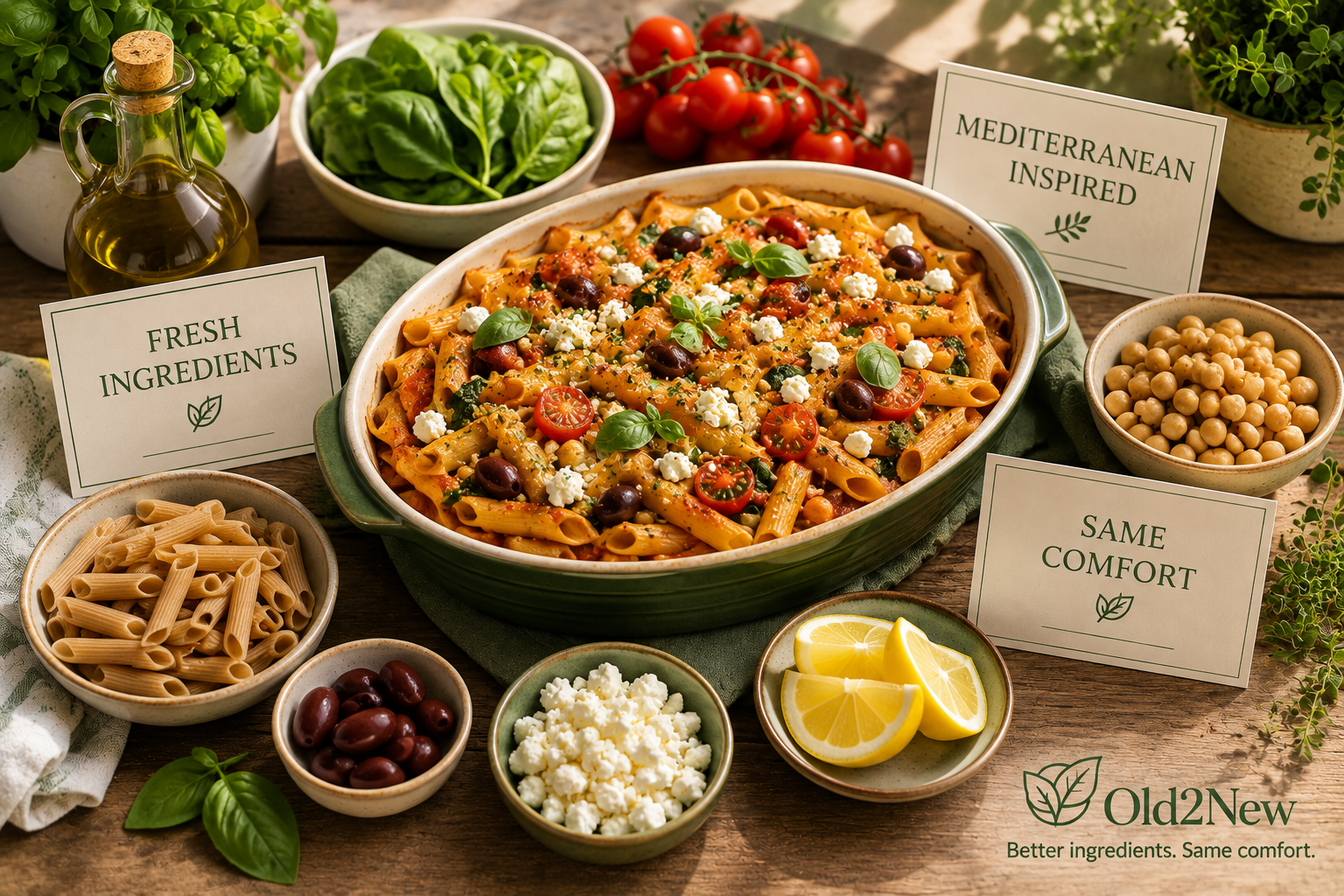
The Mediterranean diet is consistently recognized as one of the healthiest eating patterns in the world. Decades of research point to it. Doctors recommend it. Nutritionists write books about it.
And yet for a lot of people, the immediate reaction is: that's not the food I actually eat.
The assumption is that Mediterranean eating means trading in your favorite comfort foods for salads, seafood, and unfamiliar recipes from places you've never been. Giving up the lasagna. Giving up the pasta. Starting over with a whole new way of cooking.
That's not what it means.
Mediterranean-inspired cooking isn't about replacing the meals you love. It's about preparing them with ingredients that are more wholesome, more flavorful, and more nourishing — while keeping the dish itself completely recognizable.
That's exactly what recipe transformation is about.
What Mediterranean-Inspired Cooking Actually Is
Mediterranean-style eating doesn't come with a rigid rulebook. It's an eating pattern — a way of building meals — rather than a strict diet with forbidden foods and required ones.
At its core, it emphasizes ingredients that are simple, whole, and genuinely flavorful:
- Fresh vegetables, used generously and often
- Fruits, eaten as part of everyday meals rather than just as dessert
- Beans and legumes, which appear throughout Mediterranean cooking as protein, fiber, and substance
- Whole grains — whole wheat pasta, farro, barley, whole grain bread — rather than refined versions
- Olive oil, used as the primary fat for cooking and finishing
- Fresh herbs and spices, which add flavor in place of relying heavily on salt
- Nuts and seeds, used as toppings, in sauces, and as snacks
- Fish and seafood, eaten regularly
- Moderate amounts of poultry and dairy
The goal isn't perfection. It's building meals around ingredients that are genuinely good — for flavor and for how your body feels after eating them.
Comfort Food Still Belongs at the Table
The biggest misconception about Mediterranean eating is that comfort food has no place in it.
The truth is almost the opposite. Mediterranean cuisine is comfort food — just built differently.
Pasta is central to Italian cooking, which falls squarely within the Mediterranean pattern. So is pizza. So are hearty bean soups, slow-cooked stews, roasted vegetables with olive oil, stuffed peppers, and dishes built around whole grains and legumes that have been feeding people for generations.
The difference isn't the type of food. It's the ingredients inside it.
A lasagna made with whole grain noodles, lean protein, plenty of vegetables, and an olive oil-based sauce is still lasagna. It still has layers. It still comes out of the oven bubbling. It still satisfies the same craving. The ingredients have simply shifted in a direction that's more intentional about what they contribute.
A pasta dish with olive oil, garlic, vegetables, cannellini beans, and a handful of fresh herbs is still a pasta dish — and it's also exactly the kind of meal that's been eaten in Mediterranean kitchens for centuries.
The food you love doesn't have to disappear. It just gets better ingredients.
Small Changes That Move a Recipe in a Mediterranean Direction
Most recipes don't need to be rebuilt from scratch to become more Mediterranean-inspired. A few thoughtful ingredient choices can shift the dish meaningfully without changing what it fundamentally is.
Olive oil instead of more heavily processed fats. Olive oil is the cornerstone fat of Mediterranean cooking, and in most savory applications it works as well as butter or vegetable oil while adding its own layer of flavor. Use it for sautéing, roasting, finishing pasta, and making dressings.
Whole grain pasta or grains instead of refined. The dish looks and behaves almost identically. The nutritional profile shifts meaningfully — more fiber, more complex carbohydrates, a slower effect on blood sugar. Most people adjust to the slightly nuttier flavor quickly.
More vegetables throughout. Mediterranean cooking uses vegetables generously — not as a side dish but as a core component of the meal. Adding more to a pasta sauce, layering more into a casserole, or roasting vegetables alongside a protein shifts the composition of the meal without changing its character.
Beans and legumes folded into familiar dishes. Cannellini beans in a pasta dish, chickpeas in a soup, lentils added to a meat sauce — all of these are standard in Mediterranean cooking and add protein, fiber, and substance to dishes that might otherwise rely entirely on meat or starch.
Fresh herbs in place of relying on salt. Basil, parsley, oregano, thyme, and rosemary are the flavor foundation of Mediterranean cooking. Using them generously reduces the need for salt while making the dish taste more alive.
Fish or seafood in place of heavier proteins where it fits. This doesn't mean converting every dish — but trying a seafood version of a pasta dish or a fish-based stew occasionally moves the meal in a direction that aligns with Mediterranean eating patterns.
None of these changes require learning new techniques or buying unfamiliar ingredients. They're just different choices about what goes into the recipes you're already making.
Mediterranean Eating Is Flexible by Nature
One of the reasons Mediterranean-inspired eating works for so many different people is that it's flexible.
There's no single Mediterranean diet. There are many — Greek, Italian, Spanish, Moroccan, Turkish, Lebanese — each with its own ingredients, traditions, and emphases. What they share is a general orientation toward whole foods, vegetables, healthy fats, and real ingredients over processed ones.
Some people who eat in a Mediterranean-inspired pattern eat a lot of seafood. Others eat very little. Some include dairy regularly — yogurt, cheese, feta. Others eat mostly plant-based. Some drink wine. Many don't.
The focus is on building balanced, flavorful meals from wholesome ingredients — not on following a rigid protocol. That flexibility is part of why it's sustainable. It adapts to what you like, what's available, and how you cook.
Combining Mediterranean With Your Other Goals
Mediterranean eating can be layered with other health goals without conflict.
If you're focused on higher protein, Mediterranean-inspired cooking already draws on high-protein foods — legumes, fish, Greek yogurt, eggs, lean poultry. A Mediterranean transformation can emphasize these even more.
If you're cooking for someone managing blood sugar, the Mediterranean pattern's emphasis on fiber, whole grains, and healthy fats aligns well with that goal.
If you're eating in a GLP-1 friendly way, Mediterranean cooking's focus on protein, vegetables, and whole foods supports satiety without relying on heavy portions.
Old2New includes Mediterranean as one of its featured transformation goals — and lets you combine it with your own preferences. Mediterranean and vegetarian. Mediterranean and gluten-free. Mediterranean and lower sodium. The transformation adapts to what you actually need.
The Bottom Line
Mediterranean-inspired cooking isn't about giving up comfort food. It's about celebrating real ingredients, simple cooking, and flavors that have been making people happy for a very long time.
The meals you already love don't have to disappear. Sometimes they simply become a little fresher, a little brighter, and a little better for you — with olive oil where there was butter, more vegetables where there was mostly starch, and herbs that make the whole dish taste more alive.
Same comfort. Better ingredients.
Better ingredients. Same comfort.
Frequently Asked Questions
What is Mediterranean-inspired cooking?
Mediterranean-inspired cooking is a way of building meals around whole, minimally processed ingredients — fresh vegetables, olive oil, whole grains, legumes, herbs, and lean proteins like fish and poultry. It draws from the traditional eating patterns of countries bordering the Mediterranean Sea and is consistently recognized as one of the healthiest eating patterns in the world.
Can I still eat pasta on a Mediterranean diet?
Yes — pasta is a core part of Italian Mediterranean cooking. The key is how it's prepared: whole grain pasta where possible, with vegetable-forward sauces, olive oil, herbs, legumes, and lean proteins rather than heavy cream sauces or large amounts of processed meat.
Is Mediterranean eating the same as a low-fat diet?
No. Mediterranean eating actually includes healthy fats — particularly olive oil and the fats found in fish, nuts, and avocado — as a central component. It's not low-fat; it's intentional about which fats are used.
What comfort foods can be made Mediterranean-inspired?
Most comfort foods can be shifted in a Mediterranean direction. Lasagna, pasta dishes, pizza, bean soups, roasted chicken, casseroles, and grain bowls all adapt well. The changes are usually about the specific ingredients — whole grains instead of refined, olive oil instead of butter, more vegetables, beans or legumes added — rather than the dish itself.
Do I have to eat seafood to eat in a Mediterranean way?
No. Seafood is common in Mediterranean cooking, but it's not required. Many Mediterranean dishes are built primarily around vegetables, beans, whole grains, and olive oil. Poultry, eggs, and dairy also appear regularly. The eating pattern is flexible.
How does Old2New approach Mediterranean recipe transformation?
Old2New looks at your recipe and identifies ingredient swaps that move it in a Mediterranean direction — more olive oil, more vegetables, whole grains instead of refined, legumes where they fit, and fresh herbs. You can choose Mediterranean as your goal alone or combine it with other preferences like vegetarian, gluten-free, or higher protein.
Continue Your Recipe Transformation Journey
- What Is Recipe Transformation? — the foundation the whole library builds on
- How to Make Comfort Food Healthier — the practical approach behind every transformation
- Healthy Ingredient Swaps That Actually Taste Good — the specific swaps and why they work
- One Recipe, Four Goals — how the same dish transforms for four different health goals
- Understanding GLP-1 Friendly Cooking — a closer look at GLP-1 friendly meal principles
- High Protein Comfort Foods — how to add more protein without changing the dish
Old2New — There is good in everything.