For years, the advice for eating more protein sounded like the same short list: grilled chicken, plain vegetables, protein shakes, repeat.
Those foods have their place. But most people don't want to eat the same things every day โ and more importantly, they don't have to.
Increasing your protein intake doesn't require giving up the meals you grew up with. Mac and cheese, pancakes, chili, pasta, mashed potatoes, brownies โ most of these dishes can be made significantly higher in protein with a few thoughtful ingredient changes, while still tasting like the dish you actually wanted.
That's what high-protein recipe transformation looks like in practice.
Why Protein Matters in Everyday Cooking
Protein plays a role in nearly every part of how your body functions โ muscle maintenance, recovery, bone health, and perhaps most relevant to everyday eating: how full you feel after a meal and how long that feeling lasts.
For most people, simply increasing the protein in the meals they're already eating makes those meals more satisfying. Less snacking between meals. More sustained energy. A sense of having actually eaten something, rather than eaten something that left you looking for more an hour later.
The goal isn't to track protein for the sake of tracking it. It's to build meals that keep you genuinely nourished and satisfied โ and to do that starting from the dishes you already want to cook.
High Protein Doesn't Mean Boring
This is the misconception that keeps a lot of people stuck.
High-protein eating gets associated with bodybuilder meal prep โ chicken breast, broccoli, egg whites, protein powder stirred into everything. That's one approach to protein. It's not the only one, and for most people it's not a sustainable or enjoyable one.
The reality is that protein shows up in a lot of different ingredients โ and many of those ingredients work beautifully in the comfort food you're already making.
- Mac and cheese can be made higher in protein.
- Pancakes can be made higher in protein.
- Chili, casseroles, pasta, pizza, dips, mashed potatoes, and even brownies can all be transformed with protein-rich ingredients while staying recognizable.
The recipe stays familiar. The nutrition improves.
Protein Swaps That Actually Work in Comfort Food
The most useful protein swaps are the ones you don't notice โ ingredients that increase the protein content of a dish without changing what it tastes like or feels like to eat.
Greek yogurt instead of sour cream. Works in tacos, baked potatoes, dips, sauces, and baked goods. Nearly identical texture. Significantly more protein. Most people can't taste the difference in the finished dish.
Blended cottage cheese in creamy sauces. When blended until completely smooth, cottage cheese creates a rich, protein-dense base for Alfredo sauce, mac and cheese, lasagna filling, and creamy soups. The texture is indistinguishable from a cream sauce. The protein content is dramatically higher.
Lean ground turkey or chicken instead of higher-fat ground beef. Same texture in most cooked applications โ tacos, chili, pasta sauce, meatballs โ with lower fat and similar or higher protein depending on the cut. Use the same seasoning; the dish behaves identically.
Higher-protein or legume-based pasta instead of refined pasta. Chickpea, lentil, and edamame pasta varieties add meaningful protein to any pasta dish. The texture is slightly different the first time; most people adjust quickly and stop noticing.
Beans and lentils added to soups, stews, and casseroles. Folding beans or lentils into chili, soups, or pasta dishes increases protein and fiber without changing the flavor profile. In many dishes โ chili especially โ they improve it.
Eggs or egg whites incorporated into baked goods. Adding an extra egg or using egg whites in pancakes, muffins, and quick breads increases protein while improving the structure of the finished product.
Protein-rich dairy throughout. Ricotta, Greek yogurt, and certain cheeses contribute protein beyond just flavor. Swapping lower-protein dairy products for higher-protein alternatives โ cottage cheese for ricotta in lasagna, Greek yogurt for cream cheese in dips โ shifts the nutritional profile without requiring a recipe overhaul.
The goal isn't to use every one of these in every recipe. It's to look at the dish you're making and find where one or two of them fit naturally.
Looking at the Whole Recipe, Not Just One Ingredient
The most effective approach to high-protein cooking isn't making one swap โ it's looking at the entire recipe and finding multiple places where protein can be increased without the dish feeling like it's been pulled in too many directions.
Take lasagna as an example. A high-protein transformation might:
- Use a higher-protein pasta
- Blend cottage cheese into the ricotta filling
- Use lean turkey in the meat sauce
- Add spinach for additional nutrients
- Top with a cheese that's higher in protein per serving
Each change is small. The combined effect is significant. The dish is still lasagna โ it looks like lasagna, tastes like lasagna, and satisfies the same craving. It just works harder.
This is what makes recipe transformation different from simply "eating healthy." It starts with the dish you want, then finds every reasonable opportunity to improve it.
One Recipe Can Go in Different Directions
Not everyone transforming a recipe wants the same result.
Someone focused on high protein wants maximum protein density across every component. Someone on a GLP-1 medication wants protein and satiety in a smaller serving. Someone following Mediterranean-style eating wants protein from whole food sources โ legumes, seafood, olive oil โ rather than processed alternatives. Someone managing blood sugar wants protein balanced with fiber and lower glycemic carbohydrates.
The same lasagna can be rebuilt four different ways for four different goals โ and all four versions are still recognizably lasagna.
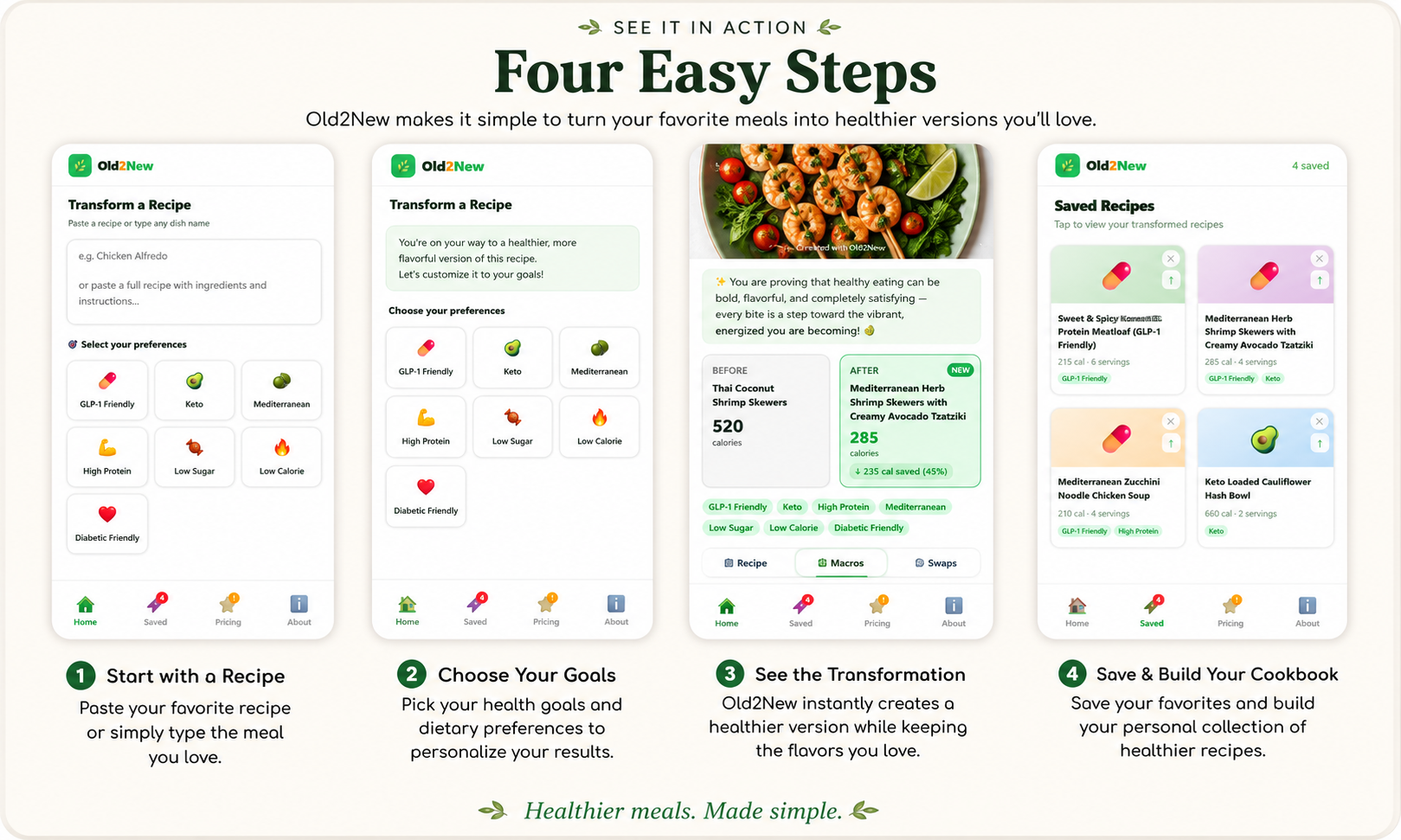
Old2New doesn't apply a generic "healthy" transformation to every recipe. It looks at your specific goal and identifies the ingredient choices that serve that goal best โ whether that's high protein, GLP-1 friendly, Mediterranean, diabetic friendly, or something you describe yourself.
Your Goals Can Be Entirely Your Own
Old2New's four featured goals โ High Protein, GLP-1 Friendly, Mediterranean, and Diabetic Friendly โ are the most common starting points. They're not the only options.
You can describe almost any eating preference and Old2New will incorporate it into the transformation:
- Anti-inflammatory
- Vegetarian or vegan
- Gluten-free or dairy-free
- Lower sodium
- Higher fiber
- Kid friendly
Or combinations: High Protein and Anti-Inflammatory. Mediterranean and Gluten-Free. The recipe becomes specifically yours, not a generic healthier version that may or may not fit how you actually eat.
The Bottom Line
Adding more protein to your cooking doesn't mean starting over. It doesn't mean eating the same five foods on repeat. And it definitely doesn't mean giving up the meals that feel like home.
It means looking at the recipes you already love and finding the places where smarter ingredient choices can make them work harder โ more satisfying, more nourishing, and still completely recognizable.
The comfort stays. The ingredients get better.
Better ingredients. Same comfort.
Frequently Asked Questions
What are the best high-protein swaps for comfort food?
Greek yogurt in place of sour cream, blended cottage cheese in creamy sauces, lean ground turkey instead of ground beef, legume-based pasta, and beans or lentils added to soups and stews are the most versatile starting points. Each one increases protein without dramatically changing the flavor or texture of the dish.
Can comfort food really be high in protein?
Yes โ most comfort foods have multiple components where protein-rich ingredients can be substituted or added. Mac and cheese, lasagna, chili, pancakes, and casseroles are all dishes that adapt well to high-protein transformations while remaining recognizable.
How much protein should I aim for in a meal?
Protein needs vary by individual, activity level, and health goals. Rather than targeting a specific number, a practical approach is to look at each meal and ask whether protein is present in a meaningful way โ and whether there's a simple swap that could increase it without changing the dish.
Do high-protein swaps change the taste of the dish?
Good swaps are chosen because they behave similarly to the ingredients they replace. Greek yogurt tastes very close to sour cream in most applications. Blended cottage cheese is nearly undetectable in a sauce. Lean turkey seasons and cooks like ground beef. There's often an adjustment period the first time, but most people stop noticing after a few uses.
Is high-protein cooking the same as keto or low-carb?
No. High-protein cooking focuses on increasing protein density across the dish โ not necessarily reducing carbohydrates. A high-protein lasagna still has pasta. A high-protein pancake still has flour. The goal is more protein, not fewer carbohydrates.
Can Old2New transform any recipe to be higher in protein?
Old2New can apply high-protein ingredient swaps to almost any comfort food recipe. The specific swaps will depend on the dish โ what it's made of and where protein can most naturally be increased โ but the goal is always to keep the dish recognizable while improving its nutritional profile.
Continue Your Recipe Transformation Journey
- What Is Recipe Transformation? โ the foundation the whole library builds on
- How to Make Comfort Food Healthier โ the practical approach behind every transformation
- Healthy Ingredient Swaps That Actually Taste Good โ the specific swaps and why they work
- One Recipe, Four Goals โ how the same dish transforms for four different health goals
- Understanding GLP-1 Friendly Cooking โ a closer look at GLP-1 friendly meal principles
Old2New โ There is good in everything.