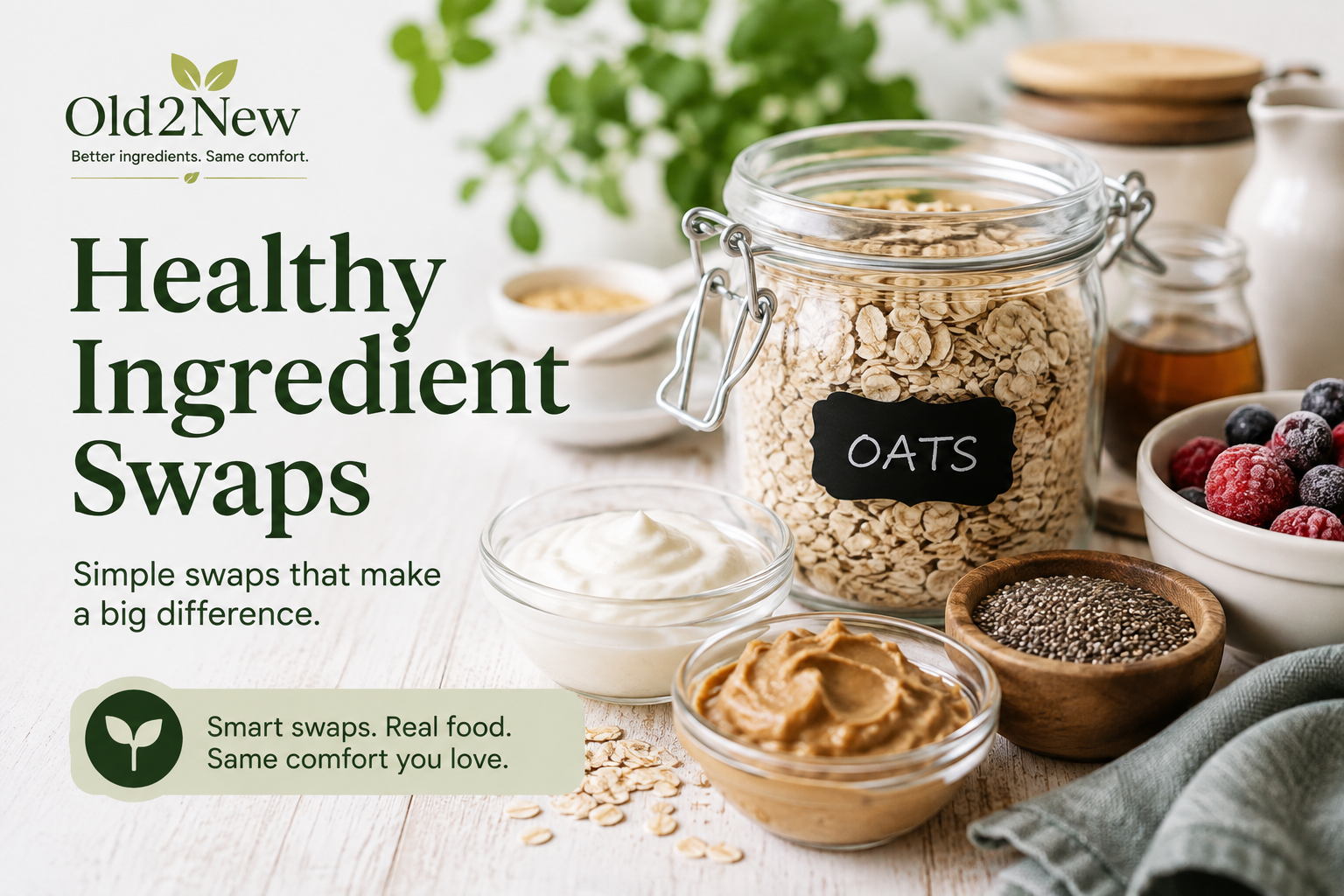
There's a reason most "healthy swaps" don't stick.
They remove everything that made the recipe worth eating. A rich, creamy sauce becomes watery. A favorite dessert loses its depth. A family meal that used to feel like comfort starts to feel like compromise.
Eventually, people stop making it — and go back to the original.
The problem isn't the idea of swapping ingredients. The problem is swapping the wrong things, or swapping too much at once, or choosing substitutes that technically improve the nutrition but ruin the dish in the process.
The best ingredient swaps don't feel like sacrifices. They improve what's in the recipe while keeping the flavor, texture, and comfort that made it worth making in the first place.
That's the standard this article holds every swap to.
What Makes a Swap Worth Making?
Not every substitution is a good one. A swap that improves the nutrition label but makes the dish worse isn't a good swap — it's just a different kind of failure.
A successful ingredient swap should do at least one of these things:
- Increase protein density
- Add fiber without changing the texture significantly
- Reduce added sugar while maintaining sweetness
- Replace refined ingredients with whole food alternatives
- Improve the fat profile of the dish
- Maintain — or improve — the flavor and texture of the original
If the dish no longer feels like the thing you were craving, the swap probably wasn't right. Start somewhere else.
The Swaps That Actually Work
Greek Yogurt Instead of Sour Cream
This is one of the most versatile swaps in comfort food cooking. Greek yogurt has a similar creamy texture and tang to sour cream, but with significantly more protein and a cleaner fat profile.
It works in almost every application where sour cream appears:
- Baked potatoes
- Tacos and burrito bowls
- Dips and dressings
- Creamy sauces and soups
- Baked goods where sour cream adds moisture
The key is using full-fat Greek yogurt, which behaves more similarly to sour cream than the low-fat version. In cold applications it's nearly indistinguishable. In cooked applications, add it off the heat to prevent curdling.
Blended Cottage Cheese Instead of Heavy Cream
This one surprises people — and then converts them.
When cottage cheese is blended until completely smooth, it creates a creamy, protein-rich base that works beautifully in sauces that would otherwise rely on heavy cream. The texture is rich. The flavor is mild. Most people eating the finished dish never identify it.
Use it in:
- Alfredo sauce
- Mac and cheese sauce
- Lasagna filling
- Pasta bakes and casseroles
- Creamy soups
Blend it thoroughly — a high-powered blender or immersion blender works best. Any remaining graininess is a sign it needs more time. Once smooth, it behaves like a cream sauce base with a fraction of the fat and a significant protein boost.
Whole Grain or Legume-Based Pasta Instead of Refined Pasta
The dish looks identical. The texture is close enough that most people stop noticing after the first time. The nutritional difference is meaningful — more fiber, more staying power, a slower effect on blood sugar.
Whole grain pasta has a slightly nuttier flavor that complements rich sauces particularly well. Legume-based pastas (lentil, chickpea, edamame) add protein and tend to work best in dishes with bold flavors that can carry the slightly different texture.
Start with whole grain in familiar dishes. Move to legume-based pasta when you want a more significant protein increase.
Olive Oil Instead of Butter (When It Fits)
Butter and olive oil aren't always interchangeable — butter has properties in baking and certain sauces that olive oil doesn't replicate. But in many cooked applications, olive oil works just as well and brings its own flavor.
Use olive oil instead of butter for:
- Roasting vegetables
- Sautéing aromatics (garlic, onions, peppers)
- Pasta dishes where butter is added at the end for richness
- Marinades and homemade dressings
- Pan-cooking proteins
The swap doesn't work as well in baked goods, where butter's fat content and moisture contribute to texture in ways that olive oil doesn't replicate. Keep butter where it matters; replace it where it doesn't.
Maple Syrup Instead of Refined Sugar
In recipes where sweetness is the goal but the specific form of sweetener is flexible, maple syrup offers a richer flavor that often allows you to use less overall sweetener while still achieving the taste you want.
It works especially well in:
- Oatmeal and overnight oats
- Energy bites and no-bake treats
- Homemade granola
- Yogurt bowls
- Salad dressings with a sweet component
The flavor is more complex than refined sugar — which is the point. A smaller amount of maple syrup in a recipe often delivers more perceived sweetness and flavor than the same volume of white sugar would.
Oat Flour Instead of White Flour
Oat flour has a mild, slightly sweet flavor that works well in baked goods. It adds fiber compared to refined white flour and tends to produce a tender, slightly dense crumb that suits quick breads, muffins, and cookies particularly well.
Best applications:
- Pancakes and waffles
- Muffins and quick breads
- Cookies (especially oatmeal-style)
- Coatings for pan-fried proteins
In most recipes, oat flour can replace 25–50% of the white flour without significantly changing the texture. Full replacement works in recipes where a slightly denser result is acceptable — many muffin and pancake recipes fall into this category.
Spinach (Into Almost Everything)
Spinach is the most forgiving addition in comfort food cooking. Fresh spinach wilts down to almost nothing in cooked dishes — a few large handfuls reduce to a few tablespoons — and in most applications it's effectively invisible in both flavor and texture.
Add it to:
- Pasta sauces (stir in during the last two minutes of cooking)
- Soups and stews (add at the end)
- Pizza (under the cheese or as a topping)
- Omelets and egg dishes
- Casseroles and baked pasta dishes
It's not a dramatic transformation — it's just more nutrition in the dish you were already making.
Small Swaps Compound Over Time
One swap doesn't change your relationship with food. But one swap a week, sustained over a year, means you've made more than 50 small improvements to the way you cook — without overhauling anything dramatically or giving up the meals you actually want to eat.
That's how lasting change works. Not a single dramatic overhaul, but a series of small decisions that become habit so gradually you stop noticing them.
Make one swap this week. The same dish, one ingredient changed. See how it goes.
How Old2New Approaches Ingredient Swaps
Old2New doesn't apply the same swap to every recipe. The right swap depends on what you're trying to achieve — and different health goals call for different ingredient choices.
The same lasagna gets rebuilt differently depending on whether the goal is:
GLP-1 support — prioritizing protein and portion satisfaction, with ingredients that feel complete without the same volume
Higher protein — maximizing protein density across every component of the dish
Mediterranean-style eating — shifting toward whole foods, olive oil, vegetables, and less processed content
Blood sugar management — reducing the glycemic impact of the starchy components while keeping the dish satisfying
One recipe. Four different versions. Each one still recognizably the dish it started as.
Better ingredients. Same comfort.
Frequently Asked Questions
What is the best healthy ingredient swap for beginners?
Greek yogurt in place of sour cream is the most accessible starting point. It requires no technique change, works in almost any recipe that calls for sour cream, and most people can't taste the difference in the finished dish. Start there.
Do healthy ingredient swaps really make a difference?
Yes — but the difference compounds over time rather than showing up in a single meal. One swap changes the nutritional profile of one dish. The same swap made consistently across dozens of meals changes the overall pattern of how you eat.
Will healthy swaps change the way my food tastes?
Good swaps shouldn't change the flavor in ways that make the dish worse. The swaps listed here are chosen specifically because they behave similarly to the ingredients they replace. There's an adjustment period with some of them — whole grain pasta tastes slightly different the first few times — but most people stop noticing after a few uses.
Can I make multiple swaps in the same recipe at once?
You can, but starting with one swap at a time makes it easier to identify what's working and what isn't. If you change five ingredients and the dish doesn't taste right, you don't know which change caused the problem. One swap at a time gives you cleaner feedback.
What's the difference between a healthy swap and just cooking healthier?
A healthy recipe is designed from scratch with nutrition in mind. A healthy swap starts with a recipe you already love and changes one ingredient at a time. The emotional starting point is different — and that matters, because it's easier to sustain a change to something familiar than to adopt something entirely new.
How does Old2New choose which swaps to recommend?
Old2New selects ingredient swaps based on your specific health goals — not a generic "healthier" standard. The same dish gets different swaps depending on whether you're focused on protein, GLP-1 support, Mediterranean eating, or blood sugar management. The goal is always to keep the dish recognizable while making it work better for how you're eating right now.
Continue Your Recipe Transformation Journey
- What Is Recipe Transformation? — the foundation the whole library builds on
- How to Make Comfort Food Healthier — the practical approach behind the swaps
- One Recipe, Four Goals — how the same dish transforms for GLP-1, high protein, Mediterranean, and diabetic-friendly eating
- Healthy Desserts That Still Feel Like Dessert — because dessert deserves good swaps too
Old2New — There is good in everything.