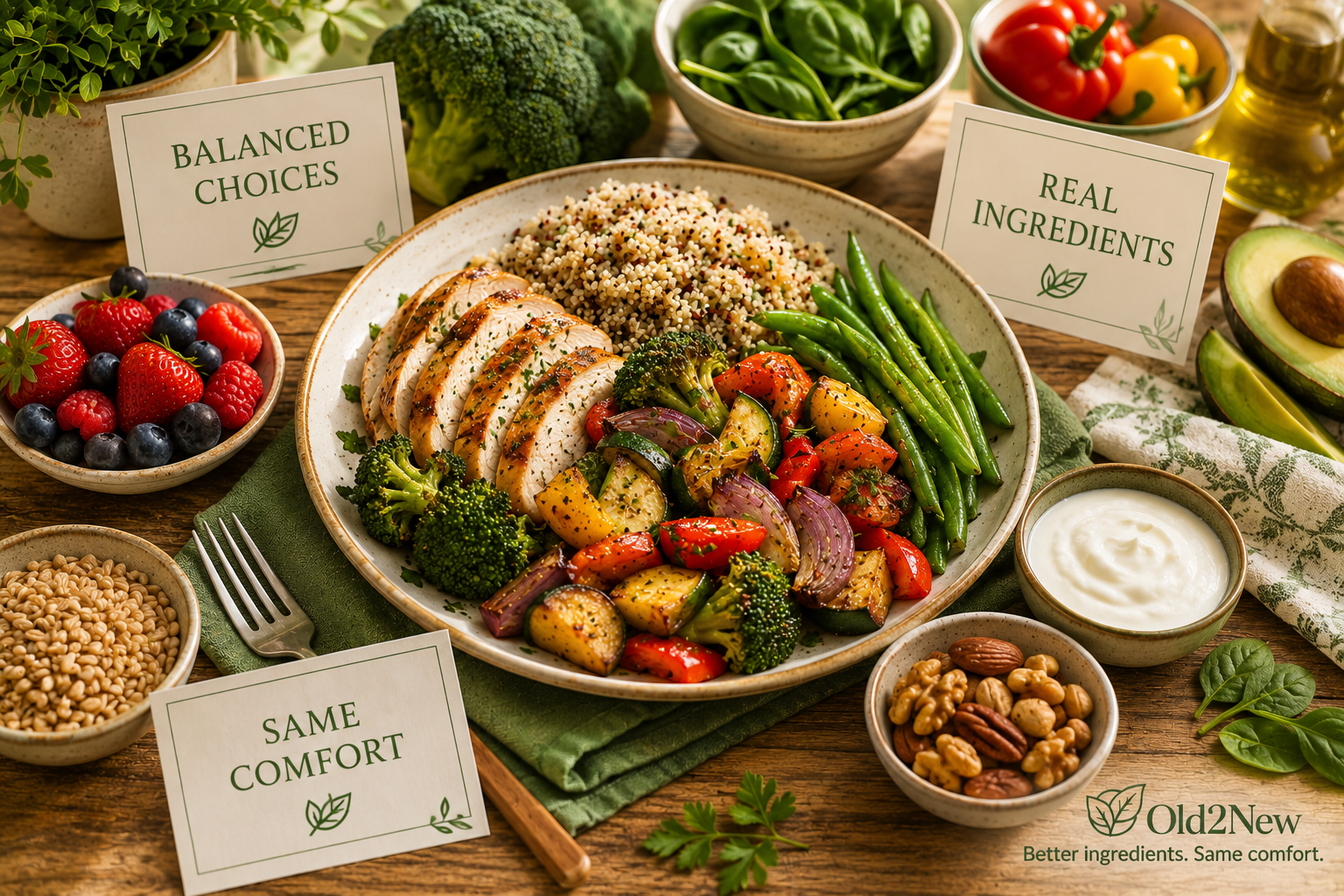
For many people, the phrase "diabetic-friendly" calls up an image of restriction — a long list of foods that are no longer allowed, favorite recipes that have to be abandoned, comfort foods that belong to a life before a diagnosis.
That's not what it has to look like.
Eating with blood sugar in mind doesn't mean saying goodbye to the meals you love. For most people, it means making more thoughtful ingredient choices — choices that help create a more balanced recipe while keeping the dish recognizable, satisfying, and genuinely enjoyable.
That's what recipe transformation is for.
Note: Old2New provides recipe ideas and ingredient suggestions for informational purposes only. It is not a substitute for medical advice. If you have diabetes or another medical condition, always work with your healthcare provider or registered dietitian to determine the eating pattern that's right for you.
What "Diabetic-Friendly" Actually Means in Cooking
Diabetic-friendly cooking isn't about eliminating food groups or counting every gram. It's about building meals that support steadier blood sugar while still providing the flavor, comfort, and satisfaction that make eating enjoyable.
For many people, that means paying more attention to:
- Fiber — which slows digestion and helps moderate the effect of carbohydrates on blood sugar
- Lean protein — which supports satiety and helps balance the overall composition of a meal
- Healthy fats — which add flavor and substance without spiking blood sugar
- Whole grains instead of refined carbohydrates — which have a different effect on blood sugar than their refined counterparts
- Less added sugar — reducing sweetness that comes from added sources rather than whole foods
- Balanced portions — the composition of the plate matters, not just individual ingredients
Every person is different. Blood sugar responses vary. What works well for one person may need adjustment for another. The guidance here is general — your healthcare team knows your specific situation best.
Comfort Food Doesn't Have to Disappear
This is the part that surprises a lot of people: most comfort foods can be transformed rather than abandoned.
A casserole doesn't have to be eliminated — it can include more vegetables, lean protein, and whole grain components that change how it behaves nutritionally without changing what it tastes like.
A pasta dish doesn't have to go away — it can be made with whole grain or legume-based pasta, more vegetables, and a protein-forward sauce that makes the same serving feel more complete.
A dessert doesn't have to be crossed off the list — it can be made with less added sugar, whole food sweeteners, and ingredients that slow the absorption of sweetness rather than spiking it.
The goal isn't to erase the recipe. It's to improve it — to find the version of the dish that works better for how you need to eat right now, without asking you to stop eating the things that bring you comfort.
Small Swaps That Make a Meaningful Difference
Recipe transformation for diabetic-friendly cooking usually starts with the same practical question: where can this dish be improved without changing what it fundamentally is?
A few ingredient choices that consistently matter:
Whole grain pasta or legume-based pasta instead of refined pasta. The dish looks and behaves similarly, but whole grain and legume-based pastas have more fiber and a lower glycemic effect than refined pasta. The adjustment in texture is subtle and most people stop noticing quickly.
Greek yogurt instead of sour cream. Increases protein, reduces fat, and keeps the creamy texture in sauces, dips, and toppings without changing the flavor profile meaningfully.
Beans added for fiber and protein. Folding beans into chili, soups, casseroles, or pasta dishes adds fiber that slows carbohydrate absorption while increasing protein. In most dishes, beans improve the flavor and texture as much as the nutrition.
More vegetables throughout. Adding more vegetables to a dish increases the fiber content and the overall volume of food without adding significant carbohydrates. More vegetables means more food that doesn't spike blood sugar — which is exactly the kind of balance that matters.
Nuts and seeds for texture and healthy fats. Used as toppings or mixed into dishes, nuts and seeds add healthy fats and a satisfying crunch while contributing to the kind of slower, more balanced digestion that supports steadier blood sugar.
Less added sugar, or whole food sweeteners where sweetness is needed. In recipes where sweetness is part of the dish, reducing the amount of added sugar or using smaller amounts of less refined sweeteners can shift the nutritional profile without eliminating what the dish is supposed to taste like.
These aren't dramatic changes. They're small decisions that, made consistently, create a meaningfully different way of eating — one that still includes the meals you love.
It's About Balance, Not Elimination
One of the most important shifts in thinking about diabetic-friendly cooking is moving from elimination to balance.
The question isn't "can I eat this?" It's "how can I eat this in a way that works better for my blood sugar?"
A plate that includes protein, fiber, and healthy fat alongside carbohydrates behaves very differently in the body than a plate of refined carbohydrates alone. The same pasta dish — served with a protein-rich sauce, a generous portion of vegetables, and a drizzle of olive oil — creates a more balanced blood sugar response than pasta with a light tomato sauce and nothing else.
This is why recipe transformation focuses on the whole dish, not just one ingredient. The goal is to shift the overall composition of the meal — more fiber, more protein, more healthy fat alongside whatever carbohydrates are present — rather than simply removing the carbohydrates.
Every Person Is Different
There is no single version of diabetic-friendly eating that works for everyone. Individual responses to food vary significantly. What one person can eat without issue may affect someone else differently.
Some people focus heavily on carbohydrate quantity. Others prioritize glycemic index — the quality of carbohydrates rather than just the amount. Some combine a low-carbohydrate approach with high protein. Others follow a Mediterranean pattern, which has strong research support for blood sugar management.
The best recipe is the one that fits your specific health goals and works with your healthcare team's guidance — not one that was designed for a generic "diabetic" audience.
Old2New's Diabetic Friendly transformation is a starting point, not a prescription. It applies ingredient swaps that are generally associated with more balanced blood sugar responses — more fiber, less refined carbohydrate, more lean protein — while keeping the dish you started with recognizable. How it fits into your specific dietary needs is something to determine with your healthcare provider.
Combining Diabetic-Friendly With Your Other Goals
Diabetic-friendly cooking often aligns naturally with other health goals, which means you don't have to choose one over another.
Mediterranean + Diabetic Friendly — the Mediterranean pattern's emphasis on fiber, whole grains, healthy fats, and vegetables has strong research support specifically for blood sugar management. These goals work together naturally.
High Protein + Diabetic Friendly — protein supports satiety and helps balance blood sugar responses when eaten alongside carbohydrates. Increasing protein while managing carbohydrate quality is a common and effective approach.
Lower Sugar + Diabetic Friendly — reducing added sugar is a core component of diabetic-friendly cooking, and combining it as a stated goal helps ensure the transformation addresses sweetness throughout the recipe.
Old2New lets you combine goals. You can choose Diabetic Friendly alone, or layer it with lower sodium, higher fiber, gluten-free, vegetarian, or any other preference that fits your situation.
The Bottom Line
Eating with blood sugar in mind shouldn't feel like punishment. The meals that bring comfort can continue to be part of your life — with a few thoughtful ingredient choices that make them work better for how you need to eat right now.
Recipe transformation doesn't replace the dish. It improves it. It finds the version of the food you already love that fits better with your health goals — without asking you to eat something unfamiliar or give up the comfort that good food provides.
Better ingredients can still create the same comfort.
Better ingredients. Same comfort.
Frequently Asked Questions
What does diabetic-friendly mean in a recipe?
A diabetic-friendly recipe is built to support more balanced blood sugar responses — typically by increasing fiber, adding lean protein, choosing whole grains over refined carbohydrates, reducing added sugar, and paying attention to portion balance. It's about the overall composition of the meal, not just eliminating specific foods.
Can people with diabetes eat comfort food?
Yes — most comfort foods can be transformed with ingredient swaps that improve their nutritional profile without changing what makes them comforting. The dish stays recognizable; the ingredients are chosen more carefully.
What are the most important swaps for diabetic-friendly cooking?
Whole grain or legume-based pasta in place of refined pasta, more vegetables throughout the dish, beans added for fiber and protein, lean proteins instead of higher-fat options, and less added sugar are the most consistent starting points. Together they shift the overall composition of the meal without requiring a complete recipe overhaul.
Is diabetic-friendly cooking the same as low-carb eating?
Not necessarily. Diabetic-friendly cooking focuses on carbohydrate quality (whole grains over refined, fiber-rich ingredients) and overall meal balance — not just reducing carbohydrates. Some people managing blood sugar do follow lower-carbohydrate approaches, but it's not the only option, and the right approach depends on the individual.
Should I follow a specific diabetic-friendly diet?
Dietary recommendations for diabetes management are highly individual and should come from your healthcare provider or registered dietitian. General principles — more fiber, lean protein, whole grains, less added sugar, balanced portions — apply broadly, but how they're implemented depends on your specific situation, medications, and health goals.
Can Old2New create diabetic-friendly versions of any recipe?
Old2New can apply diabetic-friendly ingredient swaps to most comfort food recipes, focusing on fiber, protein, whole grains, and reducing refined ingredients and added sugar. The transformation is a starting point — how it fits into your specific dietary plan is something to discuss with your healthcare team.
Continue Your Recipe Transformation Journey
- What Is Recipe Transformation? — the foundation the whole library builds on
- How to Make Comfort Food Healthier — the practical approach behind every transformation
- Healthy Ingredient Swaps That Actually Taste Good — the specific swaps and why they work
- One Recipe, Four Goals — how the same dish transforms for four different health goals
- Understanding GLP-1 Friendly Cooking — a closer look at GLP-1 friendly meal principles
- High Protein Comfort Foods — how to add more protein without changing the dish
- Mediterranean Comfort Food — Mediterranean-inspired ingredient choices for everyday cooking
Old2New — There is good in everything.