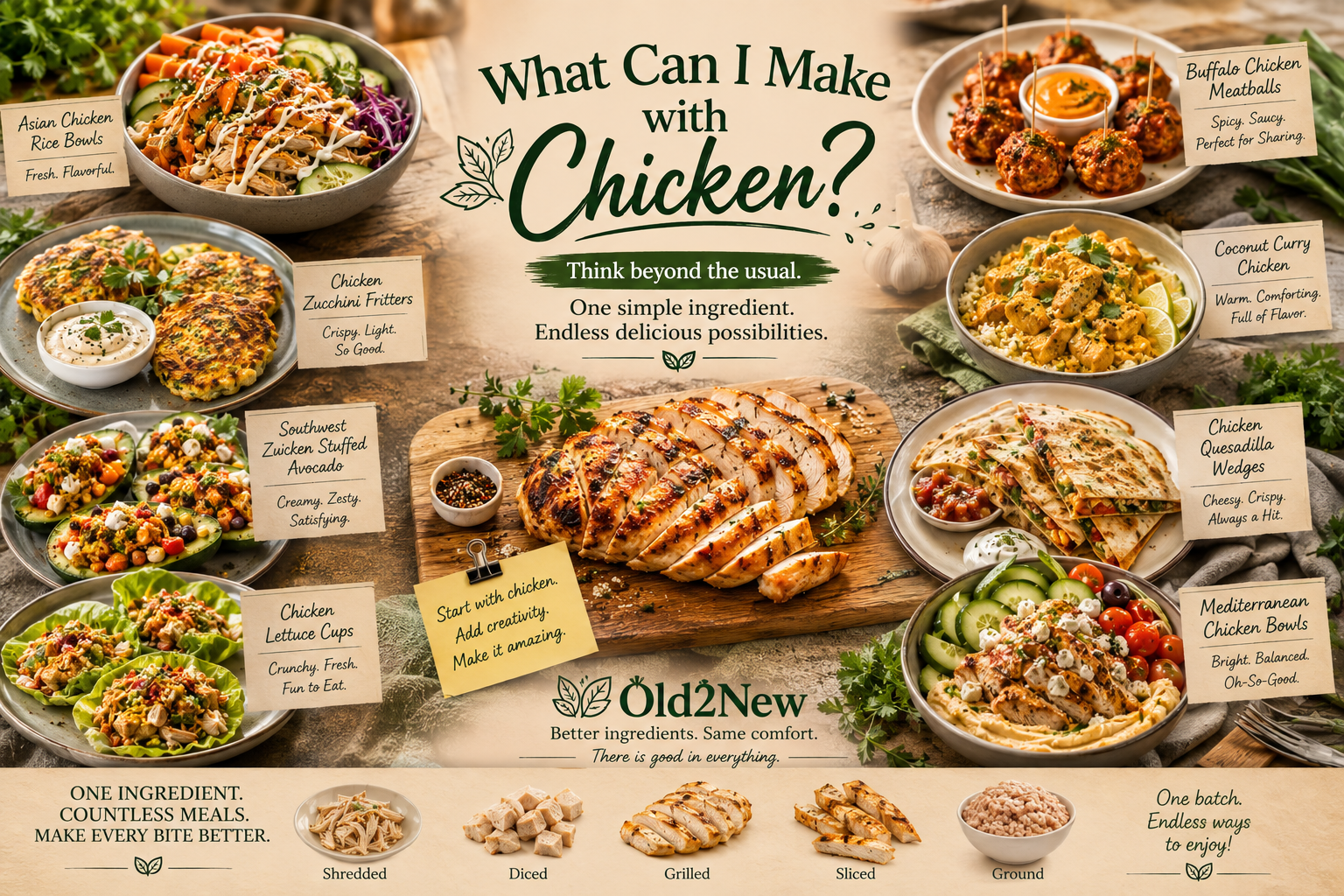
You have chicken.
Maybe it's a package of raw chicken breasts in the refrigerator. Maybe it's a rotisserie chicken you picked up on the way home. Maybe it's leftover chicken from last night that you're not sure what to do with.
Whatever the situation, the question is the same: now what?
Chicken is one of the most versatile ingredients in a home kitchen — affordable, widely available, and able to go in almost any direction depending on what you add to it. The same ingredient that becomes chicken noodle soup can also become chicken tacos, chicken Alfredo, chicken fried rice, a grain bowl, a wrap, or a casserole — sometimes with barely more than a change in seasonings and sides.
The protein is the constant. Everything around it is the variable.
Start With What You Already Have
Most people approach dinner by deciding what they want to eat and then figuring out what they need to buy. The meal comes first, the shopping follows.
Recipe transformation works the other way around: you start with what's already in your kitchen and figure out what it can become.
When chicken is the starting point, the question becomes: what do I already have that could turn this into something worth eating tonight?
- Broth and vegetables → soup or stew
- Pasta and a sauce base → pasta dish
- Rice and soy sauce → fried rice
- Tortillas and salsa → tacos
- Grains and whatever vegetables are on hand → grain bowl
- Broth, vegetables, and pastry or biscuit topping → pot pie or casserole
In most cases, the additional ingredients are things already in the pantry or refrigerator. The chicken provides the protein and the starting point. Everything else is already there.
What One Batch of Chicken Can Become
Here's what's possible starting from the same ingredient — cooked, seasoned chicken — with different additions:
Chicken tacos — shredded chicken, tortillas, salsa, and whatever toppings are on hand. Greek yogurt in place of sour cream if you want to add protein. Ready in under fifteen minutes if the chicken is already cooked.
Chicken Alfredo — whole grain pasta, a sauce made from blended cottage cheese and parmesan, and the chicken sliced or shredded into the sauce. A high-protein version of a classic that still tastes like Alfredo.
Chicken noodle soup — chicken, broth, noodles or pasta, carrots, celery, onion, and herbs. One of the most comforting things a single chicken can produce.
Chicken fried rice — day-old rice (which works better than fresh for fried rice), eggs, soy sauce, sesame oil if you have it, and whatever vegetables are around. A complete meal in under twenty minutes.
Chicken salad — shredded chicken with Greek yogurt instead of mayonnaise, diced celery, herbs, and a squeeze of lemon. Serve it on whole grain bread, in a wrap, or over greens.
Chicken enchiladas — shredded chicken with a simple sauce, rolled into tortillas, topped with more sauce and cheese, and baked. A one-pan dinner that feeds a family.
Chicken grain bowl — cooked grains as the base, sliced or shredded chicken on top, roasted vegetables, a simple dressing or sauce. One of the most flexible formats for using what's already there.
Chicken stuffed peppers — bell peppers filled with a mixture of chicken, rice or quinoa, vegetables, and sauce, then baked. A complete meal in a single vessel.
Chicken pasta primavera — pasta with chicken, olive oil, garlic, and whatever fresh or roasted vegetables are available. Bright, simple, and done in the time it takes to cook the pasta.
Chicken casserole — chicken, vegetables, a sauce made from cottage cheese or Greek yogurt, and a whole grain or crispy topping. An everything-in-one dish that works well for feeding several people.
Chicken wraps — sliced or shredded chicken in a whole grain wrap with vegetables, sauce, and whatever else is in the refrigerator. Fast, portable, and flexible.
Chicken and vegetable stir-fry — chicken sliced thin, cooked with garlic and ginger, served with vegetables and a simple sauce over rice or noodles. A high-protein meal that comes together quickly.
Each of these dishes feels completely different from the others. The chicken is the same. What changes is everything around it.
Small Swaps That Make Each Dish Better
Recipe transformation isn't about replacing the chicken — it's about improving the ingredients that surround it.
A few choices that consistently make chicken dishes more nourishing without changing what they taste like:
Whole grain pasta or brown rice instead of refined versions. The dish looks and behaves similarly. The fiber and staying power increase meaningfully.
Greek yogurt instead of sour cream or mayonnaise. Works in chicken salad, tacos, dips, and creamy sauces. Nearly identical texture, significantly more protein.
Blended cottage cheese in creamy sauces. The protein-rich alternative to heavy cream in Alfredo, casserole sauces, and pot pie filling. Blended smooth, it's undetectable.
Olive oil for sautéing and finishing. In most savory applications involving chicken, olive oil performs as well as butter with a different fat profile and its own flavor.
More vegetables throughout. Spinach, mushrooms, zucchini, bell peppers, and carrots all fold easily into chicken dishes — soup, casseroles, stir-fries, pasta — without changing what the dish fundamentally is.
Fresh herbs for brightness. Basil, parsley, cilantro, thyme, and rosemary add flavor that makes a dish taste more alive without adding salt. Add them at the end of cooking so they stay vibrant.
The Same Chicken Dish, Four Different Ways
One of the most useful things about starting with chicken is that the same dish can be transformed in completely different directions depending on your health goals.
Take chicken pasta. A high-protein version uses legume-based pasta, blended cottage cheese in the sauce, and extra lean chicken — protein in every component. A GLP-1 friendly version emphasizes protein and fiber so the dish feels complete in a smaller portion. A Mediterranean-inspired version uses whole grain pasta, olive oil, garlic, vegetables, and perhaps a little feta. A diabetic-friendly version focuses on whole grain pasta, more vegetables to balance the starch, and protein throughout to moderate the blood sugar response.
All four are still chicken pasta. Each one serves a different set of goals.
Old2New can apply any of these transformations to the recipe you bring to it — whether you're starting from a specific dish or just telling it what's in your refrigerator.
The Ingredient-Based Approach to Meal Planning
The "what can I make with chicken?" approach to cooking is actually more flexible than recipe-first meal planning — and often produces more interesting results.
When you start with a specific ingredient and ask what it can become, you're not locked into anything. The pasta dish can become a soup if you have extra broth. The grain bowl can go in any direction depending on what vegetables need to be used. The tacos can become enchiladas if you have the right sauce.
The creativity comes from the constraint: this is what I have, what can it become?
That's not a limitation. That's a starting point.
The Bottom Line
You don't need a new recipe every night. You need one good ingredient and a few ideas for where it can go.
Chicken is one of the most flexible starting points in home cooking — affordable, familiar, and able to become almost anything with the right additions and the right ingredient choices.
Start with what you have. Add one or two things that pull it together. Make it work for your goals.
Better ingredients. Same comfort.
Frequently Asked Questions
What can I make with chicken for dinner tonight?
Chicken tacos, chicken fried rice, pasta with chicken, chicken soup, chicken grain bowls, chicken wraps, and chicken stir-fry are all fast options that work with cooked or leftover chicken and pantry staples. Most come together in under twenty minutes if the chicken is already cooked.
How do I make chicken dishes healthier?
Start with one swap — Greek yogurt instead of sour cream or mayo, whole grain pasta instead of refined, blended cottage cheese in creamy sauces, or more vegetables folded into whatever you're making. Each swap improves the nutritional profile without changing what the dish tastes like.
What can I do with leftover cooked chicken?
Leftover cooked chicken is the most flexible version — it's already seasoned and ready to go into tacos, soup, fried rice, salad, wraps, pasta dishes, grain bowls, or casseroles. Because it's already cooked, most of these meals come together faster than starting from scratch.
What are good healthy chicken recipes?
The healthiest chicken dishes are ones that combine chicken with fiber-rich ingredients (vegetables, whole grains, beans), protein-rich additions (Greek yogurt, cottage cheese), and healthy fats (olive oil). Chicken soup, chicken grain bowls, chicken stir-fry with vegetables, and chicken Alfredo made with cottage cheese are all good starting points.
Can I use chicken for meal prep?
Yes — cooking a large batch of chicken at the start of the week gives you a protein that can go into different meals every day. Monday's grain bowl can use the same chicken as Wednesday's tacos and Friday's pasta. The chicken is consistent; the meals around it change.
How does Old2New help with chicken recipes?
Old2New takes the chicken recipe you already make — or helps you build one from what you have — and applies ingredient swaps based on your health goals. Whether you want high protein, GLP-1 friendly, Mediterranean, diabetic-friendly, or your own custom preferences, Old2New rebuilds the dish around those goals while keeping it recognizable.
Continue Your Recipe Transformation Journey
- Stop Throwing Away Food — how to turn any leftover into a meal worth eating
- Healthy Ingredient Swaps That Actually Taste Good — the swaps that work in chicken dishes and beyond
- How to Make a Recipe Healthier Without Losing the Flavor — the one-swap-at-a-time approach
- High Protein Comfort Foods — how to add protein without changing the dish
- Mediterranean Comfort Food — Mediterranean-inspired chicken dishes and more
- One Recipe, Four Goals — how the same dish transforms for different health goals
Old2New — There is good in everything.