Almost everyone has done it.
You open the refrigerator, look at yesterday's leftovers, think I don't really want that again — and close the door. The container sits for another day. Then another. Eventually it ends up in the trash, and you feel vaguely guilty about it on the way to the grocery store to buy more food.
Food waste doesn't usually happen because people buy too much. It happens because they can't see a path from what they have to something they actually want to eat.
Recipe transformation offers a different way of looking at it.
Instead of seeing leftovers, you start seeing ingredients for your next meal.
Leftovers Don't Have to Taste Like Leftovers
The main reason food gets thrown out isn't that it's gone bad. It's that nobody wants to eat the same thing twice in a row.
That's a reasonable feeling. Eating the exact same meal two nights in a row is boring — and the knowing it's a repeat somehow makes it taste less interesting than it actually is.
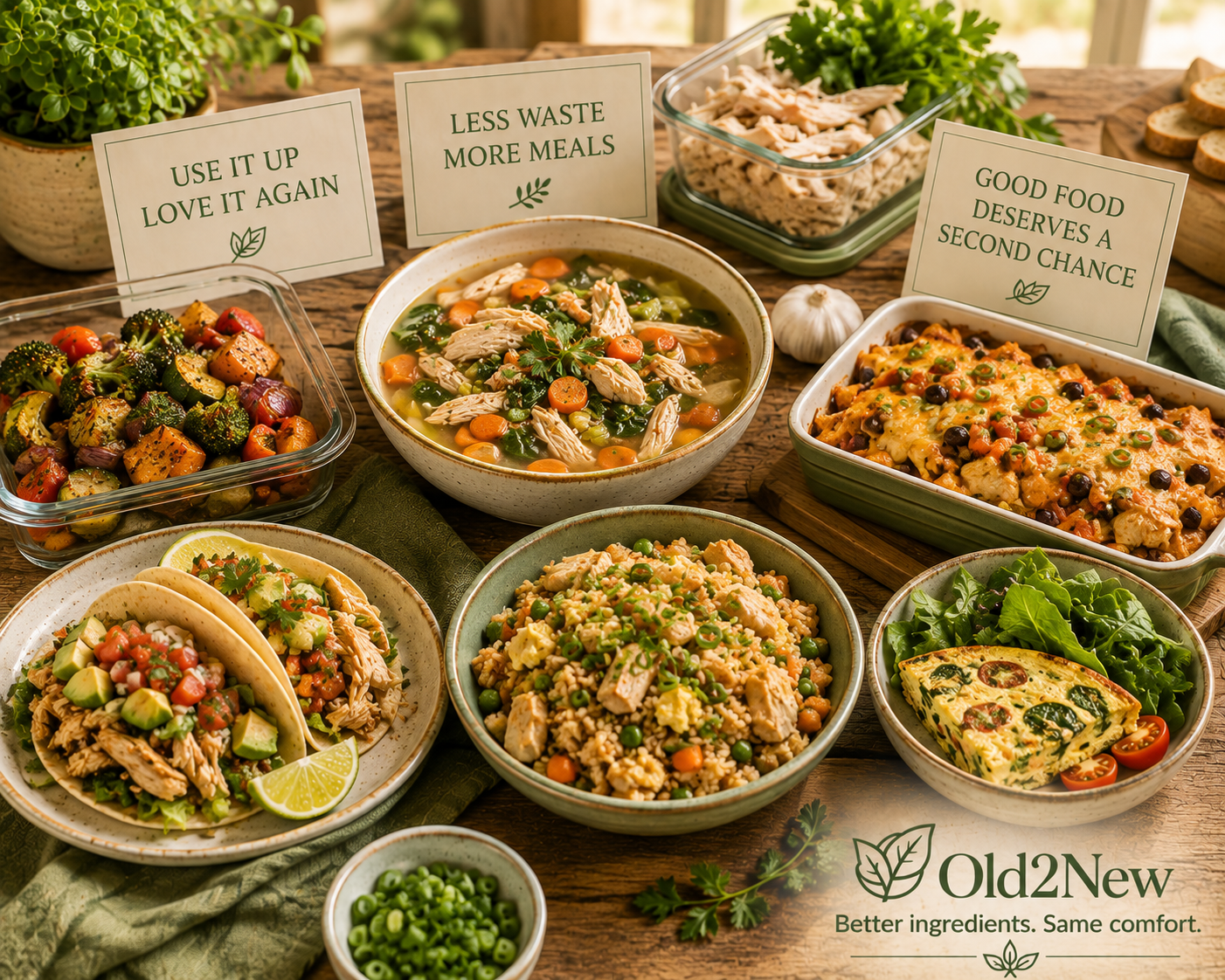
But most leftovers aren't locked into being what they were the first time. The cooked chicken doesn't have to be served the same way it was last night. The roasted vegetables don't have to appear on the plate exactly as they did before.
The ingredients are already cooked, already seasoned, already ready. The only thing that needs to change is what you do with them next.
Some directions a single ingredient can go:
Leftover grilled or roasted chicken — chicken tacos with quick toppings, chicken soup with broth and vegetables, fried rice with eggs and soy sauce, a grain bowl over whatever grain is in the pantry, quesadillas, a pasta dish with a simple sauce.
Roasted vegetables — stirred into pasta with olive oil and parmesan, folded into an omelet or frittata, blended into a soup with broth, layered into a grain bowl, used as a pizza topping.
Cooked rice or grains — fried rice with eggs and whatever vegetables are on hand, stuffed peppers, a rice bowl with different toppings than last time, soup base, grain salad with dressing and add-ins.
Leftover chili or stew — spooned over baked potatoes, used as a filling for stuffed peppers, stirred into a pasta dish, served over rice or grains as a different presentation entirely.
The ingredients stay. The meal changes. That's transformation.
Start With What You Already Have
Most people approach meal planning by shopping first and cooking from there. The list comes before the kitchen.
Recipe transformation flips that around.
Instead of starting with a recipe and buying what it requires, you start with what's already in your kitchen — and build toward something worth eating from there.
The questions that matter are:
- What protein do I already have? (Cooked chicken, beans, eggs, leftover meat, canned fish)
- What vegetables need to be used before they go bad?
- What grains, pasta, or bread are already in the pantry?
- What simple additions — broth, olive oil, eggs, cheese, canned tomatoes, spices — could pull it all together?
Most of the time, the answer is a real meal. Not a compromise, not a cleanup dish — an actual meal that uses what's there and produces something you'd choose to eat.
Small Additions That Transform Leftovers
The difference between "I guess I'll have leftovers" and "I'm making something new" is often just one or two additions.
Add broth and vegetables to leftover meat — almost any cooked protein turns into a soup or stew with good broth, a handful of vegetables, and twenty minutes on the stove. The protein is already cooked, which means the whole thing comes together faster than starting from scratch.
Turn roasted vegetables into a frittata — whatever vegetables are in the refrigerator go into a pan, eggs get poured over them, and ten minutes in a moderate oven produces something that doesn't look or feel like a leftover at all.
Use leftover grains as a fried rice base — day-old rice works better for fried rice than fresh rice does. Scrambled eggs, whatever vegetables are on hand, soy sauce or another seasoning, and leftover rice becomes a complete meal in under fifteen minutes.
Wrap it — almost any protein and vegetable combination becomes a different meal when it goes into a wrap with a sauce or condiment. Leftover chicken with salsa becomes a taco. Leftover vegetables with hummus becomes a lunch wrap. The same ingredients feel new in a different format.
Layer it into a grain bowl — cooked grains as a base, leftover protein on top, whatever vegetables are available, a simple dressing or sauce. This is the most flexible format for leftovers because it works with almost any combination and always produces something that looks intentional.
The common thread is that none of these require a new grocery trip. They require looking at what's already there and making one or two decisions about what to add.
Why This Matters Beyond the Meal
Using leftovers well isn't just about avoiding food waste — though that's a real benefit. A third of all food produced globally is wasted, and most of it happens at the household level. Small decisions about what to do with Wednesday's leftovers actually add up.
But the more immediate benefit is financial. Every ingredient you use instead of throwing away is one you don't need to replace at the grocery store. A week of actually using what's in the refrigerator before it goes bad adds up to real savings — and often produces more interesting meals than sticking rigidly to a plan.
There's also something satisfying about it. Turning yesterday's chicken into tonight's tacos feels like a small creative win in a way that following a recipe exactly doesn't. You made something from what you had.
Every Ingredient Deserves a Second Chance
Old2New believes every ingredient deserves a second chance. The recipes you already love, the proteins already in your refrigerator, the vegetables that need to be used — all of it has more potential than it might seem at first glance.
Sometimes the best meal isn't one you planned. It's the one you create from what was already there.
That's the heart of recipe transformation.
The Bottom Line
Great meals don't always start with a grocery trip. Sometimes they start with what's already in the refrigerator — cooked, ready, and waiting to become something new.
The shift is in how you look at it. Not "I have to eat this again" but "what can I make with this?"
Good food deserves a second chance.
Better ingredients. Same comfort.
Frequently Asked Questions
How do I stop wasting food at home?
The most practical starting point is changing how you look at leftovers — not as meals you have to eat again, but as ingredients for something new. Cooked chicken becomes tacos. Roasted vegetables become an omelet. Leftover rice becomes fried rice. The key is seeing the components rather than the original dish.
What can I make with leftover chicken?
Leftover chicken works in tacos, soups and stews, fried rice, grain bowls, pasta dishes, quesadillas, wraps, and salads. Because it's already cooked and seasoned, it comes together faster than starting from scratch — you're just applying it to a new context.
How do I make leftovers taste different?
Change the format, the sauce, or both. Leftover chicken that felt boring as a main dish becomes interesting in a taco with salsa and lime. Roasted vegetables that felt repetitive on a plate feel new folded into an omelet. The same ingredients taste different when they're in a different context.
What are the easiest meals to make from leftovers?
Fried rice, grain bowls, soups, frittatas, wraps, and tacos are the most flexible formats for leftovers because they work with almost any combination of protein, vegetable, and grain. They're also fast — when the main ingredients are already cooked, the whole meal comes together in fifteen to twenty minutes.
Does Old2New help with leftover ingredients?
Old2New currently transforms recipes you bring to it — taking a dish you love and rebuilding it with better ingredients based on your goals. A natural extension of that is helping you figure out what to make from the ingredients you already have. That feature is in development. In the meantime, the same transformation approach applies — look at what you have, find the meal it could become.
How do I use up vegetables before they go bad?
Soups, stir-fries, frittatas, roasted vegetable dishes, and grain bowls are the most flexible formats for using up whatever vegetables are on hand. Roasting almost any vegetable with olive oil, salt, and pepper at high heat produces something worth eating — and roasted vegetables can be used in multiple meals throughout the week.
Continue Your Recipe Transformation Journey
- What Is Recipe Transformation? — the foundation the whole library builds on
- How to Make Comfort Food Healthier — the practical approach behind every transformation
- Healthy Ingredient Swaps That Actually Taste Good — the specific swaps and why they work
- One Recipe, Four Goals — how the same dish transforms for four different health goals
- Healthy Desserts That Still Feel Like Dessert — because dessert deserves good ingredients too
- Anti-Inflammatory Comfort Food — everyday wellness through better ingredient choices
Old2New — There is good in everything.