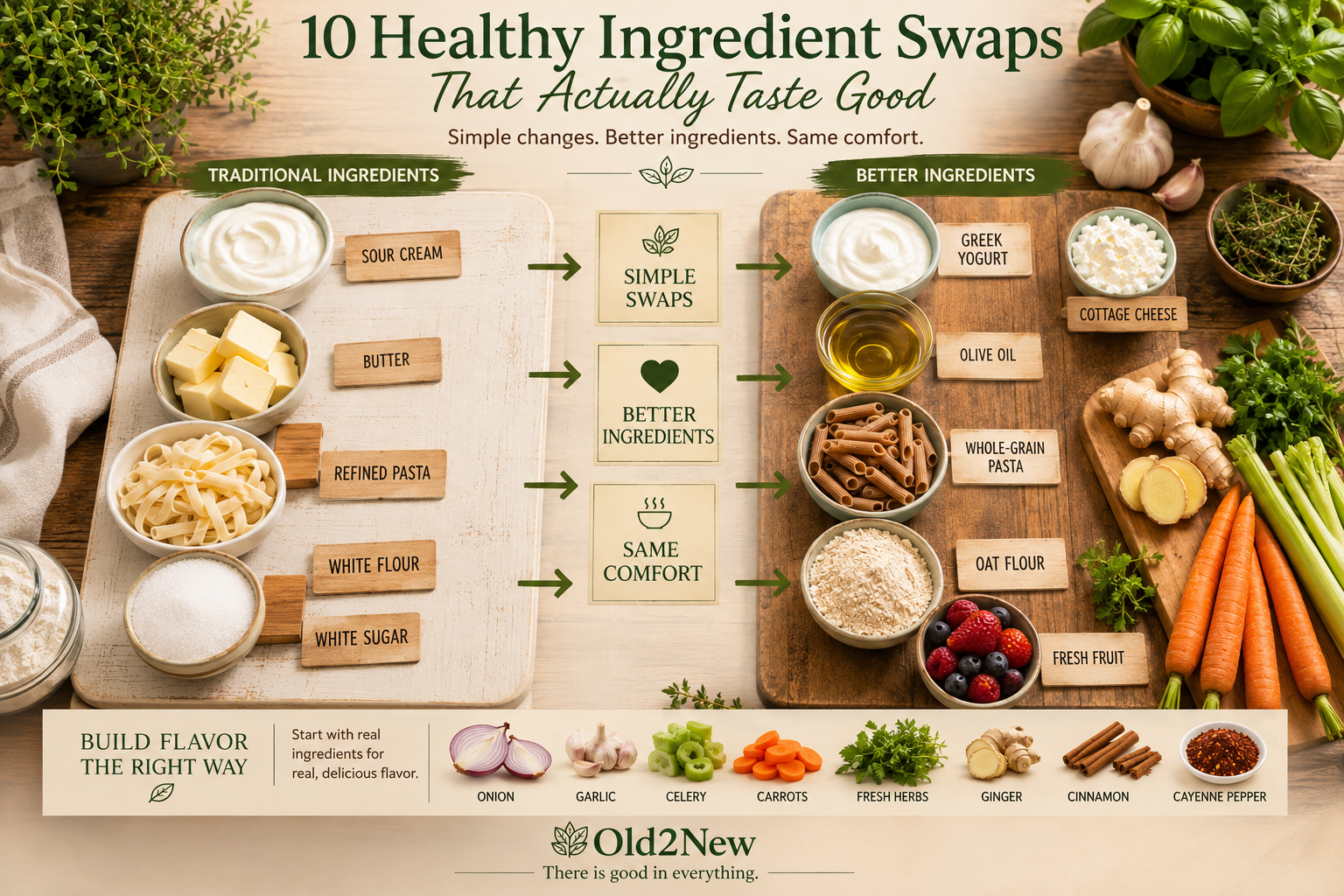
Eating healthier doesn't have to mean giving up your favorite meals.
Some of the best nutritional improvements come from changing just one ingredient — the right one, in the right dish, in a way that the finished meal still tastes like itself.
The challenge is knowing which swaps actually work. Nobody wants a brownie that tastes like cardboard or a creamy pasta sauce that suddenly isn't creamy. The swaps worth making are the ones you barely notice — except for how they quietly improve what the dish is doing for you.
Here are ten that consistently deliver.
1. Greek Yogurt Instead of Sour Cream
This is the most universally useful swap in the list. Greek yogurt has a nearly identical texture and tang to sour cream, significantly more protein, and a cleaner fat profile. In most applications, the finished dish is indistinguishable.
Use it in: baked potatoes, tacos, dips, sauces, soups, casseroles, and baked goods where sour cream adds moisture.
One technique note: in hot cooked applications, add Greek yogurt off the heat — high temperatures can cause it to separate. Stir it in at the end and don't boil.
2. Whole Grain Pasta Instead of Refined Pasta
Same dish, same sauce, same presentation. The texture is slightly nuttier the first time and most people stop noticing after that. The fiber content is higher and the effect on blood sugar is more gradual.
Works in: spaghetti, lasagna, mac and cheese, pasta bakes, pasta salads — essentially any pasta dish.
If the texture transition feels like too much at once, start with a half-and-half blend of whole grain and refined pasta in the same dish. Most people can't detect it and it eases the adjustment.
3. Olive Oil Instead of More Heavily Processed Fats
In most savory cooked applications, olive oil performs as well as butter or vegetable oil while providing a different fat profile and its own layer of flavor. It's not always interchangeable — it doesn't work the same way in baking or in applications where butter's specific properties matter — but for everyday cooking it covers a lot of ground.
Best for: sautéing aromatics, roasting vegetables, finishing pasta, making dressings and marinades, pan-cooking proteins.
Extra-virgin olive oil has the most flavor and is best for finishing and dressings. Regular olive oil has a higher smoke point and works better for high-heat cooking.
4. Blended Cottage Cheese for Creaminess and Protein
This one surprises people — and then converts them. When cottage cheese is blended completely smooth, it creates a rich, protein-dense base that behaves like a cream sauce in most applications. The texture is indistinguishable. The flavor is mild enough that most people eating the finished dish can't identify it.
Use it in: Alfredo-style sauces, mac and cheese, lasagna filling, creamy soups, dips, mashed potatoes, and cheesecake-style desserts.
The key is blending until completely smooth — any remaining graininess is a sign it needs more time. A high-powered blender or immersion blender works best.
5. Fresh Herbs Instead of Relying Only on Salt
Fresh basil, parsley, cilantro, thyme, rosemary, dill, and oregano add layers of flavor that dried herbs and extra salt don't replicate. Used generously, they can transform a dish that tastes flat into one that tastes alive — and often reduce the need for salt in the process.
Works in: almost everything. Pasta sauces, soups, roasted vegetables, grain bowls, dips, dressings, eggs, and anywhere a dish needs brightness.
Add hardy herbs (rosemary, thyme, oregano) early in cooking so they release their flavor. Add delicate herbs (basil, parsley, cilantro, dill) at the end so they don't wilt.
6. Beans and Lentils for Fiber and Protein
Folding beans or lentils into a dish that already has protein and starch increases the fiber content meaningfully and adds substance without changing the flavor profile in any dramatic way. In many dishes — chili especially — they improve it.
Add them to: soups, chili, pasta sauces, tacos, casseroles, grain bowls, and salads.
Canned beans are already cooked and just need to be rinsed and added. Lentils cook in about 20 minutes and don't need soaking. Either works in any dish where you'd otherwise just add more of the main protein.
7. Vegetables Mixed Into Familiar Dishes
Instead of serving vegetables alongside a dish, fold them into it. This increases the fiber and nutrient content of the meal while adding volume — more food, less of the ingredient you're trying to moderate, and the same serving size.
Vegetables that disappear into dishes: spinach (wilts down to nothing in cooked dishes), mushrooms (add substance and umami to meat-based dishes), zucchini (nearly invisible in sauces and baked goods), bell peppers (add color and mild sweetness), carrots (add natural sweetness and texture to soups and stews).
The goal isn't to hide vegetables. It's to make the dish more complete.
8. Nuts and Seeds for Texture and Healthy Fats
Used as toppings, mixed into batters, or stirred into dishes, nuts and seeds add crunch, healthy fats, and nutrients in a way that changes the texture of a dish without dramatically changing the flavor.
Best uses: toppings for oatmeal and yogurt, mixed into granola and energy bites, scattered over salads and grain bowls, stirred into baked goods, used as a topping for cobblers and crisps in place of breadcrumbs.
Best options for different applications: walnuts for baking and salads, almonds for crunch, pumpkin seeds for a neutral flavor that works anywhere, chia seeds for thickening smoothies and overnight oats, sunflower seeds for snacking.
9. Fruit for Natural Sweetness
Fresh and dried fruit add sweetness, color, and texture to dishes while contributing fiber and nutrients that refined sugar doesn't provide.
In savory dishes: sliced peaches or mango on tacos, dried cranberries in grain salads, apple slices in a slaw, pomegranate seeds over roasted vegetables.
In baked goods: mashed banana or unsweetened applesauce can replace some of the sugar or fat, adding natural sweetness and moisture. Dates blended into a paste work as a concentrated natural sweetener in many desserts.
The flavor shift is worth noting — a banana-sweetened muffin tastes like bananas. These swaps work best when the fruit flavor complements the dish rather than competing with it.
10. Build Flavor From the Beginning
This one isn't a single ingredient swap — it's a cooking approach that changes how much you need everything else.
Dishes that start with well-developed aromatics — onion, garlic, celery, carrots, ginger, and spices like cumin, paprika, and cinnamon — don't need as much salt, sugar, or fat to taste good. The flavor foundation is already there.
The practical version:
- Cook onion and garlic until soft and fragrant before adding anything else
- Toast spices briefly in the pan before adding liquid
- Use carrot, celery, and onion (the classic mirepoix) as the base for soups, stews, and sauces
- Add a pinch of cayenne, smoked paprika, or fresh ginger to dishes that taste flat
Building flavor from the beginning often means the dish needs less of everything you might be trying to reduce — salt, sugar, butter, cream — because the depth is already there.
The Best Swap Is the One You'll Keep Using
Healthy cooking isn't about making every change overnight. It's about finding the swaps that fit the way you cook and the dishes your family actually eats — and using them consistently enough that they become your new normal.
Start with one. Make the dish the way you usually would, change one ingredient, and see how it goes. If it works, it becomes the new default. If it doesn't quite land, try something different next time.
Small improvements, repeated consistently, produce results that dramatic overhauls rarely do.
Better ingredients. Same comfort.
Frequently Asked Questions
What is the best healthy ingredient swap to start with?
Greek yogurt in place of sour cream is the most universally applicable starting point. It works in more dishes than almost any other swap, requires no technique change, and most people can't taste the difference in the finished dish.
Do healthy ingredient swaps change the taste of food?
Good swaps are chosen because they behave similarly to the ingredient they replace — same texture, same function, close enough in flavor that you stop noticing. There's usually a short adjustment period the first few times, and then the new version becomes familiar.
Can I use multiple swaps in the same recipe?
You can, but starting with one at a time makes it easier to identify what's working. If you change five ingredients and the dish doesn't taste right, you don't know which change caused the problem. One swap at a time gives cleaner feedback.
Which swap makes the biggest nutritional difference?
It depends on the dish, but replacing refined pasta with whole grain or legume-based pasta and adding blended cottage cheese to creamy sauces tend to produce the largest nutritional shifts with the smallest flavor impact. Greek yogurt for sour cream is the most broadly applicable.
Are these swaps good for specific health goals?
Most of these swaps support multiple health goals — more fiber, more protein, less refined carbohydrate, better fat profile. Old2New can apply swaps targeted to your specific goal (GLP-1 friendly, high protein, Mediterranean, diabetic-friendly, anti-inflammatory) rather than applying generic improvements.
How does Old2New choose ingredient swaps?
Old2New looks at the recipe you bring to it and identifies swaps based on your specific health goals — prioritizing changes that improve the nutritional profile in the direction you need while keeping the dish recognizable. The goal is always to preserve what makes the dish worth eating.
Continue Your Recipe Transformation Journey
- What Is Recipe Transformation? — the foundation the whole library builds on
- How to Make Comfort Food Healthier — the practical approach behind every transformation
- Healthy Ingredient Swaps That Actually Taste Good — a deeper look at why specific swaps work
- How to Make a Recipe Healthier Without Losing the Flavor — the one-swap-at-a-time approach
- Stop Throwing Away Food — how to turn leftovers into meals worth eating
- Healthy Desserts That Still Feel Like Dessert — because dessert deserves good ingredients too
Old2New — There is good in everything.