Seasonal Produce Guide: What to Buy Throughout the Year
Walk into the produce section in June and the strawberries look extraordinary — deeply red, fragrant, priced reasonably, and genuinely worth eating. Walk in the same store in December and the strawberries are pale, watery, expensive, and picked before they had a chance to develop the flavor that made them worth buying in June. Same product, same aisle, completely different experience.
That difference is season — and understanding it is one of the simplest ways to improve grocery shopping without changing what you cook.
Seasonal produce isn't a complicated concept or a lifestyle commitment. It's the observation that fruits and vegetables have times of year when they're most abundant, most flavorful, and most economical — and times when they're the opposite. Buying with that rhythm in mind produces better-tasting meals at lower cost, introduces natural variety to the weekly shopping without requiring new recipes, and reduces the food waste that comes from buying out-of-season produce that never tastes quite right and gets eaten reluctantly or not at all.
You don't need to memorize a harvest calendar. Knowing the general seasonal patterns and using them as a starting point in the produce section is enough.
Why Seasonal Produce Matters
The practical advantages of seasonal produce come down to three things: flavor, price, and variety.
Flavor is the most immediately noticeable. A tomato ripened on the vine in August and bought at a farmers market or grocery store that sources locally tastes like a tomato is supposed to taste — sweet, acidic, complex, with a texture that holds up to slicing. A tomato shipped from thousands of miles away and ripened artificially during transit to appear red on the shelf is a completely different eating experience. The same principle applies across virtually every fruit and vegetable: strawberries in May are not the same as strawberries in November, regardless of what the label says.
Price tends to follow abundance. When a crop is at peak harvest and supply is high, prices fall. When produce is shipped long distances and out of season, prices are higher and quality is lower simultaneously — the worst possible combination. Buying what's plentiful and in season typically produces better food for less money.
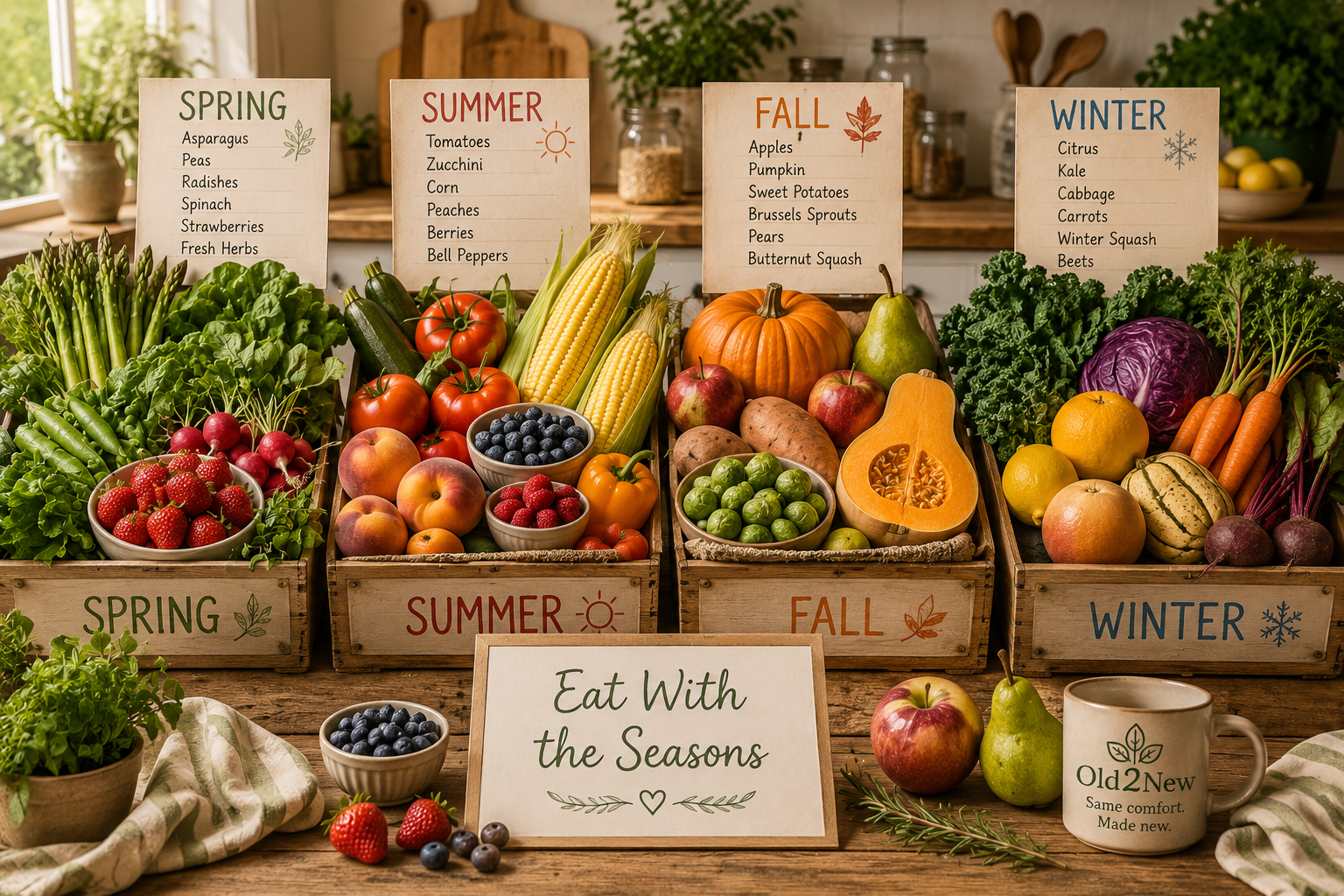
Variety is the benefit most people underestimate. Buying the same fruits and vegetables every week produces meals that feel repetitive over time. The seasons naturally introduce new ingredients — asparagus in spring, corn and tomatoes in summer, squash and apples in fall, citrus and root vegetables in winter — that add variety to the weekly cooking without requiring research or new recipes. The same dishes made with seasonal ingredients taste different throughout the year in ways that feel natural rather than forced.
Spring Produce
Spring brings lighter, fresher ingredients back into the kitchen after the heavier root vegetables and storage crops of winter. The defining quality of spring produce is brightness — tender vegetables that cook quickly, fresh herbs that have overwintered indoors or just emerged, and early fruits that signal the warmer season arriving.
Asparagus is the most emblematic spring vegetable — available for a relatively short window and at its best when the stalks are firm and the tips are tight. It roasts in 12 minutes at 425°F, pairs with eggs, pasta, and grain dishes, and tastes like nothing that comes from a can or the frozen aisle. When asparagus is good and reasonably priced, it's worth building several meals around it.
Peas — either fresh or frozen at the peak of spring quality — add sweetness and bright color to pasta dishes, grain bowls, soups, and omelets. Spinach and leafy greens are at their most tender in spring, before summer heat makes them bitter. Radishes add crunch and a peppery bite to salads and grain bowls. Strawberries arrive at the end of spring and deserve to be eaten as simply as possible — on yogurt, over oatmeal, on their own — while they're at their peak.
Fresh herbs begin their outdoor growing season in spring: parsley, chives, cilantro, dill, and mint are all at their most vigorous and most affordable. A small pot of fresh herbs on a sunny windowsill provides fresh herb availability for months.
Spring produce works naturally in pasta dishes with olive oil and garlic, omelets and frittatas, fresh salads, grain bowls, and soups where the vegetables can remain slightly crisp rather than being cooked down into something soft.
Summer Produce
Summer is the peak of the produce calendar — the season when variety is at its widest, flavor is at its most concentrated, and the case for cooking with fresh ingredients is at its strongest. The abundance of summer is worth leaning into.
Tomatoes are the signature summer ingredient and one that most dramatically illustrates the difference between in-season and out-of-season produce. A ripe summer tomato — thick-sliced with olive oil and sea salt, or quickly simmered into a pasta sauce with garlic and fresh basil — is one of the most genuinely pleasurable eating experiences available. The same dish made with January tomatoes is a pale approximation. When summer tomatoes are good, use them for everything: pasta sauce, bruschetta, salads, sandwiches, shakshuka, grain bowls, and eating straight with salt.
Zucchini and summer squash are among the most useful summer vegetables because they cook quickly, absorb surrounding flavors, and work in a wide range of applications — grilled, roasted, sautéed, in pasta, in baked goods as a moisture-adding ingredient, in soups, and in grain bowls. They're also typically very affordable when in season and available in abundance from home gardens.
Corn, cucumber, bell peppers, and green beans are summer staples that add color and sweetness to salads, stir fries, grain bowls, and simple side dishes. Peaches, plums, and cherries are summer stone fruits at their peak — worth eating fresh, adding to oatmeal and yogurt, and using in simple desserts while their season lasts. Berries of all kinds — blueberries, blackberries, raspberries — reach their peak in summer and are worth buying fresh for snacking and baking while the quality is highest.
Summer produce works best with preparations that showcase rather than transform it — simple roasting, quick sautéing, raw in salads, and minimal additions that let the ingredient's natural flavor carry the dish.
Fall Produce
Fall produce is where seasonal eating and comfort food meet most naturally. The ingredients of fall — sweet potatoes, winter squash, apples, Brussels sprouts, cauliflower, and root vegetables — are the building blocks of the warming, satisfying dishes that define the season.
Apples are the most versatile fall fruit and one that works in both sweet and savory applications with equal success. Sliced into oatmeal with cinnamon. Diced into a salad with walnuts and sharp cheddar. Folded into stuffing. Roasted alongside pork. Turned into a simple crisp with an oat and honey topping. The variety of apple matters for different applications — tart Granny Smith holds its shape in cooking, while sweet Honeycrisp and Fuji are better for fresh eating.
Sweet potatoes and butternut squash become deeply sweet and caramelized when roasted at high heat — one of the most satisfying and visually appealing vegetable preparations possible. Both also blend beautifully into soups that need no cream to be creamy. Pumpkin, whether freshly roasted or from a can, goes into oatmeal, muffins, pancakes, soups, and pasta sauces with equal ease.
Brussels sprouts roasted at high heat until the edges are charred and slightly crispy are a completely different ingredient from the boiled Brussels sprouts that gave them their bad reputation. They caramelize beautifully alongside bacon or turkey bacon, dried cranberries, and a drizzle of balsamic. Cauliflower and broccoli are at their best quality in fall and early winter, when cool weather produces tight, dense heads with concentrated flavor.
Fall produce pairs naturally with warming spices — cinnamon, nutmeg, smoked paprika, sage, rosemary, and thyme — that deepen the seasonal character of the dishes.
Winter Produce
Winter produce is less dramatic than summer's abundance but genuinely excellent in its own right. The defining quality is depth rather than brightness — vegetables that have concentrated their sugars through cold weather and fruit that provides sweetness and acidity at a time when other fresh options are limited.
Citrus is the most valuable winter produce category: oranges, grapefruit, lemons, limes, and mandarins are at peak quality in winter when little else is. Their juice and zest brighten salads, marinades, dressings, pasta, fish, chicken, and soup in a way that lifts the heaviness of winter cooking. A squeeze of lemon over almost any winter dish makes it taste more alive.
Root vegetables — carrots, parsnips, beets, turnips, and celeriac — are at their sweetest after cold weather has converted their starches to sugars. Roasted together on a sheet pan with olive oil and herbs, they become deeply caramelized and satisfying. Slow-cooked in soups and stews, they provide body and sweetness.
Kale and other hearty winter greens become more tender and sweet after frost and hold up to longer cooking times better than delicate spring and summer greens. Cabbage, often overlooked, is one of the most economical and versatile winter vegetables — it becomes a crunchy slaw, a warm braised side, an addition to soups, or a stuffed preparation with grain and protein filling.
Produce Available Year-Round
Many of the most commonly purchased produce items are available year-round through modern distribution systems — bananas, apples, carrots, potatoes, onions, garlic, avocados, and various citrus fruits appear in grocery stores regardless of season because they store well or are sourced from regions with different growing seasons.
This is not a problem. Seasonal eating is not a rule that requires buying only what's locally in season — it's a strategy for finding the best-quality, best-priced produce at any given time of year. If your family eats apples year-round and the apples in the store are good quality, buy them year-round. The seasonal guide is a tool for improving grocery trips, not a restriction on what can be purchased.
The practical application is using seasonal awareness as a starting point in the produce section — noticing what looks particularly good, what's priced favorably, and what might be worth building a meal around this week — rather than defaulting to the exact same produce every shopping trip regardless of what's actually at peak quality.
When Fresh Isn't Available: Frozen and Canned
Seasonal eating doesn't require only fresh produce. Frozen fruits and vegetables are picked and processed at peak ripeness, which means they often deliver better flavor than out-of-season fresh produce from distant growing regions. Frozen berries in winter, frozen peas in fall, frozen corn in spring — all are legitimate seasonal alternatives that perform as well as fresh in cooked applications.
Canned produce has a similar role. Canned tomatoes are the foundation of pasta sauce, chili, and soup year-round because they're processed at peak summer quality and store for a year or more. Canned pumpkin is more convenient than roasting fresh pumpkin and performs identically in oatmeal, pancakes, muffins, and soups. Canned corn, peaches, and pears work in applications where fresh isn't available or affordable.
When choosing canned produce, looking at the label for products packed without added salt, sugar, or heavy syrups produces the most versatile and nutritious options — the vegetable or fruit without modifications is the most useful pantry ingredient.
Buying What You'll Actually Use
The most important principle in seasonal produce shopping, regardless of what's technically in season, is buying what will actually be used. A beautiful pile of fresh summer vegetables isn't a health achievement if half of it wilts before being cooked. A gorgeous basket of fall apples doesn't improve the week's eating if nobody makes room for them in the meal plan.
Before putting seasonal produce in the cart, the useful question is: what am I going to do with this? If there's a specific meal or several meals in mind, it goes in the cart. If it's being bought because it looks good without a plan for using it, the risk of food waste is real. Better to buy a smaller quantity with a clear purpose than a larger quantity based on enthusiasm that fades by Thursday.
FAQ
Do I need to buy from a farmers market to eat seasonally? No — regular grocery stores stock seasonal produce, and the quality and price signals are visible. When strawberries are bright red, plentiful, and reasonably priced in the grocery store produce section, they're in season even if they came from a commercial operation rather than a local farm. The same cues that indicate quality also indicate seasonality in most cases.
What if I don't like the seasonal vegetables? Eating seasonally doesn't require eating things you don't enjoy. If fall squash doesn't appeal to your household, you're not obligated to cook with it simply because it's in season. The goal is to let seasonal availability inform and inspire grocery choices, not to restrict them. Use the produce that's at peak quality as an opportunity to try something in a new preparation — roasted butternut squash soup is a different experience from butternut squash that was boiled and presented as a side dish.
Are imported out-of-season fruits always worse? Not always — some fruits (bananas, mangoes, pineapple) come from tropical regions where the growing conditions and climate produce excellent quality year-round, and there's no meaningful local season to defer to. The seasonal produce concept applies most directly to temperate-climate fruits and vegetables that are genuinely better at certain times of year in the growing regions that supply most grocery stores.
Continue Your Recipe Transformation Journey
Seasonal produce is one of the most natural ways to add variety and freshness to familiar meals. These guides will help you use it well:
- Easy Ways to Add More Vegetables Without Anyone Noticing — how to work seasonal vegetables into existing dishes
- Fresh vs. Frozen Vegetables — when frozen is the better seasonal alternative
- Healthy Grocery Shopping on a Budget — how seasonal buying reduces produce costs
- How to Shop the Perimeter of the Grocery Store — where to find the best seasonal produce in the store
- Easy Sheet Pan Dinners — the best format for showcasing seasonal roasted vegetables
Old2New — There is good in everything.