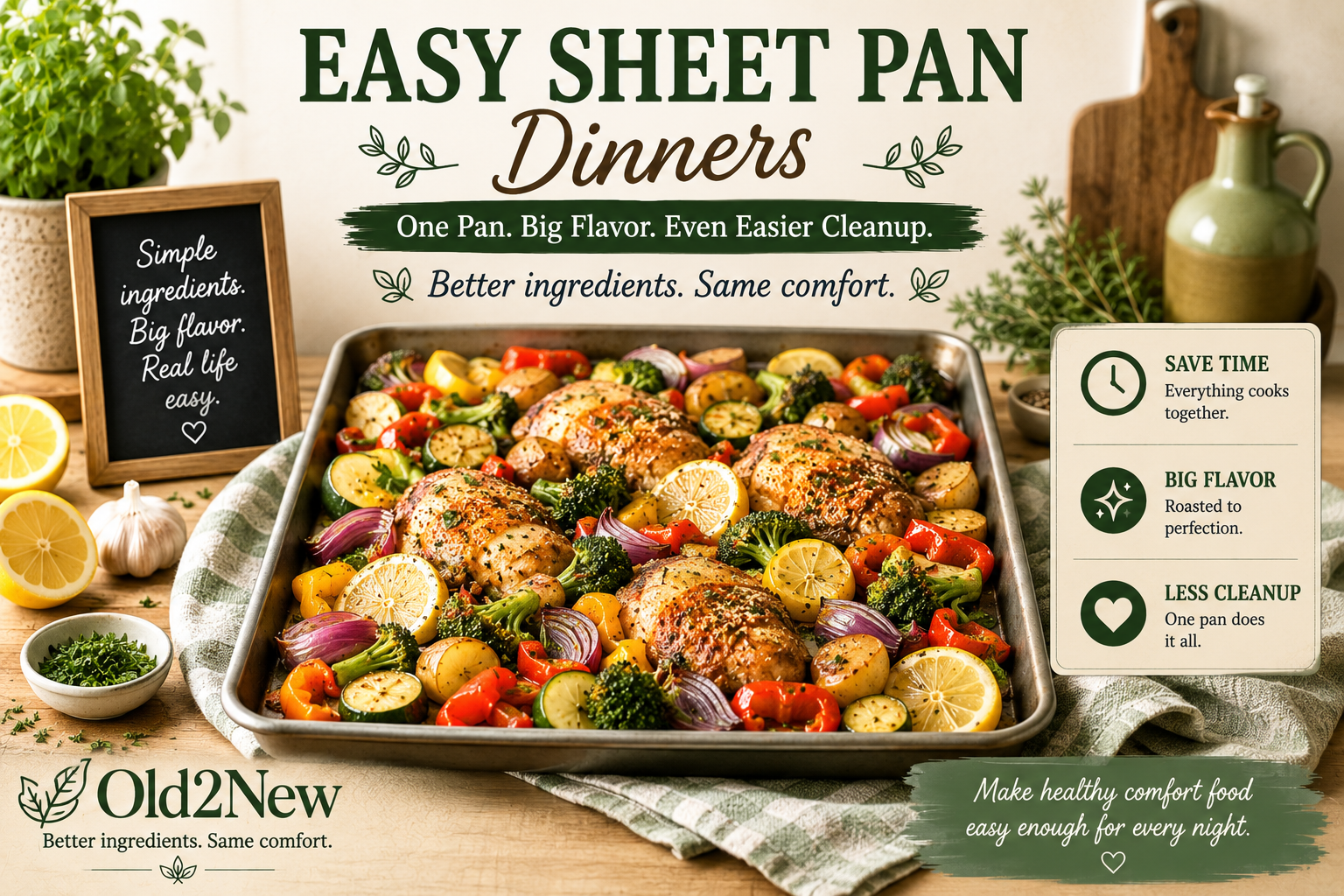
Easy Sheet Pan Dinners
The sheet pan dinner is one of the most useful concepts in weeknight cooking — not because it's innovative or trendy, but because it solves the actual problem of weeknight dinner. That problem isn't finding a recipe. It's having a protein, a vegetable, and a starch ready at the same time with minimal active attention and a manageable amount of cleanup afterward.
A sheet pan dinner handles all of this. Everything goes on one pan, goes into a hot oven, and comes out 20 to 40 minutes later as a complete meal. The protein roasts alongside the vegetables and absorbs their flavors. The vegetables caramelize in the fat from the protein and the olive oil. Everything finishes at approximately the same time if the components are chosen and sized thoughtfully. And cleanup is one pan and a cutting board.
It's the format that makes the healthy-ingredients-real-food approach to cooking sustainable on a Tuesday when everyone is tired and dinner needs to happen.
Why Sheet Pan Dinners Work
The oven does the work that would otherwise require standing over a stovetop monitoring multiple pots. Once the pan goes in, the meal runs itself for the next 25 to 40 minutes — which is time that can be spent doing anything else. The high, dry heat of the oven caramelizes the natural sugars in vegetables and creates a crust on protein that stovetop cooking at typical home temperatures often doesn't achieve. Everything on the same pan shares the cooking environment, which means flavors cross-pollinate — chicken thigh juices drip onto the vegetables below and season them; garlic and herbs placed under the protein flavor the whole pan as they cook; tomatoes burst and create a sauce that pools around whatever is nearby.
The format is also inherently portion-balanced because the pan contains exactly what was planned to go in it. There's no pot of pasta sitting on the counter inviting a second serving. The meal is the pan.
The Sheet Pan Formula
Almost every sheet pan dinner that works follows the same four-part structure: protein, vegetables, healthy fat, and seasoning. The specific ingredients within each category change with the season, what's available, and what sounds good — but the structure stays constant.
Protein plus vegetables plus fat plus seasoning equals dinner. Chicken thighs with broccoli, baby potatoes, garlic, lemon, and olive oil — dinner. Salmon with asparagus, cherry tomatoes, capers, and herbs — dinner. Shrimp with bell peppers, zucchini, mushrooms, and garlic — dinner. Turkey sausage with Brussels sprouts, sweet potatoes, and onion — dinner.
Once the formula is internalized, shopping and planning become simpler because the decision is just about which protein and which vegetables, not about following a specific recipe. Any protein that roasts well plus any vegetables that roast well plus olive oil and seasoning equals a sheet pan dinner.
Best Proteins for Sheet Pan Cooking
The proteins that work best on a sheet pan are the ones that roast evenly at oven temperatures and don't require constant attention.
Bone-in, skin-on chicken thighs are the most forgiving sheet pan protein — the fat in the skin self-bastes the chicken as it cooks, the bone slows the cooking slightly and helps the meat stay juicy, and the skin becomes genuinely crispy at high heat in a way that skinless chicken doesn't. Boneless chicken breast cooks faster (20 to 25 minutes versus 35 to 45 for bone-in thighs) and works well when cut into similar-sized pieces or pounded to even thickness. Salmon fillets roast beautifully in 12 to 15 minutes at 400°F and stay moist within their natural fat content — they go onto the pan last in a mixed sheet pan dinner because they cook the fastest. Shrimp cook in 8 to 10 minutes and should be added for the final portion of the roasting time. Turkey or chicken sausage, sliced into rounds or left whole, adds flavor to everything around it and needs 20 to 25 minutes. Lean pork tenderloin roasts in 20 to 25 minutes and pairs particularly well with root vegetables and apple. Chickpeas roasted until crispy add protein and crunch to vegetable-forward sheet pan meals.
Vegetables That Roast Beautifully
Most vegetables improve with roasting — the high heat concentrates their natural sugars, caramelizes the cut surfaces, and creates a texture that steaming or boiling never achieves. But not all vegetables roast in the same amount of time, which is the most important consideration when combining them on a sheet pan.
Root vegetables and starches (sweet potatoes, baby potatoes, carrots, beets, parsnips) take the longest — 30 to 45 minutes at 400°F to 425°F. They should go onto the pan first, or be cut smaller than other vegetables to account for the longer cooking time. Cruciferous vegetables (broccoli, cauliflower, Brussels sprouts) take 20 to 30 minutes and develop the most flavor when roasted at high heat until their edges are slightly charred. Bell peppers, onions, and zucchini take 20 to 25 minutes and are ideal for the same pan as chicken thighs. Mushrooms take 15 to 20 minutes and work best when not crowded — they release a lot of moisture and need space to evaporate it. Cherry tomatoes take 15 to 20 minutes, burst and release their juice, and essentially create a sauce around whatever is nearby. Green beans and asparagus take 10 to 15 minutes and should go in for the final portion of cooking time.
Cutting vegetables into similar sizes ensures they cook at the same rate regardless of variety.
Simple Seasoning Combinations
The seasoning is what gives a sheet pan dinner its character — the same chicken and broccoli with lemon and herbs tastes entirely different from chicken and broccoli with smoked paprika and cumin. Having a few reliable seasoning combinations memorized means the decision of what to make is essentially made once the protein and vegetables are chosen.
Lemon garlic — minced garlic, lemon zest and juice, olive oil, black pepper, and fresh parsley added after cooking. Works on chicken, salmon, shrimp, asparagus, and potatoes. The most versatile combination and the one that pairs with the widest range of ingredients.
Italian herb — dried basil, oregano, thyme, garlic, olive oil, and a little parmesan added in the last five minutes. Works on chicken, turkey sausage, zucchini, tomatoes, and bell peppers. The combination that makes a sheet pan dinner taste like something from an Italian kitchen.
Smoky southwest — smoked paprika, cumin, chili powder, garlic powder, and olive oil. Works on chicken, shrimp, sweet potatoes, bell peppers, and onions. Serve with corn tortillas for a sheet pan fajita dinner.
Rosemary and thyme — dried rosemary, fresh or dried thyme, garlic, olive oil. The classic pairing for chicken, pork tenderloin, potatoes, and carrots. A straightforward combination that reliably produces a deeply comforting dinner.
Honey Dijon — Dijon mustard, honey, garlic, and olive oil whisked together and brushed over the protein before roasting. Creates a caramelized glaze that's particularly good on chicken and salmon.
Sheet Pan Dinner Ideas That Work
Lemon Garlic Chicken — Bone-in chicken thighs with baby potatoes and broccoli, tossed with olive oil, minced garlic, lemon zest, and fresh rosemary. The potatoes go in first for 15 minutes, then the chicken goes on top of them with the broccoli alongside. Roast at 425°F for another 35 to 40 minutes until the chicken is cooked through and the skin is golden. Finish with fresh parsley and a squeeze of lemon. One of the most reliably excellent sheet pan dinners there is.
Mediterranean Salmon — Salmon fillets placed over a bed of halved cherry tomatoes, sliced zucchini, pitted olives, and red onion wedges, all tossed with olive oil, garlic, and dried oregano. The vegetables go in for 15 minutes first, then the salmon goes on top and the whole pan roasts for another 12 to 15 minutes. The tomatoes burst and create a sauce around the salmon. A dinner that looks like it required considerably more effort than it did.
Fajita Sheet Pan — Sliced chicken breast, bell peppers (multiple colors), and onion wedges tossed with olive oil and fajita seasoning, spread on a sheet pan and roasted at 425°F for 20 to 25 minutes until the chicken is cooked through and the vegetables have some char at the edges. Serve directly from the pan with warm corn tortillas, avocado, and Greek yogurt.
Harvest Chicken — Bone-in chicken thighs with cubed sweet potatoes, halved Brussels sprouts, and red onion, seasoned with olive oil, smoked paprika, garlic powder, and a pinch of cinnamon. Roast at 425°F for 40 minutes until caramelized. Finish with dried cranberries and toasted pecans scattered over the top. A fall and winter sheet pan dinner that's deeply satisfying.
Turkey Sausage and Vegetables — Sliced turkey sausage with broccoli florets, cubed potatoes, and sliced onion, tossed with olive oil, garlic, and Italian seasoning. Roast at 400°F for 30 minutes, tossing once halfway through. The sausage seasons everything in the pan as it cooks. A fast, filling weeknight dinner with almost no prep.
Veggie Power Pan — Chickpeas, cauliflower florets, sliced carrots, zucchini, and bell peppers tossed with olive oil, cumin, smoked paprika, and garlic powder. Roast at 425°F for 30 to 35 minutes until the chickpeas are crispy and the vegetables are golden. Serve over quinoa with a drizzle of tahini and fresh herbs. A plant-based sheet pan dinner that's genuinely satisfying.
Herb Pork Tenderloin — Pork tenderloin with green beans and baby potatoes, seasoned with olive oil, fresh rosemary, thyme, garlic, and Dijon. The potatoes go in first for 15 minutes, then the tenderloin and green beans are added and everything roasts together for another 20 to 25 minutes. A sheet pan dinner that feels slightly more special than a weeknight meal while requiring the same effort as any other.
Prep Tips for Success
The difference between a sheet pan dinner that's excellent and one that's merely adequate often comes down to a few preparation habits that take almost no extra time.
Pat proteins dry before seasoning — surface moisture prevents browning and creates steam rather than caramelization. Cut vegetables into similar sizes so they cook at the same rate — a broccoli floret the size of a walnut and one the size of a golf ball will not be done at the same time. Toss everything in oil and seasoning before it goes onto the pan rather than drizzling after — even coating produces even roasting. Spread ingredients in a single layer without crowding — this is the most commonly ignored instruction and the most important one for getting vegetables that are roasted and caramelized rather than steamed and soft. Use two sheet pans when cooking for a larger group rather than overloading one.
A wire rack set in the sheet pan allows air to circulate underneath proteins and prevents the bottom from steaming, which produces a crispier result for chicken and salmon.
Make Extra for Tomorrow
Sheet pan dinners scale easily for meal prep — the same roasted chicken and vegetables that serve four for dinner can be portioned into four lunches for the week with almost no additional effort. The components hold well in the refrigerator for four days and reheat quickly.
The real value of sheet pan leftovers is how easily they repurpose. Leftover roasted vegetables and chicken go into a grain bowl the next day with quinoa and a drizzle of dressing. Leftover shrimp and vegetables go into a wrap with hummus and spinach. Leftover roasted vegetables go into an omelet or frittata. Leftover sausage and potatoes go into a breakfast hash. The sheet pan dinner provides both dinner tonight and components for tomorrow's meal with one cooking session.
Cook with the Seasons
Sheet pan dinners adapt naturally to seasonal produce, which keeps the format from becoming repetitive and often produces the best flavor because seasonal vegetables are at their peak.
Spring brings asparagus, peas, and young carrots that roast quickly and pair beautifully with salmon and light herb seasonings. Summer brings zucchini, tomatoes, corn, and bell peppers that caramelize into something deeply sweet and pair with shrimp and chicken. Fall brings sweet potatoes, Brussels sprouts, butternut squash, and beets that develop complex, nutty flavor in the oven and pair with chicken thighs and turkey sausage. Winter brings broccoli, cauliflower, carrots, onions, and root vegetables that roast into deeply savory, warming dinners alongside heartier proteins.
Cooking with what's in season also tends to be less expensive — peak-season produce costs less than out-of-season produce and tastes significantly better.
FAQ
How do I prevent the pan from smoking in the oven? Two main causes: too much oil (use just enough to coat, not pool) and drippings from fatty proteins landing on the pan surface and burning. A wire rack set in the pan lifts proteins above their drippings and significantly reduces smoking. Lining the pan with parchment (for lower temperatures up to 425°F) or foil also helps with cleanup and reduces smoking from drippings.
Can I use parchment paper on a sheet pan? Yes — parchment paper is oven-safe up to about 425°F and makes cleanup significantly easier. For temperatures above 425°F, use foil instead, as parchment can brown and potentially smoke at very high temperatures. Don't use parchment if you want maximum caramelization on the bottom of vegetables — direct pan contact produces better browning than parchment.
What size sheet pan should I use? A half-sheet pan (18x13 inches with a 1-inch rim) is the standard for sheet pan dinners and the most practical size for home ovens. It fits most ovens and provides enough surface area for four to six portions without overcrowding. Quarter-sheet pans (13x9 inches) work for smaller quantities. Rimmed pans are essential — a flat cookie sheet lets juices run off and makes a mess.
How do I know when everything is done at the same time? Add the slowest-cooking items first and work backward. Root vegetables and large potato pieces go in first (often 15 minutes before anything else). Proteins like bone-in chicken go in after the root vegetables have a head start. Faster-cooking vegetables (broccoli, bell peppers) go in when the protein is added. Fastest-cooking proteins (shrimp, salmon) and vegetables (cherry tomatoes, green beans) go in for the final 10 to 15 minutes.
Continue Your Recipe Transformation Journey
Sheet pan dinners are one of the most practical formats for making healthy, home-cooked meals sustainable on a busy schedule. These guides will help you build on them:
- Healthy One-Pan Meals — the stovetop companion to sheet pan cooking
- Healthy Cooking Methods That Still Taste Amazing — why roasting produces such good results
- How to Cook with Herbs and Spices — the seasonings that make sheet pan dinners memorable
- Beginner's Guide to Meal Planning — how to incorporate sheet pan dinners into a weekly plan
- How to Use Leftovers Creatively — what to do with sheet pan dinner leftovers
Old2New — There is good in everything.