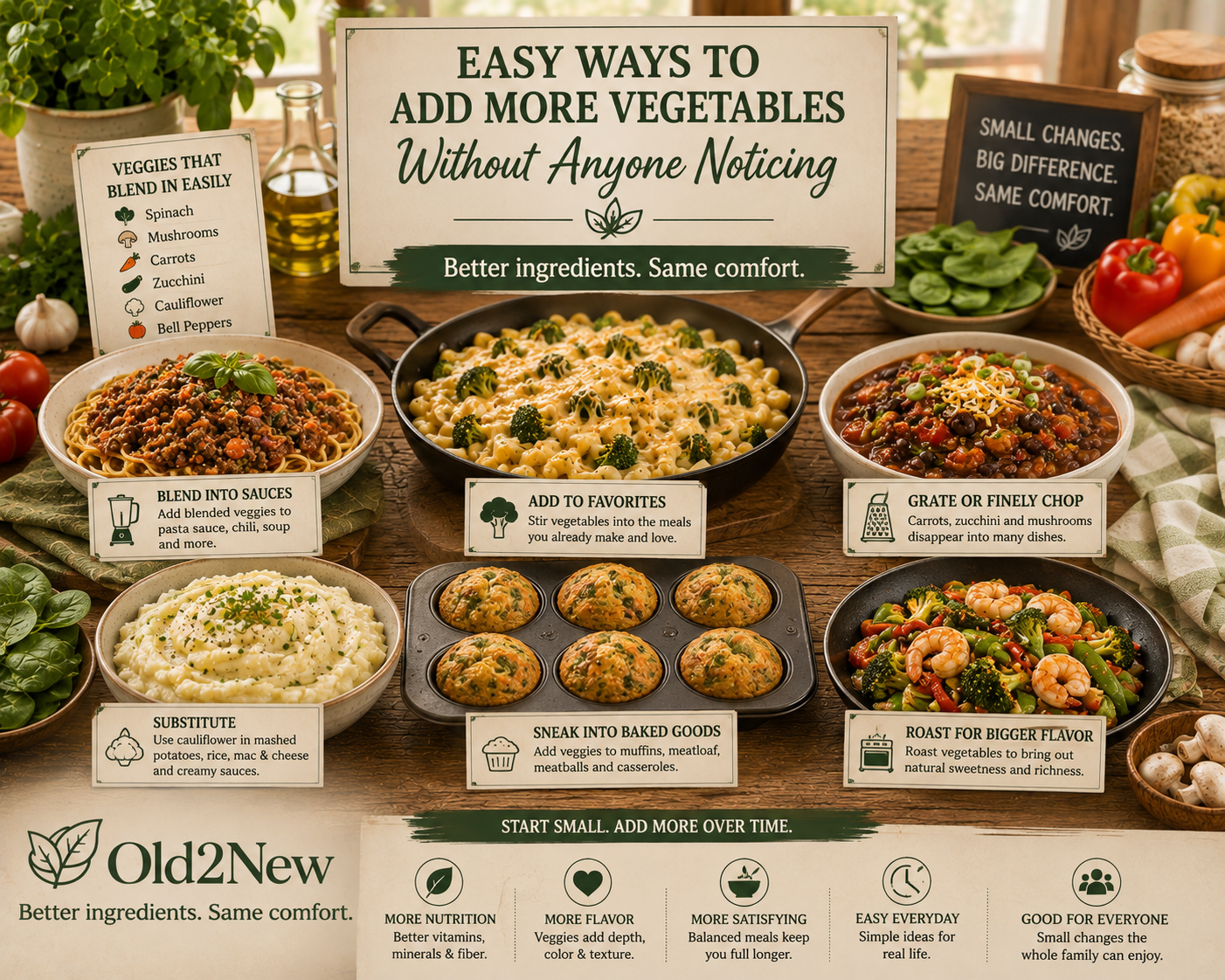
Easy Ways to Add More Vegetables Without Anyone Noticing
The hardest part of eating more vegetables isn't finding recipes that use them. It's getting them into the meals people already love — the spaghetti, the chili, the meatloaf, the mac and cheese — without turning dinner into a negotiation.
The good news is that most comfort food recipes have room for vegetables that integrate so naturally they become invisible. Spinach wilts into pasta sauce in two minutes and disappears completely. Grated carrot softens in chili and adds sweetness that most people assume came from the tomatoes. Finely chopped mushrooms blend into ground meat and make it heartier, juicier, and more flavorful without being identifiable as a separate ingredient. Shredded zucchini folds into muffin batter and keeps it moist without anyone tasting zucchini.
These additions don't require new recipes. They don't require convincing anyone to eat anything. They just require knowing which vegetables work in which dishes and adding them quietly.
Why Adding Vegetables Matters
Vegetables add fiber, vitamins, minerals, and natural flavor to meals. They add color that makes food more visually appealing. They add volume and texture that makes meals more satisfying without adding significant calories. They stretch recipes further — a pot of chili with an extra cup of diced bell pepper and a handful of spinach goes further and costs less per serving than the same recipe without them.
They also reduce food waste. A carrot that's going soft, a handful of mushrooms that need to be used, half a zucchini left from another recipe — all of these have a home in whatever's cooking for dinner tonight. The vegetable that might otherwise be thrown away becomes an invisible ingredient that makes the meal better.
The goal isn't to hide vegetables from anyone. It's to welcome them into meals where they genuinely belong — where they add something without taking anything away.
Start with the Meals You Already Make
The most practical place to add more vegetables is the meal that's already on regular rotation — the one everyone eats without complaint, the one you could make with your eyes closed. That's the meal to improve first, because improving it requires the least adjustment and delivers the most consistent benefit.
Look at your weekly favorites and ask a few simple questions: Could spinach go in here? Would mushrooms add something? Can a grated carrot disappear into this sauce? Could I stir broccoli into this casserole without changing what it is? Would diced bell pepper add color and crunch without altering the flavor?
Most recipes say yes to at least one of these. And the answer only needs to be yes once to start building the habit.
Vegetables That Blend In Most Easily
Some vegetables are better than others at integrating into existing dishes without announcing themselves. These are the ones worth starting with.
Spinach is the most versatile disappearing vegetable in the kitchen. Fresh spinach wilts in under two minutes when added to any hot dish — pasta, soup, scrambled eggs, rice, lasagna, or stir fry — and reduces to a fraction of its original volume. Once it's wilted and incorporated, it's almost invisible in terms of texture and taste. A large handful of fresh spinach goes into spaghetti sauce, becomes part of the sauce, and adds iron and vitamins that weren't there before without anyone at the table identifying it as a separate ingredient. Frozen spinach works equally well in soups, casseroles, and sauces — just squeeze out excess moisture before adding.
Mushrooms are the most effective meat-extending vegetable available because they provide umami — the savory, meaty flavor that makes food feel satisfying. Finely chopped mushrooms mixed into ground beef or turkey for tacos, meatballs, meatloaf, or burgers add moisture, extend the meat further per pound, and deepen the flavor in a way that most people notice as "this tastes really good" rather than "I can taste mushrooms." Diced mushrooms in spaghetti sauce blend into the meat and become indistinguishable from it while making the sauce more substantial.
Carrots add natural sweetness and nutrition to savory dishes in a way that feels like it's always been there. Finely grated carrot stirred into pasta sauce, chili, or sloppy joe filling softens completely as it cooks and adds a subtle sweetness that balances the acidity of tomatoes — most people assume the sweetness comes from the tomato itself. Grated carrot in meatloaf or meatballs adds moisture that keeps them tender even after they've cooled. Diced carrot in soups and stews is so expected that it requires no explanation.
Zucchini is one of the most useful vegetables for baking because it adds moisture without flavor. Shredded zucchini squeezed dry and folded into muffin, quick bread, or meatloaf batter keeps the finished product moist in a way that oil alone doesn't achieve. In pasta sauce, diced zucchini softens and takes on the flavor of the sauce completely — after 20 minutes of simmering, it's essentially part of the sauce rather than a separate vegetable. In casseroles and lasagna, thin slices layered between other ingredients add volume and vegetables without changing the structure of the dish.
Cauliflower has a mild flavor that makes it one of the most adaptable hidden vegetables in the kitchen. Steamed and blended into a cheese sauce for mac and cheese, it adds creaminess and extends the sauce without anyone identifying it as cauliflower. Mixed into mashed potatoes at a half-and-half ratio, it lightens the dish and adds fiber without changing the creamy, comforting character of the original. Riced and stirred into regular rice, it adds volume and reduces the overall starch content of the dish in a way that's essentially imperceptible.
Bell peppers add color, sweetness, and vitamins to any dish that includes them. Diced and cooked into chili, tacos, fajitas, omelets, or fried rice, they become part of the flavor base rather than a visible separate ingredient. The red and orange varieties are sweetest and least likely to be objected to — the slight bitterness of green pepper is the variety most likely to be noticed and identified.
Blend Instead of Chop
One of the most effective techniques for adding multiple vegetables to a sauce or soup is blending them into the liquid base rather than leaving them as visible pieces. This works particularly well for tomato-based sauces, soups, and chili.
Sauté onion, carrot, celery, bell pepper, and mushrooms together until softened, then add canned tomatoes and blend the whole mixture smooth before adding meat or other components. The result is a rich, deeply flavored sauce that contains multiple servings of vegetables per portion — and that looks and tastes like a classic tomato sauce because it is one, just with more going on underneath.
This technique works in spaghetti sauce, pizza sauce, chili, sloppy joe filling, soup bases, and lasagna sauce. The vegetables that went into the blender cease to exist as individual components — they become the sauce itself, contributing their flavor and nutrition without any visible trace of what they were.
Roast for Bigger Flavor
The other technique worth knowing is roasting — because roasted vegetables taste fundamentally different from steamed or raw ones. High heat concentrates their natural sugars, caramelizes the edges, and creates a depth of flavor that makes even the most reluctant vegetable eaters pause and reconsider.
Roasted broccoli with olive oil, garlic, and a little parmesan is a different ingredient than steamed broccoli — it's crispy, deeply savory, and slightly sweet at the edges. Roasted cauliflower goes golden and nutty. Roasted Brussels sprouts become caramelized and slightly crispy. Roasted carrots become sweet enough to eat like candy. Roasted bell peppers become silky and deeply sweet.
These are vegetables worth introducing to people who claim not to like vegetables — because the objection is almost always to steamed or boiled vegetables, and the roasted version is a genuinely different eating experience. Toss with olive oil and seasoning, spread on a sheet pan without crowding, and roast at 425°F until golden and slightly charred at the edges. The rest takes care of itself.
Add Vegetables a Little at a Time
If you're cooking for people who are resistant to vegetables in their favorite dishes, the most effective approach is incremental addition over time. Start with half the amount you eventually want to include and increase it gradually over several weeks. By the time the full amount is there, the dish has been made that way often enough that it's simply how the recipe tastes.
A handful of spinach in pasta sauce this week. Two handfuls next week. The week after, two handfuls plus a grated carrot. By the time the recipe has doubled its vegetable content, it just tastes like the recipe — because it's been that way for a month and the adjustment happened gradually enough that no one tracked it consciously.
Keep Frozen Vegetables on Hand
Fresh vegetables are ideal when available, but frozen vegetables are just as nutritious and considerably more convenient for weeknight cooking when the fresh option isn't available or has already gone soft. Frozen broccoli, green beans, mixed vegetables, spinach, peas, corn, and cauliflower all go directly from the freezer into soups, casseroles, stir fries, pasta dishes, and grain bowls without any prep required.
Keeping a well-stocked freezer vegetable supply means there's always something available to add to whatever is cooking — which removes the excuse of not having vegetables on hand and makes the addition a default rather than an effort.
Make Vegetables Part of the Recipe, Not an Addition to It
The most important shift in thinking is moving from "adding vegetables to the recipe" to "vegetables are part of the recipe." Broccoli in mac and cheese isn't an addition — it's an ingredient in mac and cheese with broccoli. Spinach in scrambled eggs isn't an addition — it's how those eggs are made. Mushrooms in meatloaf aren't a trick — they're what makes that meatloaf particularly moist and flavorful.
When vegetables become ingredients rather than additions, the cooking changes. You stop thinking about fitting them in and start thinking about which ones belong in each dish. The question stops being "can I sneak vegetables in here?" and becomes "what vegetable makes this better?" — which is a much more interesting and productive way to cook.
FAQ
What's the single easiest vegetable to start adding to existing recipes? Spinach — it wilts in under two minutes, becomes nearly invisible in any hot dish, has a mild flavor that doesn't assert itself, and adds iron, vitamins, and fiber to whatever it goes into. A large handful in pasta sauce, soup, scrambled eggs, or a casserole is the lowest-resistance first step in adding more vegetables to familiar meals.
How do I get kids to eat more vegetables without a fight? The most reliable approach is gradual, quiet integration into dishes they already love. Finely chopped mushrooms in taco meat. Grated zucchini in muffins. Spinach wilted into pasta sauce. Blended vegetables in a smooth tomato sauce. When the vegetable is integrated into the dish rather than served alongside it as a separate item requiring acceptance, the resistance is significantly lower. Starting with smaller amounts and increasing gradually also helps — the dish changes slowly enough that it just tastes like itself.
Are frozen vegetables as nutritious as fresh? Yes — frozen vegetables are typically processed at peak ripeness, which means they're often more nutritious than fresh vegetables that have been sitting in transit and storage. The cooking process matters more than whether the vegetable started fresh or frozen for most applications. Use fresh when texture matters most (raw in salads, roasted as a side dish) and frozen when convenience and cost are the priority (soups, casseroles, stir fries).
How much vegetable can I add before it changes the dish noticeably? It depends on the dish and the vegetable, but as a general rule, you can add up to 25 percent of the total volume of a dish in hidden vegetables before it starts to noticeably change the texture or flavor. A pot of chili that serves eight can absorb two cups of diced bell pepper and carrots without anyone identifying them as new additions. A batch of meatballs can have up to a quarter of the meat replaced with finely chopped mushrooms before the texture changes. Starting at 10 to 15 percent and increasing from there is the most reliable approach.
Continue Your Recipe Transformation Journey
Adding more vegetables is one of the highest-impact changes you can make to everyday cooking. These ingredient guides will help you know what each vegetable can do:
- What Can I Make with Spinach? — the most versatile disappearing vegetable in the kitchen
- What Can I Make with Mushrooms? — the best meat-extending vegetable available
- What Can I Make with Zucchini? — the most useful vegetable for baking and hidden additions
- What Can I Make with Carrots? — natural sweetness that blends into almost any savory dish
- What Can I Make with Cauliflower? — the mild vegetable that can do almost anything
- How to Make Your Favorite Recipes Healthier Without Starting Over — the bigger picture behind every improvement
Old2New — There is good in everything.