Meal prep has a reputation problem.
Ask most people why they don't do it, and the answer is usually the same: they don't want to eat the exact same chicken and broccoli five days in a row. The image of identical containers stacked in the refrigerator — Monday through Friday, same thing, no variation — is enough to make the whole idea feel more like a diet than a strategy.
That's not what good meal prep looks like.
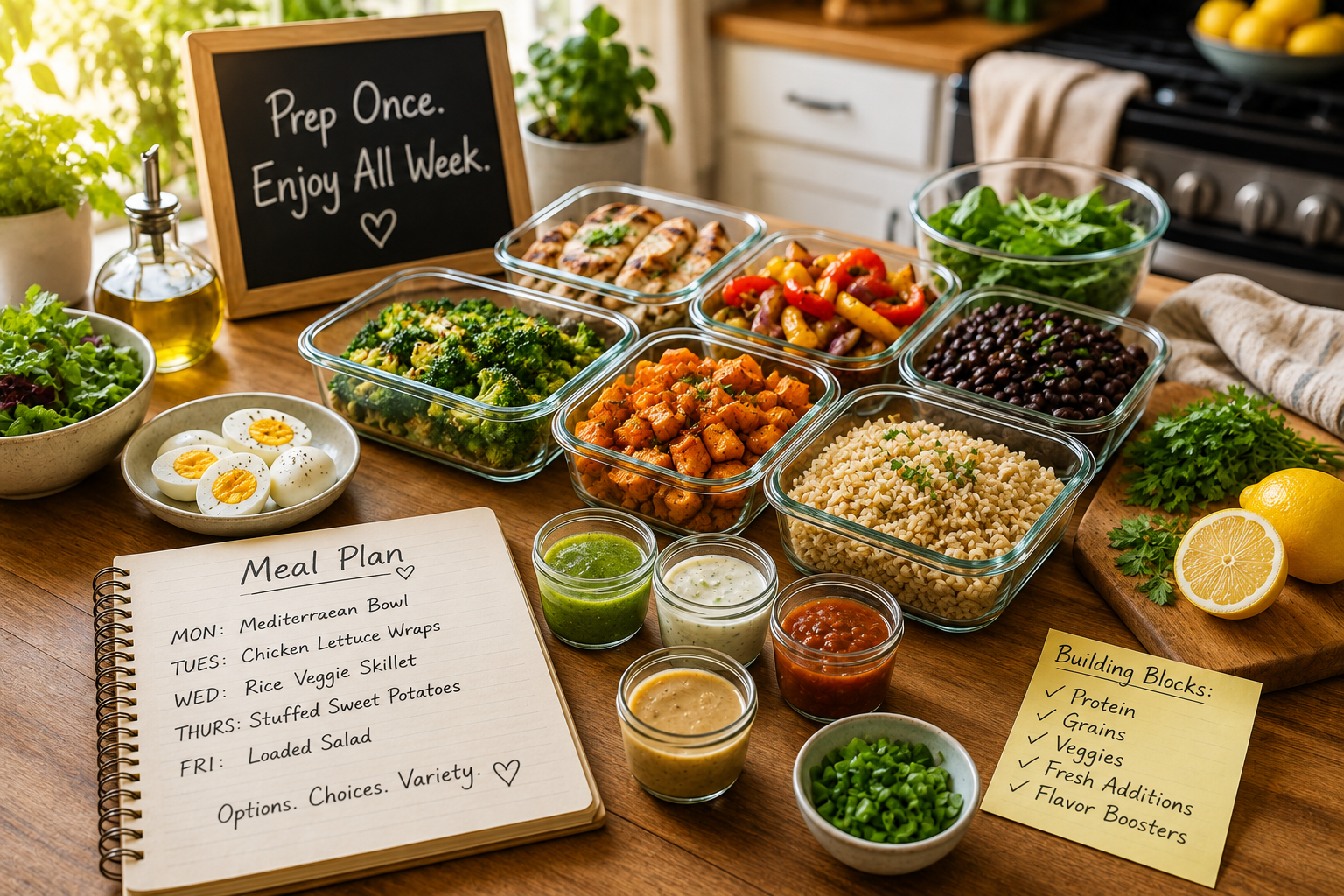
The approach that actually works isn't preparing five complete identical meals. It's preparing ingredients — proteins, grains, vegetables, and sauces — that can combine into completely different meals throughout the week. The same cooked chicken becomes tacos on Monday, a grain bowl on Wednesday, and soup on Friday. The same roasted vegetables go into a frittata for breakfast, a pasta dish for dinner, and a wrap for lunch.
One afternoon of preparation. An entire week of variety.
Why Meal Prep Matters — and Why It Fails
The appeal of meal prep is real: less decision fatigue on weeknights, fewer trips to the grocery store mid-week, less food waste, less money spent on takeout when there's nothing prepared and nobody wants to cook.
The reason it fails is usually not lack of time or effort. It's rigidity. People prepare five identical lunches, eat the first two with enthusiasm, get tired of the third, skip the fourth, and throw away the fifth. The whole week's effort produces three days of benefit and two days of guilt.
The fix is changing what you're preparing. Instead of finishing five meals, you're finishing the components of dozens of meals. The protein is done. The grains are done. The vegetables are roasted. Now every night is assembly, not cooking — and the assembly can go in any direction.
Think Ingredients, Not Meals
The shift that makes meal prep enjoyable instead of monotonous is preparing building blocks rather than complete dishes.
Here's what that looks like in practice:
Cook once:
- A batch of chicken (roasted, poached, or sautéed)
- A pot of brown rice or grains
- A sheet pan of roasted vegetables
- A pot of black beans or lentils
Use them to make:
- Burrito bowls (rice, beans, chicken, salsa, Greek yogurt)
- Grain bowls (grains, roasted vegetables, chicken, dressing)
- Stuffed peppers (rice, beans, and vegetables baked in peppers)
- Fried rice (day-old rice, chicken, eggs, soy sauce, vegetables)
- Lettuce wraps (chicken, rice, vegetables in lettuce leaves)
- Soup (chicken, vegetables, broth, and whatever grains are left)
- Salads (greens, cold chicken, roasted vegetables, dressing)
- Flatbreads or quesadillas (chicken, vegetables, cheese)
The ingredients are identical. The meals are completely different. That's the whole idea.
Five Building Blocks for a Flexible Week
Protein
Cook one or two proteins that work in multiple applications:
Chicken — poached or roasted chicken shreds easily and goes into tacos, grain bowls, soups, salads, wraps, pasta dishes, and casseroles. One batch covers multiple meals.
Ground turkey or beef — brown a large batch seasoned simply with garlic, onion, salt, and pepper. Use it in tacos on Monday, pasta sauce on Wednesday, stuffed peppers on Thursday.
Eggs — hard-boiled eggs keep in the refrigerator for a week and work as snacks, salad toppings, breakfast bowls, and quick protein additions to any meal.
Beans and lentils — canned beans require no cooking. A pot of lentils cooks in twenty minutes. Both work in any meal that needs protein and fiber without meat.
Grains and Starches
Cook a large batch of one or two:
Brown rice — the most versatile grain for meal prep. Works in bowls, stir-fries, soups, stuffed vegetables, and casseroles.
Quinoa — cooks in fifteen minutes, works hot or cold, provides complete protein alongside carbohydrates.
Sweet potatoes — roast a whole sheet pan. Eat as a side, mash into a bowl, stuff with toppings, or slice into a grain bowl.
Whole grain pasta — cook a large batch and use it cold in salads or warm in pasta dishes throughout the week.
Vegetables
Roast a large sheet pan (or two) of vegetables at the beginning of the week:
Broccoli, bell peppers, zucchini, onions, carrots, mushrooms, and Brussels sprouts all roast well together at 400°F with olive oil, salt, and pepper. They work hot as a side dish, cold in salads and grain bowls, stirred into eggs, folded into pasta, or layered into casseroles.
Raw vegetables that hold up well — cucumbers, carrots, celery — can be washed and cut ahead of time for easy grab-and-go snacking or salad additions.
Fresh Additions
Some ingredients are better added fresh at serving time:
Greens — spinach, arugula, and romaine hold up for several days in the refrigerator and should be added to bowls and salads right before eating, not before.
Avocado — cut at serving time, not ahead.
Fresh herbs — basil, cilantro, and parsley add brightness when added fresh. They wilt and lose flavor if prepped too early.
Lemon and lime — a squeeze of citrus right before eating brightens any dish. Prep the wedges ahead so they're easy to grab.
Flavor Boosters
This is the piece that creates variety from identical ingredients. The same chicken and rice bowl tastes completely different depending on what sauce or seasoning goes on it:
- Salsa — Mexican-inspired
- Tzatziki — Greek-inspired
- Pesto — Italian-inspired
- Hummus — Mediterranean
- Soy sauce and sesame — Asian-inspired
- Greek yogurt with herbs — creamy and protein-rich
- Olive oil with lemon and garlic — bright and simple
- Balsamic vinaigrette — works on almost anything
Keep two or three sauces prepared or purchased and the same base ingredients become genuinely different meals every day.
A Week Built From Four Ingredients
Here's what a week might look like starting with cooked chicken, brown rice, roasted vegetables, and black beans:
Monday — Mediterranean bowl: rice, roasted vegetables, chickpeas, cucumber, olive oil, lemon, fresh herbs
Tuesday — Chicken lettuce wraps: chicken, rice, green onions, ginger, soy sauce, in lettuce leaves
Wednesday — Rice skillet: rice, chicken, roasted vegetables, eggs scrambled in, a little soy sauce
Thursday — Stuffed sweet potatoes: baked sweet potato topped with black beans, chicken, Greek yogurt, salsa
Friday — Loaded salad: greens, cold chicken, roasted vegetables, black beans, avocado, balsamic dressing
Five meals. Four base ingredients. Completely different experiences every day.
What Not to Prep Ahead
Some things hold up better prepared fresh:
Don't prep ahead: avocado, fresh herbs, salad greens (beyond washing and drying), dressings on salads, crunchy toppings, citrus juice
Do prep ahead: cooked proteins, grains, roasted vegetables, hard-boiled eggs, washed and cut raw vegetables, dips and sauces
The rule of thumb is: anything that will get soggy, brown, or lose its texture shouldn't be prepped more than a day ahead. Everything else is fair game.
Meal Prep Reduces Food Waste
One of the underrated benefits of ingredient-based meal prep is that it makes food waste almost disappear.
When cooked chicken, rice, and vegetables are already in the refrigerator, the answer to "what should we eat tonight?" is always "something from what we have." There's no forgotten produce in the back of the crisper, no container of leftovers that sat until it was too late.
Your refrigerator becomes a collection of possibilities rather than a graveyard of forgotten ingredients. That's better for your budget, better for the environment, and better for the stress level on weeknights.
How Old2New Fits Into Meal Prep
Old2New is built around the same logic that makes ingredient-based meal prep work: start with what you have, apply the ingredient choices that serve your goals, keep the results recognizable and worth eating.
When you're building a meal prep routine, Old2New can help transform the dishes that will become your weekly staples. Whether you're cooking for high protein, GLP-1 support, Mediterranean eating, or blood sugar management, the transformation starts from the recipes you already want to eat — not from a meal plan someone else designed.
The Bottom Line
Meal prep doesn't mean eating the same lunch five days in a row. It means giving yourself a head start — cooked proteins, grains, and vegetables ready in the refrigerator — so that every meal this week is thirty minutes away instead of an hour, and every choice is already a good one.
Prep for flexibility, not completion. Cook the ingredients, not the meals. Let the sauces and seasonings create the variety.
There is good in every ingredient. Prepare them well and they'll take care of the rest.
Better ingredients. Same comfort.
Frequently Asked Questions
How do I start meal prepping if I've never done it before?
Start with one building block, not an entire week's worth of meals. Cook a large batch of one protein (chicken or ground turkey) and one grain (brown rice or quinoa) on Sunday. Use them in different ways throughout the week. Once that feels manageable, add roasted vegetables to the prep session.
How long does meal prepped food last in the refrigerator?
Cooked proteins and grains keep well for 4-5 days. Roasted vegetables keep for 4-5 days. Hard-boiled eggs keep for up to a week. Fresh greens keep for 3-5 days. Cut raw vegetables keep for 3-4 days.
Does meal prep work for families with different preferences?
Ingredient-based meal prep actually works better for mixed preferences than complete-meal prep does. Everyone can assemble their own bowl from the same set of components. One person adds more vegetables, another adds more protein — the base ingredients are the same, the assembly is personal.
How do I avoid getting bored with meal prep?
Change the sauces and seasonings rather than the base ingredients. The same chicken and rice bowl tastes like a completely different meal with salsa versus tzatziki versus soy sauce. Keep two or three different flavor boosters prepped and rotate them throughout the week.
Is meal prep cheaper than cooking daily?
Usually yes — buying proteins and vegetables in larger quantities is typically more economical than buying for individual meals, and having food prepped reduces the temptation to order takeout on busy nights. The reduction in food waste also contributes to savings over time.
How does Old2New help with meal prep?
Old2New can transform the recipes that form your meal prep staples — the chicken dish you always make, the grain bowl formula, the soup you batch-cook. Apply ingredient swaps based on your health goals so that every meal this week is not just convenient but nutritionally aligned with where you're trying to go.
Continue Your Recipe Transformation Journey
- How to Stock a Healthy Pantry Without Throwing Everything Away — the foundation for every meal prep session
- What Can I Make with Rice? — 25 ways to use one meal prep staple
- What Can I Make with Chicken? — the most versatile meal prep protein
- Stop Throwing Away Food — how prepped ingredients become the week's meals
- Healthy Ingredient Swaps That Actually Taste Good — make every meal prep dish work harder
- What's in My Refrigerator? — the ingredient-first approach to cooking
Old2New — There is good in everything.