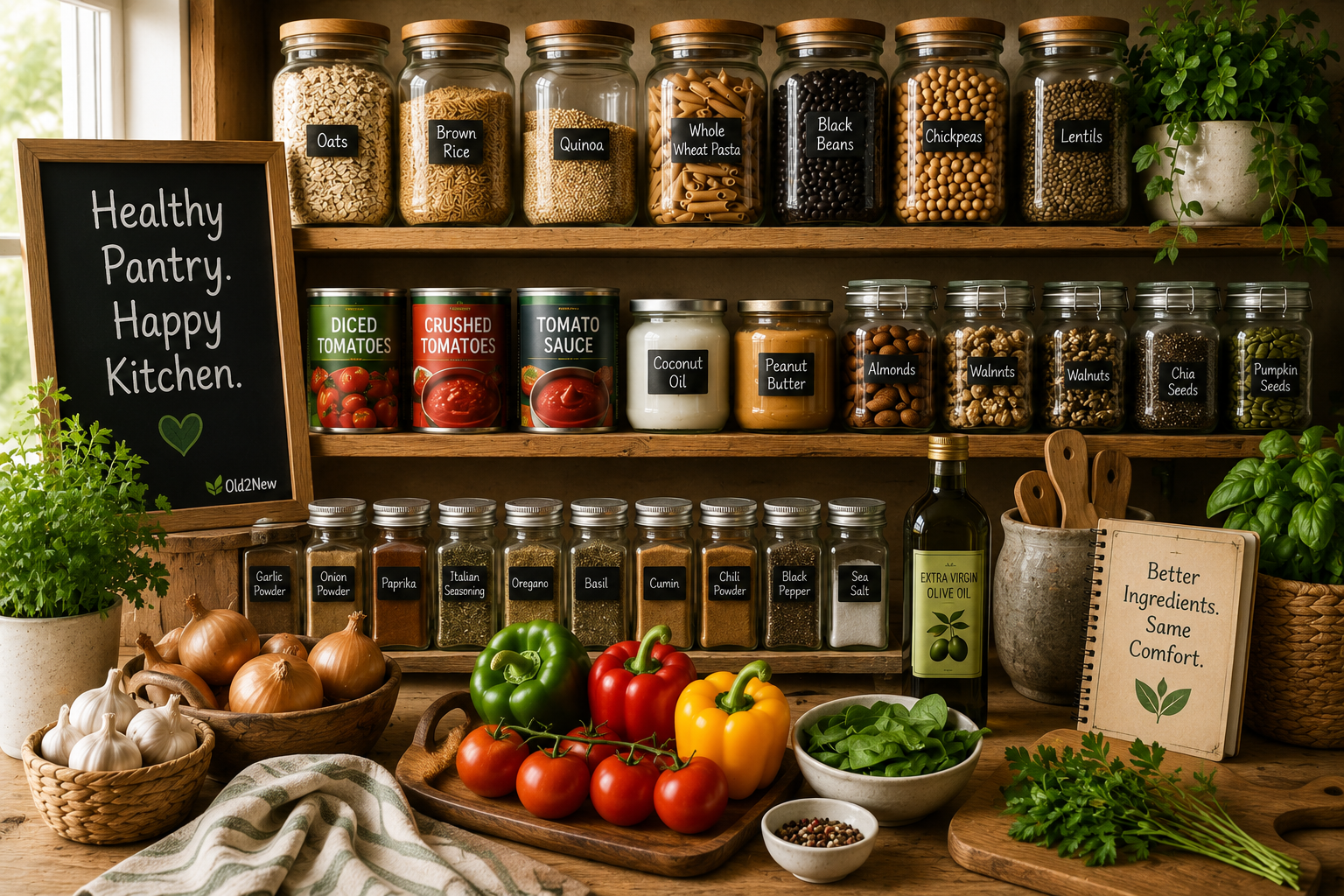
One of the most common pieces of healthy eating advice is also one of the least helpful: clean out your pantry and start over.
The idea is that if you remove everything processed or refined and replace it with the "right" ingredients, eating healthier becomes automatic. In practice, it usually means throwing away food you paid for, spending significant money on replacements, and stocking a pantry full of ingredients you're not sure how to use — before eventually reverting to old habits.
There's a better approach.
A healthy pantry isn't built in a single shopping trip. It's built through small, practical choices made over time — replacing one ingredient as you run out of another, adding one versatile staple per week, gradually shifting what's on the shelf without disrupting the way you already cook.
That's the same logic that drives recipe transformation: don't start over, improve what's already there.
Why Your Pantry Matters More Than Your Recipes
Most people think of healthy eating as a recipe problem — find the right recipe, follow it, eat better. But recipes require ingredients, and what's available in your kitchen is what determines what you actually cook on a Tuesday night when you're tired and don't want to think too hard.
A pantry stocked with versatile, nutritious ingredients makes healthy cooking the path of least resistance. When whole grain pasta is what's in the cabinet, that's what goes in the pot. When canned beans are on the shelf, they end up in the chili. When olive oil is next to the stove, that's what goes in the pan.
The pantry shapes the meal before the recipe does. Getting it right means making good choices automatic rather than effortful.
Start With What You Already Have
Before buying anything new, take stock of what's already there.
Most kitchens already contain a foundation of useful pantry staples — rice, pasta, canned tomatoes, beans, oats, broth, peanut butter, flour, herbs and spices. These aren't ingredients to throw away. They're the starting point.
The question to ask isn't "what do I need to replace?" It's "what can I gradually improve as I run out?"
- When the white pasta runs out, buy whole grain next time
- When the white rice is gone, try brown rice or a brown-and-white blend
- When the vegetable oil is empty, replace it with olive oil
- When the sour cream needs restocking, pick up Greek yogurt instead
None of these changes require throwing anything away. They just require making a slightly different choice at the store, one item at a time. Over a few months, the pantry shifts without feeling like it changed.
The Pantry Staples Worth Having
These are ingredients that earn their place because they're versatile, nutritious, and genuinely useful in everyday cooking — not specialty items that sit on the shelf untouched.
Whole Grains
Brown rice — the most direct swap for white rice in any dish. Slightly nuttier flavor, more fiber. Works in stir-fries, grain bowls, stuffed peppers, soups, and anywhere white rice appears.
Rolled oats — breakfast as oatmeal, baked into energy bites and granola, used as a binder in meatloaf and meatballs instead of breadcrumbs. One of the most versatile dry goods in a pantry.
Whole grain pasta — the same shape, similar texture, more fiber. Works in every pasta dish.
Quinoa — a complete protein that cooks in fifteen minutes and works as a rice substitute, a salad base, a grain bowl foundation, or a side dish.
Farro or barley — heartier grains that add substance and nutty flavor to soups, salads, and grain bowls.
Beans and Lentils
Black beans — tacos, burritos, chili, grain bowls, soups, salads, and quesadillas. One of the most flexible canned ingredients.
Kidney beans — chili, soups, and casseroles. Add protein and fiber to any dish that has broth and vegetables.
Chickpeas — roasted as a snack or topping, added to soups and stews, blended into hummus, folded into grain salads.
Canned lentils or dried lentils — soup, pasta sauce, tacos (a partial lentil-and-meat blend is nearly undetectable), and casseroles. Lentils cook from dry in about twenty minutes without soaking.
White beans (cannellini) — fold them into soups and pasta dishes for protein and creaminess, or blend them into a sauce base.
Canned and Jarred Goods
Diced tomatoes and crushed tomatoes — the foundation of countless pasta sauces, soups, chilis, and braises. Keep at least four cans on hand.
Chicken and vegetable broth — turns protein and vegetables into soup in twenty minutes. Use in place of water when cooking rice or grains for more flavor.
Canned fish — tuna, salmon, and sardines are high-protein, shelf-stable proteins that work in salads, pasta dishes, grain bowls, and sandwiches.
Coconut milk — for curries, soups, and some baked goods. A useful addition for recipes that benefit from creaminess without dairy.
Oils and Vinegars
Olive oil — the most useful cooking oil for sautéing, roasting, finishing pasta, and making dressings. Keep a larger bottle for cooking and a smaller good-quality bottle for finishing.
Apple cider vinegar and red wine vinegar — a small amount of acid brightens sauces, dressings, and soups in a way that's hard to replicate otherwise.
Nuts and Seeds
Walnuts and almonds — eat as snacks, add to oatmeal and salads, use in baked goods.
Pumpkin seeds and sunflower seeds — neutral enough to add to almost anything. Good on grain bowls, soups, and salads as a topping.
Chia seeds and ground flaxseed — stir into oatmeal, yogurt, or smoothies for fiber and omega-3s. Store flaxseed in the refrigerator once opened.
Nut butters — peanut butter and almond butter work in sauces (especially Asian-inspired dishes), baked goods, energy bites, and obviously on whole grain toast.
Herbs and Spices
A well-stocked spice cabinet allows you to build flavor without relying on salt or processed sauce packets.
Dried herbs: oregano, basil, thyme, rosemary, bay leaves
Spices: cumin, smoked paprika, chili powder, garlic powder, onion powder, turmeric, ginger, cinnamon, black pepper, cayenne
Salt: kosher or sea salt in larger flakes for cooking and finishing
Fresh garlic, onions, and shallots aren't pantry items exactly, but they're the most important aromatics in everyday cooking. Keep them on the counter or in a cool, dark place and restock regularly.
Baking Basics
Oat flour — a fiber-rich alternative to white flour for muffins, cookies, pancakes, and quick breads.
Whole wheat flour — for baking where structure matters more than a dense crumb.
Baking powder and baking soda — standard leavening that gets used in almost any baked good.
Maple syrup and honey — more complex sweeteners that often allow you to use less than refined sugar while achieving similar sweetness.
Dark chocolate chips — more antioxidants and less sugar than milk chocolate. Used sparingly in baked goods or energy bites.
Don't Forget the Freezer
The freezer is an extension of the pantry — and one of the most underused tools in healthy cooking.
Frozen vegetables are often just as nutritious as fresh, don't go bad, and cook faster than most fresh alternatives. Spinach, broccoli, edamame, peas, corn, and mixed vegetables all work well from frozen.
Frozen fruit — for smoothies, oatmeal, and baked goods. Frozen berries especially maintain their nutritional value well.
Frozen proteins — chicken breasts, ground turkey, ground beef, and fish fillets that can be thawed as needed rather than bought fresh every week.
Batch-cooked items — soups, chili, cooked grains, and cooked beans all freeze well. Making a large batch and freezing portions means a healthy meal is twenty minutes away even on the busiest nights.
Simple Organization That Makes Cooking Easier
A pantry you can see is a pantry you'll actually use.
- Group similar items together — all grains together, all canned goods together, all spices together
- Use clear containers for dry goods — rice, oats, pasta, and lentils stored in labeled glass or clear plastic containers are visible and stay fresh longer
- Rotate stock — move older items to the front when you restock so they get used first
- Keep everyday items at eye level — if the olive oil and the pasta are immediately visible, they're the ones that get cooked with
- Check expiration dates periodically — once every few months is enough to catch anything that's been forgotten
An organized pantry reduces the friction between "I should cook" and "I'm actually cooking."
Building It Gradually
The pantry in this article doesn't need to materialize in one shopping trip. It builds over time, and the process itself becomes a habit.
A realistic approach:
Week 1: Pick up a bag of lentils and a can of chickpeas you didn't already have.
Week 2: When the white pasta runs out, buy whole grain.
Week 3: Add a new spice you've been meaning to try — smoked paprika, turmeric, or za'atar.
Month 2: Replace vegetable oil with olive oil. Pick up a bag of quinoa.
Month 3: Add chia seeds to the oatmeal rotation. Try brown rice instead of white in a stir-fry.
Six months of small weekly decisions produces a pantry that's meaningfully different from where it started — without a single dramatic overhaul, without throwing anything away, and without spending significantly more than you already were.
The Bottom Line
A healthy pantry isn't about perfection. It's about having ingredients available that make healthy cooking easier, so the default choice — when it's late, you're tired, and you don't want to think — is still a good one.
Start with what you already have. Improve one thing at a time. Let the pantry shift gradually toward something that works better for the way you want to eat.
There is good in every kitchen. Sometimes all it takes is a few better ingredients on the shelf.
Better ingredients. Same comfort.
Frequently Asked Questions
What are the most important healthy pantry staples?
Whole grain pasta, brown rice, rolled oats, canned beans (black beans, chickpeas, kidney beans), lentils, canned tomatoes, broth, olive oil, and a well-stocked spice cabinet are the most consistently useful pantry ingredients. Together they can produce dozens of different meals.
Do I have to throw away my existing pantry to eat healthier?
No — and throwing everything away usually doesn't work anyway. The most sustainable approach is to improve one item at a time as you run out of what you have. White pasta becomes whole grain next time. Vegetable oil becomes olive oil. The pantry shifts gradually without disruption.
How do I stock a healthy pantry on a budget?
Beans, lentils, oats, rice, canned tomatoes, and frozen vegetables are among the most nutritious and affordable pantry items available. Building around these ingredients keeps costs down while providing a strong nutritional foundation. Buy in bulk when possible for the best value.
What's the difference between a healthy pantry and a regular pantry?
A healthy pantry prioritizes whole grains over refined, includes legumes and nuts alongside other protein sources, uses olive oil as the primary fat, and stocks a wide range of herbs and spices for flavor. Most other pantry staples — canned tomatoes, broth, pasta, rice — appear in both. The shift is usually in the specific version of each item, not in a completely different set of ingredients.
How does a well-stocked pantry help with recipe transformation?
When the right ingredients are already on the shelf, making a healthier version of a dish requires no extra effort. If whole grain pasta is what's available, that's what goes in the pot. If olive oil is next to the stove, that's what gets used. The pantry makes the healthier choice the easy choice.
Continue Your Recipe Transformation Journey
- Healthy Ingredient Swaps That Actually Taste Good — the specific swaps and why they work
- Stop Throwing Away Food — how to use everything you already have
- How to Make Comfort Food Healthier — the practical approach behind every transformation
- What Can I Make with Ground Beef? — putting pantry staples to work
- What Can I Make with Chicken? — one protein, dozens of directions
- What's in My Refrigerator? — ingredient-first cooking from what you have
Old2New — There is good in everything.