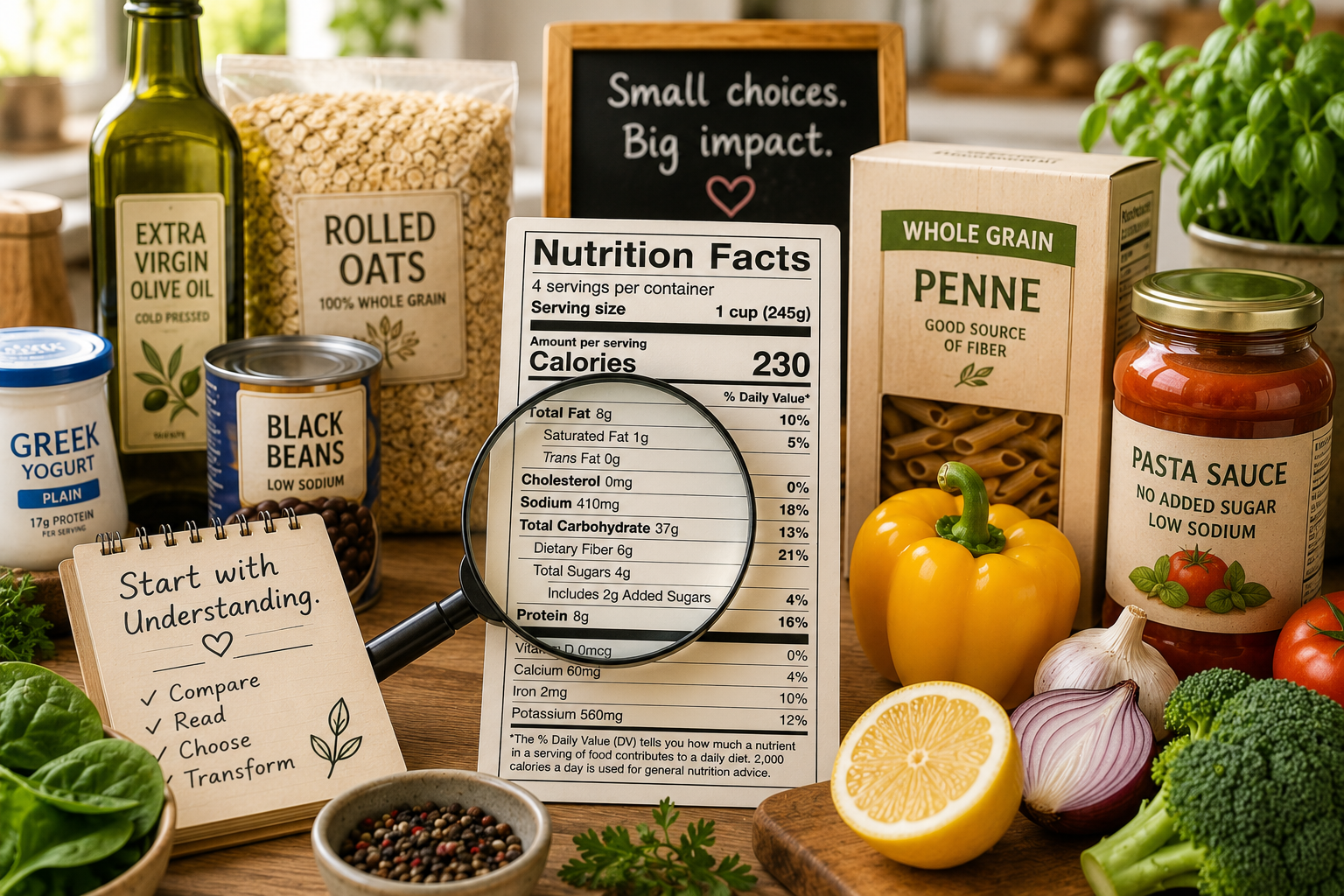
Standing in the grocery aisle comparing two boxes of pasta or two jars of pasta sauce can feel surprisingly overwhelming.
Calories. Carbohydrates. Sodium. Added sugars. Serving sizes. Percent daily values. Daily values based on a 2,000-calorie diet. The numbers multiply and the comparisons blur and after a few minutes it's easy to just grab whichever box is on sale and keep moving.
But reading a nutrition label doesn't have to be that complicated. You don't need to memorize every number or understand every percentage. Learning to read just a few key sections — in the right order — makes grocery shopping significantly easier and the choices significantly more confident.
This is what those sections are and what they actually tell you.
Start With the Serving Size — Not the Calories
Most people scan directly to the calorie count. That's the wrong place to start.
The serving size is where the story begins, because every other number on the label is based on it. A package that looks like a single serving might actually contain two or three. A pasta sauce labeled as 150 calories might deliver 300 calories if you use the whole jar — which most people do.
Check the serving size first, then check how many servings are in the container. Multiply accordingly. Now the calories and every other number on the label make sense.
Calories: Useful Context, Not the Whole Story
Calories are one piece of information — not a verdict.
Two foods with the same calorie count can have completely different nutritional profiles. A hundred calories of almonds delivers protein, healthy fats, and fiber. A hundred calories of a processed snack delivers refined carbohydrates and very little else. Same number. Very different nutritional value.
Calories matter for overall energy balance, but they're most useful when considered alongside fiber, protein, and what the rest of the label shows. A lower-calorie food isn't automatically a better choice, and a higher-calorie whole food isn't automatically a worse one.
Fiber: One of the Most Useful Numbers on the Label
Fiber is worth seeking out specifically because it does several things at once: it slows digestion (which moderates blood sugar response), it contributes to satiety (you feel full longer), and it supports digestive health broadly.
The daily value for fiber is 28 grams. A food with 5 grams of fiber per serving is considered high fiber. Anything with 2.5 grams or more per serving is a decent source.
When comparing two similar products — two types of bread, two brands of cereal, two pasta options — fiber is one of the most meaningful differences to look for. Whole grain products, beans, lentils, and vegetables tend to provide significantly more fiber than their refined counterparts.
Protein: The Number That Makes a Meal Complete
Protein contributes to satiety, supports muscle maintenance, and helps create a more balanced blood sugar response when eaten alongside carbohydrates.
Looking at the protein content of a food tells you whether it's going to contribute meaningfully to a meal or just add carbohydrates and calories. A food with 15+ grams of protein per serving is a substantial protein source. A food with 2-3 grams per serving is primarily something else — a carbohydrate, a fat — with protein as a minor component.
When building a meal, having at least one food with meaningful protein content helps the whole meal feel complete and satisfying.
Added Sugars: The Number Worth Scrutinizing
The nutrition label distinguishes between total sugars and added sugars — and that distinction matters.
Total sugars includes naturally occurring sugars from fruit, dairy, and other whole food sources. Added sugars are sweeteners added during processing that provide calories without other nutritional value.
The daily value for added sugars is 50 grams. Many health organizations recommend aiming for well below that. A food with 10+ grams of added sugar per serving is contributing meaningfully to daily added sugar intake — something worth noting when comparing products.
This is particularly useful when comparing products that don't seem sweet: pasta sauces, salad dressings, bread, condiments, and cereals can all contain significant added sugars that aren't obvious from the taste alone.
Sodium: Worth Comparing Between Brands
Packaged and processed foods are typically the largest source of sodium in most diets — not the salt shaker on the table.
The daily value for sodium is 2,300 milligrams. A food with 20% or more of the daily value per serving is considered high sodium. For people watching sodium intake, comparing brands of the same product (two brands of canned tomatoes, two pasta sauces, two broths) often reveals significant differences — sometimes 200-400mg per serving — without any difference in flavor.
The comparison is usually straightforward: look at the % daily value for sodium in two similar products and choose the lower one. Over a week of cooking, those differences accumulate into a meaningful reduction.
The Ingredient List: Where the Real Story Is
The ingredient list is listed in order from greatest quantity to least. The first three to five ingredients are the most meaningful — they're what the food is primarily made of.
A few things worth looking for:
Whole grains at the top: If a bread or cracker claims to be "whole grain," the first ingredient should be a whole grain (whole wheat, whole oat, etc.), not enriched flour or wheat flour.
Added sugars by different names: Sugar appears on ingredient lists under dozens of names — corn syrup, high-fructose corn syrup, cane juice, dextrose, maltose, and others. If multiple sweeteners appear in the ingredient list, the total added sugar content may be higher than any single entry suggests.
Shorter doesn't automatically mean better: A short ingredient list isn't a guarantee of nutritional quality, and a longer one isn't automatically concerning. What matters is what the ingredients actually are.
The % Daily Value: A Quick Comparison Tool
The % daily value column on the right side of the nutrition label shows how much of each nutrient a serving provides relative to a 2,000-calorie daily diet.
A simple rule of thumb:
- 5% DV or less = low in that nutrient
- 20% DV or more = high in that nutrient
For nutrients you want more of (fiber, protein, vitamins, minerals): look for higher percentages.
For nutrients you want less of (added sugars, sodium, saturated fat): look for lower percentages.
This column is most useful for quick comparisons between similar products rather than for precise tracking.
What You Can Mostly Ignore
Not every line on the nutrition label requires your attention. A few things that are less useful for everyday grocery decisions:
Total fat: Fat isn't the enemy it was once treated as. The type of fat matters more than the total amount — unsaturated fats from olive oil, nuts, and avocados are very different from trans fats or excessive saturated fats.
Vitamins and minerals: Unless you're tracking specific nutrients for a health condition, the vitamin and mineral section is primarily useful for fortified foods. Most nutrients are better obtained from whole foods than from fortified packaged ones.
% daily value for protein: The FDA doesn't require a % daily value for protein, so it's often left blank or set at a fixed reference that may not match your needs.
A Practical Approach for Grocery Shopping
You don't need to analyze every label in depth. A few quick checks cover most situations:
- Check the serving size — is this one serving or multiple?
- Look at fiber — does this contribute meaningfully?
- Look at protein — will this help make a meal complete?
- Check added sugars — especially in products that don't seem sweet
- Scan sodium — especially when comparing brands of the same product
- Read the first few ingredients — what is this food actually made of?
That's it. Six things. Most can be done in under thirty seconds once the habit forms.
Small Choices Compound Over Time
You don't need to make every grocery choice perfectly. One change per trip, made consistently over time, shifts the overall quality of what goes into your kitchen without requiring any dramatic overhaul.
Maybe this week it's switching to a pasta sauce with less added sugar. Next week it's choosing the broth with lower sodium. The week after, noticing which cereal has more fiber.
Each small choice is unremarkable on its own. Together, they change what's in your pantry, which changes what goes in your meals, which changes how your body feels.
That's exactly how recipe transformation works — and it starts at the grocery store.
The Bottom Line
A nutrition label isn't a verdict on a food. It's information — information that helps you compare products, understand serving sizes, and make choices that work for your goals.
You don't need to fear it or obsess over it. You just need to know which numbers to look at first.
Serving size. Fiber. Protein. Added sugars. Sodium. Ingredients.
Start there. The rest will follow.
Better ingredients. Same comfort.
Frequently Asked Questions
What should I look at first on a nutrition label?
Start with the serving size — everything else on the label is based on it. Then check fiber, protein, added sugars, and sodium in that order. The ingredient list tells you what the food is actually made of.
How much fiber should I look for per serving?
Five grams or more per serving is considered high fiber. Two and a half grams or more is a decent source. When comparing similar products, choose the one with more fiber.
What's the difference between total sugars and added sugars?
Total sugars includes naturally occurring sugars from fruit, dairy, and other whole foods. Added sugars are sweeteners added during processing. Added sugars are the ones worth paying attention to and minimizing.
How do I know if a food is high in sodium?
20% or more of the daily value per serving is considered high sodium (that's about 460mg). For most people, lower is better — especially in products like canned goods, sauces, and condiments where sodium levels vary significantly between brands.
Does a short ingredient list mean a food is healthier?
Not necessarily. A short ingredient list can indicate a minimally processed food, but it doesn't guarantee nutritional quality. What matters is what the ingredients actually are — five whole food ingredients is generally better than twenty unrecognizable ones, but the specific ingredients matter more than the count.
How does reading nutrition labels connect to recipe transformation?
Understanding what's in packaged ingredients lets you make better choices about what goes into your recipes. Choosing a pasta sauce with less added sugar, a broth with less sodium, or a pasta with more fiber improves the nutritional profile of your meal before you've made a single recipe swap. Labels and recipe transformation work together.
Continue Your Recipe Transformation Journey
- How to Stock a Healthy Pantry Without Throwing Everything Away — building a kitchen that supports better choices
- Healthy Ingredient Swaps That Actually Taste Good — what to do with better ingredients
- How to Make Comfort Food Healthier — the practical approach to every recipe
- What Can I Make with Potatoes? — putting ingredient knowledge to work
- 10 Healthy Ingredient Swaps That Actually Taste Good — a practical reference list
Old2New — There is good in everything.