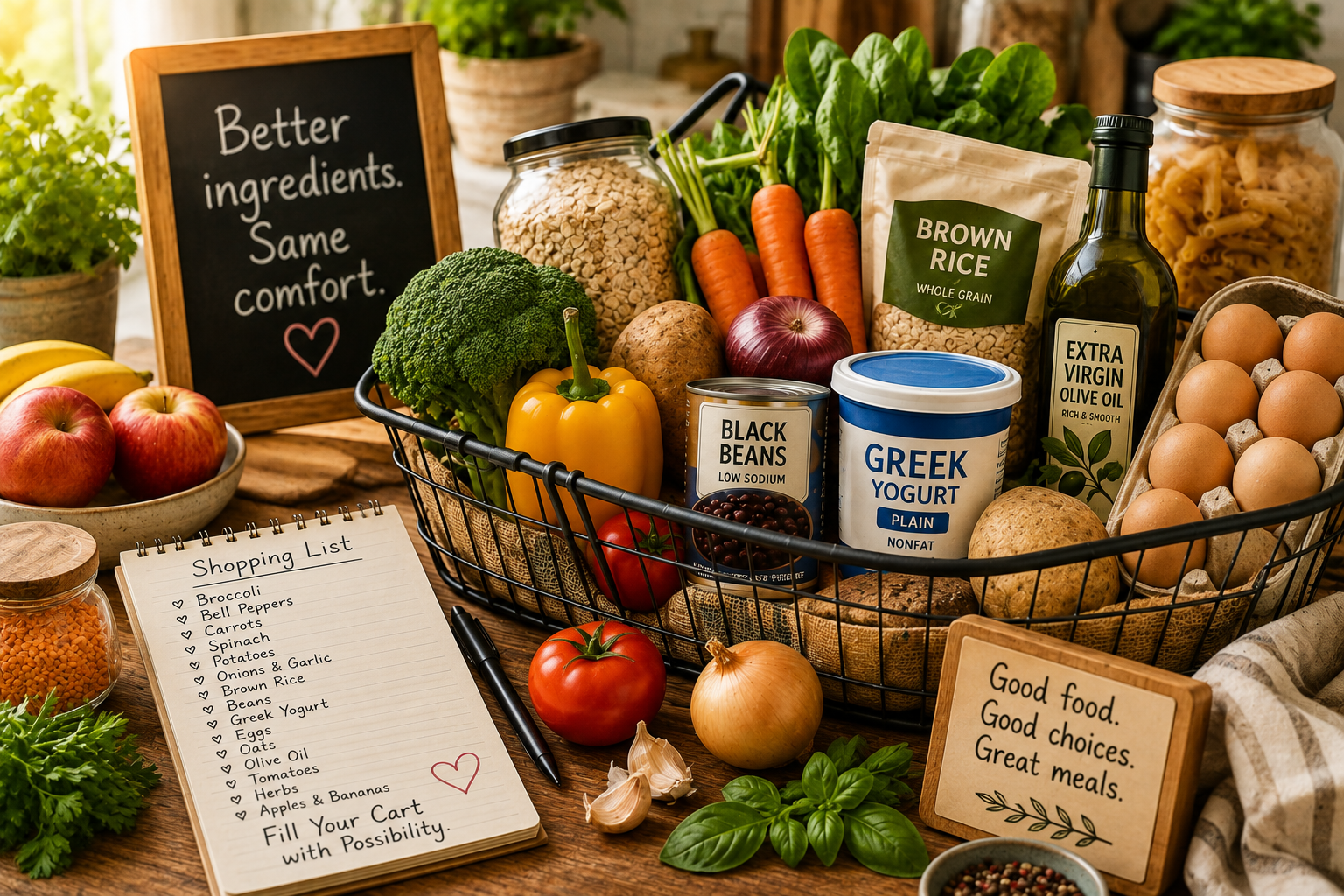
Healthier eating has a reputation for being expensive — and it's not hard to see why.
Walk through any grocery store and the "healthy" section is usually lined with premium products, specialty ingredients, and organic versions of everything at twice the price. Adaptogens. Cold-pressed this. Activated that. It starts to feel like eating well is something that requires either a nutrition degree or a significantly larger grocery budget.
It doesn't.
The ingredients that make the biggest difference in everyday cooking — the ones that improve fiber, protein, and nutritional quality the most — are also some of the most affordable in the store. Beans. Eggs. Oats. Brown rice. Canned tomatoes. Frozen vegetables. Greek yogurt. Lentils.
Healthy grocery shopping isn't about finding different foods. It's about making slightly better choices among the foods you already know.
Start Before You Leave Home
The most expensive grocery trip is an unplanned one.
Without a list, you buy things you already have, forget things you needed, pick up impulse purchases that weren't in the budget, and come home with ingredients that don't combine into actual meals.
A few minutes of planning before the trip changes all of that:
Check the refrigerator and pantry first. Know what you have before deciding what to buy. You probably have more than you think — and buying duplicates of what's already there is one of the most common sources of food waste and budget creep.
Plan two or three meals, not seven. Planning every meal of the week is ambitious and often unrealistic. Planning two or three specific meals and building around a few flexible ingredients covers the rest. If Tuesday's plan falls through, the chicken and rice become something else.
Write a list and use it. A shopping list keeps the trip focused and reduces the kind of browsing that fills a cart with things that don't contribute to actual meals.
The Produce Section: Start Here
Fresh produce is where the greatest nutritional value per dollar lives in most grocery stores — particularly for staple vegetables that appear in dozens of different recipes.
Some of the most consistently affordable and versatile:
Onions and garlic — the foundation of flavor in more recipes than any other two ingredients. Buy a bag of onions and a head of garlic and they'll contribute to meals all week.
Carrots — inexpensive, long shelf life, work raw as snacks, cooked in soups and stews, roasted as a side, or shredded into salads and grain dishes.
Broccoli — one of the most nutritionally dense affordable vegetables. Roasts well, works in stir-fries and casseroles, holds up in soups.
Bell peppers — add color and sweetness to almost anything. Red and yellow peppers are more expensive; green peppers deliver the same function at lower cost.
Spinach — fresh spinach wilts into cooked dishes invisibly. Frozen spinach is even more economical and works anywhere spinach is cooked rather than eaten raw.
Tomatoes — fresh when in season and affordable, canned when not. Canned diced and crushed tomatoes are pantry workhorses that belong on every shopping list.
Bananas and apples — among the most affordable fruits. Bananas also work in baked goods as a natural sweetener.
Lemons — a squeeze of lemon brightens almost any dish. One lemon goes a long way.
The Pantry Aisle: Where the Budget Stretches Furthest
The most budget-friendly healthy ingredients in any grocery store are usually in the dry goods and canned goods aisles — not the fresh or specialty sections.
Canned beans — black beans, kidney beans, chickpeas, and white beans are among the most nutritious and affordable ingredients available anywhere. Already cooked, ready to use, high in protein and fiber.
Dried lentils — even more economical than canned beans and cook from dry in about twenty minutes without soaking. A one-pound bag of lentils costs a few dollars and produces enough protein for multiple meals.
Brown rice — more fiber and nutrients than white rice, barely more expensive, and cooks without any special technique.
Whole grain pasta — comparable in price to refined pasta with meaningfully more fiber. The texture is slightly different and most people adjust quickly.
Rolled oats — one of the most affordable breakfast and baking staples available. Works as oatmeal, in granola and energy bites, in meatloaf and meatballs as a binder, and in baked goods as a partial flour substitute.
Canned tomatoes — diced, crushed, and tomato paste. The foundation of pasta sauces, soups, chilis, and braises. Keep at least six cans on hand.
Broth — chicken and vegetable broth turn protein and vegetables into soup in twenty minutes. Buying store-brand broth in bulk is one of the easiest budget moves in a grocery cart.
The Dairy and Egg Section: Maximum Nutrition Per Dollar
Eggs — one of the most nutrient-dense and affordable proteins available. A dozen eggs costs less than almost any other protein source and provides multiple meals worth of protein.
Greek yogurt — more expensive than regular yogurt but significantly higher in protein. Works as a sour cream substitute, a base for dips and dressings, a protein addition to baked goods, and a standalone snack. Store brands offer substantial savings over name brands with similar nutritional profiles.
Cottage cheese — often overlooked, usually inexpensive, and genuinely useful. Blended smooth, it creates a protein-rich cream sauce base. Used as-is, it works in bowls and as a snack.
The Freezer Aisle: Produce Without the Waste
Frozen vegetables are one of the most underrated sections of the grocery store.
Produce is typically frozen at peak ripeness, which means the nutritional quality is often comparable to fresh — and sometimes better than fresh produce that's been sitting in transit for several days. Frozen spinach, broccoli, peas, corn, edamame, and mixed vegetables all work well in any application where they'll be cooked.
The practical advantages are significant: frozen vegetables don't go bad, cost less than fresh out of season, and require no prep work beyond opening a bag.
Frozen fruit — frozen berries especially maintain their nutritional value well and are significantly less expensive than fresh berries out of season. Work in smoothies, oatmeal, and baked goods.
Simple Comparisons at the Store
You don't need to memorize nutrition labels to make better choices. A few quick comparisons at the shelf cover most situations:
When choosing between two similar products: Which has more fiber? Which has less added sugar? Which has less sodium? Which has ingredients you recognize?
When choosing grains: Does whole grain appear as the first ingredient? If yes, it's a genuine whole grain product. If enriched flour or wheat flour appears first, it's primarily refined.
When choosing canned goods: Lower sodium versions of beans, tomatoes, and broth are usually available at the same price as regular versions. Draining and rinsing canned beans also removes some sodium.
When choosing yogurt: Greek yogurt has significantly more protein than regular yogurt. Store-brand Greek yogurt is nutritionally comparable to name-brand versions.
Buy What You'll Actually Use
The most nutritious ingredient in the grocery store is the one that actually gets eaten.
This sounds obvious, but it's where a lot of healthy grocery shopping breaks down. People buy kale because it's healthy, then let it wilt in the back of the crisper because nobody in the household actually wants to eat it. They buy specialty ingredients for one recipe and never use the rest of the package.
Choose foods your family already enjoys. Introduce one or two new ingredients at a time, alongside familiar ones. Build slowly.
A bag of spinach that gets eaten is worth more than a head of kale that goes in the trash.
Seasonal Shopping When It Fits
Seasonal produce is usually fresher, more flavorful, and less expensive than out-of-season produce. In-season tomatoes in August cost significantly less than tomatoes in February. Stone fruit in summer, apples in fall, citrus in winter — buying what's in season naturally reduces cost while improving flavor.
Farmers markets sometimes offer better prices on seasonal produce than grocery stores, particularly late in the day when vendors are selling remaining inventory. They're not always less expensive, but they're worth checking if one is accessible.
What Good Grocery Shopping Looks Like Over Time
A single grocery trip doesn't have to be perfect. The goal is a slow shift in the overall pattern of what comes home — one better choice per trip, repeated consistently.
Maybe this week it's switching from white pasta to whole grain. Next week it's picking up a can of lentils alongside the usual groceries. The week after, choosing lower-sodium broth.
Over a few months, the pantry shifts. The meals shift. The way the body feels shifts. And none of it required a dramatic overhaul, a larger budget, or a completely different relationship with food.
That's how recipe transformation works. And it starts in the grocery aisle.
The Bottom Line
A grocery cart doesn't have to look like a magazine spread to support healthier cooking. It has to contain ingredients that become real meals — meals your family will eat, meals you actually know how to cook, meals that feel like the comfort food they're supposed to be.
The ingredients that make the biggest difference are usually already on the shelf. They just need to be chosen over the alternative.
Every grocery trip is a fresh start.
Better ingredients. Same comfort.
Frequently Asked Questions
Is healthy eating really more expensive?
Not necessarily. The most nutritious everyday ingredients — beans, lentils, eggs, oats, brown rice, canned tomatoes, frozen vegetables — are among the least expensive in the store. The expensive versions of healthy eating involve specialty products and supplements that aren't necessary for genuinely better cooking.
What are the most affordable healthy ingredients?
Eggs, canned beans, dried lentils, oats, brown rice, frozen vegetables, canned tomatoes, broth, onions, garlic, carrots, and bananas are consistently among the most affordable and nutritious groceries available in any grocery store.
How do I shop healthy on a tight budget?
Build around dry and canned goods (beans, lentils, rice, oats, canned tomatoes), supplement with eggs and Greek yogurt for protein, use frozen vegetables instead of fresh for anything that will be cooked, and buy seasonal produce when possible. Meal planning before the trip reduces waste and prevents impulse buys.
Should I buy organic?
Organic produce reduces pesticide exposure, but the research on health impact is mixed. If budget is a concern, prioritizing a wide variety of conventional produce is more nutritionally beneficial than buying a smaller quantity of organic produce. A full cart of conventional vegetables is better than a half cart of organic ones.
How do I avoid wasting food I buy?
Plan meals before shopping so every ingredient has a purpose. Check the refrigerator before buying — duplicate purchases are one of the most common sources of food waste. Use flexible ingredients (like chicken, eggs, or beans) that can go in multiple directions if the original plan changes.
How does grocery shopping connect to recipe transformation?
Better ingredients produce better meals. Choosing whole grain pasta, lower-sodium broth, and Greek yogurt over sour cream at the store means the recipes those ingredients go into are already improved before any specific swap is made. Grocery shopping and recipe transformation work together.
Continue Your Recipe Transformation Journey
- How to Read a Nutrition Label Without Feeling Overwhelmed — what to look for at the shelf
- How to Stock a Healthy Pantry Without Throwing Everything Away — building the foundation at home
- Healthy Ingredient Swaps That Actually Taste Good — putting better ingredients to work
- What Can I Make with Potatoes? — affordable comfort food in every direction
- Stop Throwing Away Food — using everything you buy
Old2New — There is good in everything.