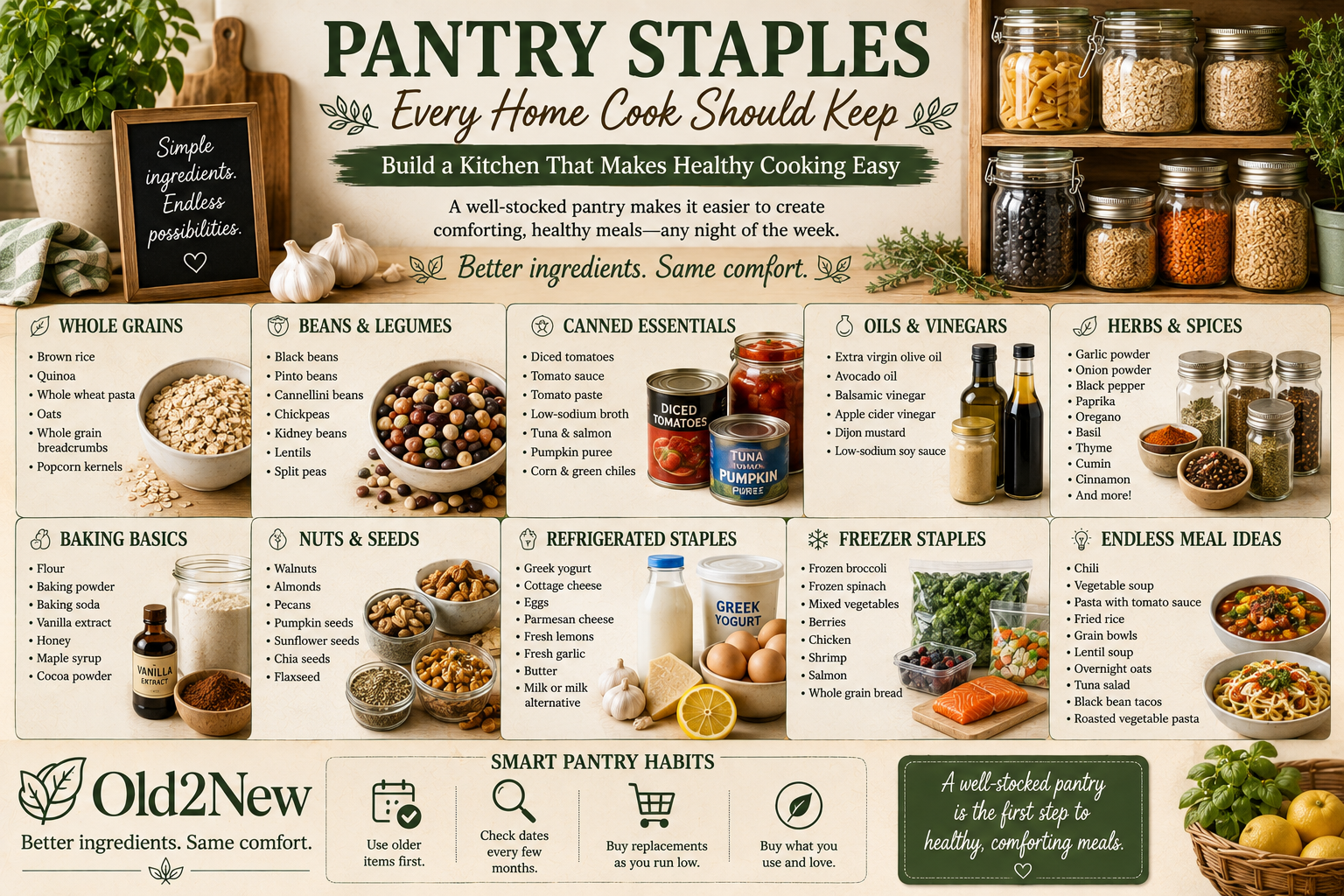
Pantry Staples Every Home Cook Should Keep
The biggest obstacle to cooking more at home isn't time, skill, or motivation. It's opening the refrigerator at 6pm and finding nothing that goes together — a situation that ends with a delivery app instead of a home-cooked meal. A well-stocked pantry doesn't eliminate the need for fresh ingredients, but it eliminates the feeling of having nothing to work with. When the right staples are always there, a bag of dried lentils and a can of tomatoes becomes lentil soup. A box of whole wheat pasta and a jar of olive oil becomes dinner in 20 minutes. Frozen chicken and a handful of spices becomes something worth sitting down for.
The goal isn't a pantry with everything — it's a pantry with the right things. A smaller collection of versatile ingredients that gets used regularly is more valuable than shelves full of specialty items that sit untouched for months. Here's what's actually worth keeping.
Whole Grains
Whole grains are the foundation of comfortable, filling meals across breakfast, lunch, and dinner. They store for months, cook without much attention, and go into more dishes than most people realize.
Brown rice is the most versatile whole grain — it goes into grain bowls, fried rice, soup, stuffed peppers, and alongside any protein. It takes longer than white rice (about 45 minutes), which is why cooking a large batch at the start of the week and refrigerating it pays dividends throughout. Quinoa cooks in 15 minutes, provides complete protein, and works in everything from breakfast bowls to dinner grain bowls. Whole wheat pasta has a slightly nuttier flavor that pairs well with bold sauces and works in any pasta application. Old-fashioned oats go into overnight oats, hot oatmeal, granola, muffins, and as a breadcrumb substitute in meatloaf and meatballs — one of the most multi-purpose pantry items available. Whole grain breadcrumbs add crunch to baked dishes and coatings for chicken and fish. Popcorn kernels are an inexpensive, high-fiber snack that comes together in five minutes.
Beans and Legumes
Beans and lentils are among the most affordable, nutritious, and versatile ingredients available. A can of black beans costs almost nothing and can become tacos, a grain bowl topping, a soup ingredient, or a side dish in under ten minutes. Dried legumes take more planning but store for over a year and cost a fraction of canned.
The variety worth keeping: black beans for Mexican-inspired dishes, tacos, grain bowls, and soups; pinto beans for chili, refried beans, and burritos; cannellini beans for Italian-inspired soups, pasta dishes, and blended as a cream substitute; chickpeas for roasting, curries, hummus, and Mediterranean grain bowls; kidney beans for chili and stews; lentils (brown for everyday cooking, red for soups and curries) for soups, Bolognese, tacos, and stuffed vegetables.
Canned beans are drained and rinsed and ready to use — the most practical option for weeknight cooking. Dried beans and lentils cost less and store longer. Both are worth having. Lentils in particular are worth keeping in dried form because they require no soaking and cook in 20 to 30 minutes — making them nearly as convenient as canned while being significantly more economical.
Canned Pantry Essentials
Quality canned goods are the backbone of fast home cooking. They require no prep, store for over a year, and become the foundation of dozens of different meals.
Diced tomatoes and whole canned tomatoes are among the most used pantry items in any kitchen that cooks regularly — they go into pasta sauce, chili, soup, curry, shakshuka, and anywhere a tomato base is needed. San Marzano whole tomatoes are worth seeking out when available — they're sweeter and less acidic than standard canned tomatoes and produce a noticeably better sauce. Tomato paste adds concentrated tomato flavor and richness to sauces and stews in a tablespoon or two rather than a full can. Tomato sauce is a more convenient base for quick pasta nights.
Low-sodium broth — chicken, vegetable, or beef — goes into soups, grains cooked in broth instead of water, braises, and pan sauces. Buying low-sodium gives you control over the salt level in the finished dish. Canned tuna and salmon are among the most underutilized pantry proteins — they require no cooking, provide high-quality protein, and work in salads, pasta, sandwiches, and cakes without any preparation beyond opening the can. Pumpkin puree adds natural sweetness, fiber, and moisture to baked goods and works in soups and sauces. Canned corn and green chiles are quick additions to soups, tacos, casseroles, and rice dishes.
Healthy Cooking Oils
You don't need a collection of different oils — you need two that cover most situations.
Extra virgin olive oil is the most versatile cooking fat for everything from sautéing and roasting to salad dressings and finishing. Its flavor adds something to whatever it's used in, and its smoke point (around 375°F for high-quality EVOO) is sufficient for most stovetop cooking. It's worth buying the best quality you can afford — better olive oil tastes noticeably better as a finishing oil on salads, pasta, and vegetables. Avocado oil has a higher smoke point (around 520°F) and a neutral flavor, making it the better choice for high-heat cooking like searing and high-temperature roasting where olive oil might smoke. Keeping both covers every cooking situation without needing a shelf of specialty oils.
Vinegars and Flavor Builders
These are the ingredients that add brightness, depth, and complexity to dishes that would otherwise feel flat. They're used in small amounts, which means a single bottle lasts a long time — making them inexpensive to keep despite how much work they do.
Balsamic vinegar adds sweetness and depth to salad dressings, roasted vegetables, grain bowls, and glazes for chicken and salmon. A drizzle of good balsamic over a finished dish adds a richness that reads as sophisticated. Apple cider vinegar adds bright acidity to slaws, dressings, marinades, and quick pickles and has a milder, slightly fruity flavor that works across both savory and sweet applications. Red wine vinegar is sharper and works particularly well in Mediterranean preparations and vinaigrettes.
Dijon mustard adds a sharp, tangy depth to dressings, sauces, marinades, and anything that needs complexity without sweetness. Low-sodium soy sauce or tamari adds umami and savory depth to stir fries, marinades, grain bowls, and soups — a small amount changes the entire flavor profile of a dish. Worcestershire sauce adds a layered, savory complexity to meat dishes, burgers, and sauces that's difficult to replicate with any single other ingredient. Good-quality salsa is a legitimate pantry staple — it goes on eggs, tacos, grain bowls, and baked potatoes, and it adds tomatoes, onion, and herbs to a dish without any additional prep.
Herbs and Spices
A basic spice cabinet covers hundreds of different recipes and is worth building thoughtfully rather than all at once. Start with the essentials and add to the collection as the cooking demands it.
Garlic powder and onion powder are the most used spices in savory cooking — they add the flavor foundation of fresh aromatics in applications where there isn't time to cook them properly. Black pepper (freshly ground when possible) adds complexity and heat. Paprika and smoked paprika add color, sweetness, and (in the smoked version) a depth that suggests slow cooking even in fast preparations. Italian seasoning covers the oregano-basil-thyme combination for pasta, pizza, and chicken without needing multiple separate herbs. Cumin is essential for any Mexican, Middle Eastern, or South Asian cooking. Chili powder builds warmth and depth in chili, tacos, and roasted vegetables. Cinnamon works in both sweet and savory applications and adds warmth to chili, curry, and Moroccan-inspired dishes. Turmeric adds golden color and anti-inflammatory compounds to rice, eggs, soups, and roasted vegetables.
For fresh herbs, garlic and parsley are the two most worth keeping fresh at all times — garlic for building the flavor base of nearly any savory dish, parsley for finishing and brightening. Fresh ginger (which keeps well in the freezer and can be grated from frozen) adds freshness and heat to stir fries, soups, and marinades.
Baking Basics
Even a kitchen that rarely bakes benefits from having the essentials on hand — many are useful in savory cooking as well, and having them available makes weekend baking spontaneous rather than requiring a special trip.
All-purpose flour thickens sauces and soups as well as providing the base for baked goods. Baking powder and baking soda are leaveners that go into muffins, quick breads, and pancakes. Vanilla extract adds depth to sweet preparations and is worth having in pure rather than imitation form. Honey and pure maple syrup are natural sweeteners that work in dressings, marinades, glazes, baked goods, and oatmeal — more versatile than granulated sugar in most applications because they also add flavor. Cocoa powder goes into baked goods, chocolate overnight oats, and chocolate smoothies without adding significant sugar.
Nuts and Seeds
Nuts and seeds add texture, healthy fat, and protein to dishes that would otherwise lack crunch or satiety. They go on oatmeal, salads, yogurt parfaits, roasted vegetables, and grain bowls, and they work in baking as a textural element.
Walnuts and almonds are the most versatile nut — walnuts pair with fruit and cheese and go into salads and baked goods, while almonds work sliced on oatmeal and salads or as almond butter. Pecans add sweetness and crunch to grain bowls, sweet potato dishes, and baked goods. Pumpkin seeds (pepitas) add a slightly nutty, slightly savory crunch to salads, soups, and grain bowls. Chia seeds and flaxseed add fiber, omega-3s, and thickening power to overnight oats, smoothies, and baked goods. Sunflower seeds work as an economical, allergen-friendly alternative to tree nuts in most applications.
Store nuts and seeds in the refrigerator or freezer to prevent the oils from going rancid — they keep for months when cold and much shorter periods at room temperature.
Refrigerator Staples
A pantry works best when supported by a small collection of refrigerator essentials that complete meals without requiring additional shopping.
Greek yogurt is one of the most versatile refrigerator staples available — it replaces sour cream, mayo, and heavy cream in dozens of applications, serves as a breakfast base, works in dressings and dips, and functions as a high-protein addition to baked goods. Cottage cheese similarly works across savory and sweet applications, blends into creamy sauces, and provides protein that completes a meal. Eggs are among the most important proteins in any kitchen — fast to cook, versatile across every meal of the day, and the ingredient that can turn almost any pantry combination into a complete dinner.
Parmesan cheese kept in a block (rather than pre-grated) lasts for months and delivers far more flavor per gram than the pre-grated version — a small amount goes a long way in pasta, soups, and roasted vegetables. Fresh lemons brighten almost any dish they touch and are worth keeping at all times. Fresh garlic provides a depth that garlic powder doesn't fully replicate for dishes where it's sautéed as the flavor base.
Freezer Staples
The freezer is an extension of the pantry — a place where proteins, vegetables, and grains can be stored for months and deployed when fresh options aren't available or planning hasn't happened.
Frozen broccoli and spinach go directly from the freezer into soups, casseroles, pasta dishes, and stir fries without any defrosting or prep. Mixed frozen vegetables extend soups, stir fries, and fried rice in seconds. Frozen berries go into smoothies, oatmeal, yogurt parfaits, and baked goods. Frozen chicken breasts and thighs thaw overnight in the refrigerator and are nearly as convenient as fresh for most applications. Frozen shrimp thaw in 15 minutes under cold running water and cook in under five minutes — the fastest dinner protein available. Frozen salmon fillets roast directly from frozen in 20 to 25 minutes. Whole grain bread freezes well and can go directly from the freezer to the toaster, which prevents the food waste of fresh bread going stale before it's finished.
Pantry Meals from What You Have
The true test of a well-stocked pantry is what you can make without a recipe and without additional shopping. With the staples above, any of these meals are possible on a weeknight from what's already on the shelf:
Chili from canned tomatoes, kidney beans, and chili spices with ground turkey from the freezer. Lentil soup from dried lentils, canned tomatoes, onion, garlic, and cumin. Pasta with tomato sauce from whole wheat pasta, canned tomatoes, garlic, olive oil, and Italian seasoning. Fried rice from brown rice, frozen vegetables, eggs, garlic, and soy sauce. Grain bowls from quinoa, canned chickpeas, whatever fresh or frozen vegetables are available, and olive oil with lemon. Black bean tacos from canned black beans, cumin, chili powder, and whatever toppings are in the refrigerator. Overnight oats from oats, Greek yogurt, almond milk, chia seeds, and frozen berries.
How to Maintain a Useful Pantry
A pantry is useful when it's actively used and rotated, not when it's a museum of ingredients bought for recipes that were never made. A few simple habits keep it functional: use older items first by moving them to the front when new stock arrives; check expiration dates a few times a year and use anything approaching its date; buy replacements as things run low rather than waiting until they're fully gone; avoid buying ingredients for a single recipe unless they'll realistically be used again.
A smaller pantry that's consistently used is more valuable than a larger one that's half-forgotten.
FAQ
How much does stocking a pantry cost upfront? Building a pantry from scratch can feel expensive initially, but most pantry staples cost very little per use once they're on the shelf. A bag of dried lentils costs a few dollars and makes a dozen servings of soup. A jar of cumin costs a few dollars and seasons hundreds of dishes. The upfront investment spreads across months of cooking and reduces the per-meal cost significantly compared to buying ingredients for individual recipes.
What's the most important pantry item to have? Canned tomatoes and dried or canned beans are the most impactful because they enable so many complete meals from almost nothing else. With tomatoes, beans, garlic, and olive oil you can make pasta sauce, chili, soup, shakshuka, and a dozen other dishes. If you're starting from nothing, those are the items worth prioritizing.
How long do pantry staples actually last? Dried grains and dried legumes: one to two years or more in an airtight container. Canned goods: one to three years (use by the date on the can, but most remain safe well beyond). Oils: six months to a year at room temperature, longer if refrigerated after opening. Spices: one to two years for ground spices, two to four years for whole spices. Nuts and seeds: two to four months at room temperature, six to twelve months in the refrigerator or freezer.
Continue Your Recipe Transformation Journey
A well-stocked pantry is where better cooking begins. These guides will help you put it to use:
- How to Cook with Herbs and Spices — how to get the most from the spice collection
- Easy Ways to Add More Vegetables Without Anyone Noticing — how to use frozen and pantry vegetables effectively
- How to Make Creamy Recipes Without Heavy Cream — how cottage cheese and Greek yogurt become the most versatile pantry items
- How to Make Your Favorite Recipes Healthier Without Starting Over — the bigger picture behind every improvement
- What Can I Make with Lentils? — one of the most underused pantry staples
Old2New — There is good in everything.