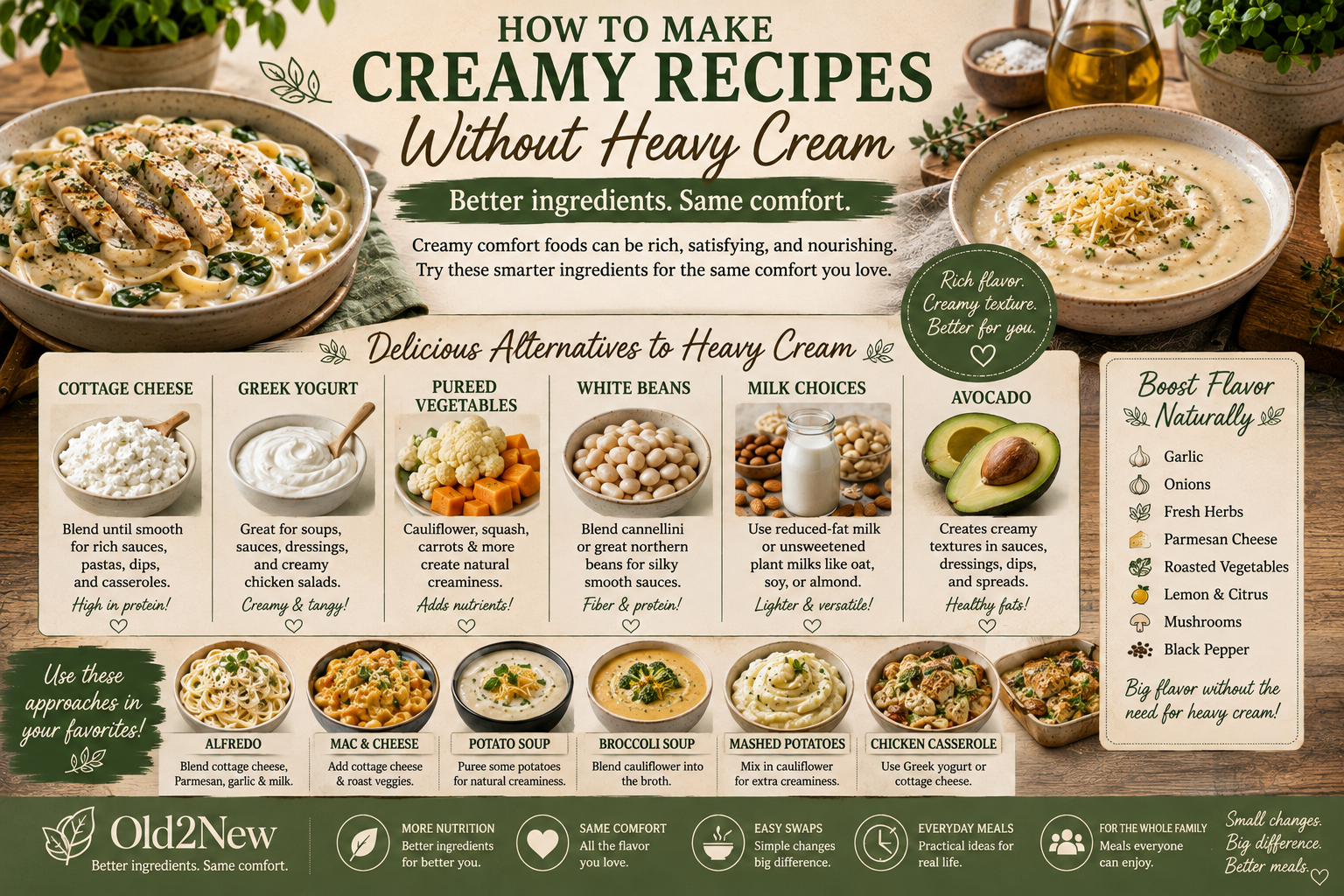
How to Make Creamy Recipes Without Heavy Cream
Creamy comfort food has a specific kind of appeal that's hard to replace — the richness of a good Alfredo, the velvety texture of a well-made soup, the satisfying weight of a mac and cheese that coats the pasta completely. These dishes earn their place on the family table because they deliver something that lighter preparations don't always manage: the feeling of being genuinely taken care of.
The assumption is that heavy cream is what creates that feeling. It isn't. Heavy cream adds fat and body, but the creaminess itself — the smooth, coating texture that makes a sauce feel luxurious — comes from emulsification, starch, protein, and the physical structure of whatever is providing the base. And there are several ingredients that provide that structure with more protein, more fiber, and more nutritional value than heavy cream, while delivering an end result that's indistinguishable in most applications.
You don't have to give up creamy comfort food. You just need to know where creaminess actually comes from.
Why Rethink Heavy Cream?
Heavy cream is an effective ingredient — it adds richness and body to any dish and behaves predictably in most cooking applications. It also adds significant saturated fat and very little else in terms of nutrition. A quarter cup of heavy cream adds about 200 calories and 14 grams of saturated fat with minimal protein and no fiber.
The alternatives discussed here aren't about eliminating cream from every recipe. There are dishes where a small amount of heavy cream is the right call and where the substitution would change something essential. The goal is knowing that you have options — that creaminess doesn't require heavy cream as a default, and that the alternatives often add something the original didn't have.
Cottage Cheese: The Most Versatile Swap
Blended cottage cheese has become one of the most talked-about cooking ingredients in recent years, and the reason is simple: when blended smooth, it creates a thick, creamy, protein-rich base that works in almost any application where heavy cream or cream cheese would be used. The texture is genuinely creamy — not watery, not grainy — and the flavor is mild enough that it takes on the surrounding seasonings rather than asserting its own.
The technique is straightforward: add cottage cheese to a blender with whatever liquid the recipe calls for (broth, milk, pasta water) and blend until completely smooth — about 60 seconds on high. The result is a smooth, pourable base that goes into sauces, soups, dips, and casseroles without being identifiable as cottage cheese in the finished dish.
For Alfredo sauce, blend cottage cheese with a little pasta water, parmesan, garlic, and black pepper. The result is a sauce that coats pasta like a traditional Alfredo, delivers significantly more protein per serving, and takes fifteen minutes. For mac and cheese, blend cottage cheese into the cheese sauce — it extends the sauce, adds creaminess, and increases the protein content without changing what mac and cheese is. For lasagna, use blended cottage cheese in place of ricotta — it's actually closer to the texture of traditional Italian ricotta than most American ricottas and works beautifully between the noodle layers. For potato soup, stir blended cottage cheese in at the end for body and creaminess that thickens the broth without requiring cream or a flour-based roux.
The protein content is the additional benefit — cottage cheese adds roughly 14 grams of protein per half cup, which means a creamy pasta dish or soup made with it is also a significantly higher-protein meal than the heavy cream version.
Greek Yogurt for Tanginess and Protein
Plain Greek yogurt is the most direct swap for sour cream and works in most applications where a creamy, slightly tangy element is needed. It has the same thickness and cooling quality as sour cream with significantly more protein — about 17 grams per half cup compared to roughly one gram in the equivalent amount of sour cream.
For hot dishes, the key is timing — Greek yogurt separates when exposed to high heat for extended periods, which gives it a curdled appearance that doesn't affect flavor but does affect texture. Stir it in at the very end of cooking, off the heat or over very low heat, and it stays smooth. For soups, add it as a finishing swirl rather than simmering it in the pot. For sauces, add it in the last two minutes and don't let the heat exceed a gentle simmer.
Greek yogurt works in chicken salad, potato salad, and coleslaw in place of mayo or sour cream — the texture and creaminess are essentially identical and the protein increase is significant. It works in dressings mixed with olive oil, lemon, and herbs. It works as a taco and baked potato topping with no detectable difference from the sour cream it's replacing. It works in pasta salads and grain bowl dressings. And it works in baked goods — replacing oil or sour cream in muffin, quick bread, and cake recipes — where it adds moisture and protein without changing the texture of the finished product.
Pureed Vegetables for Body and Nutrition
Several vegetables blend into sauces and soups in a way that provides creaminess without any dairy at all. The technique is simple: cook the vegetable until completely tender, blend until smooth, and add to the dish. The result is a base that has body, richness, and depth of flavor — and that adds nutrition rather than calories.
Cauliflower is the most neutral-flavored option and the most versatile. Steamed or roasted cauliflower blended with broth and a little garlic creates a creamy base for soups and pasta sauces that tastes almost like a cream-based preparation. Mixed into a cheese sauce for mac and cheese, it extends the sauce and adds fiber without changing the flavor. Blended into mashed potatoes, it lightens the dish and adds fiber without changing the creamy character.
Butternut squash blended into soups adds natural sweetness and a deep orange color alongside the creaminess. It pairs beautifully with warming spices — nutmeg, cinnamon, ginger — and creates one of the most naturally satisfying soups possible without any dairy. Sweet potato does similar work with a slightly earthier sweetness. Carrot blended into a soup or sauce adds color and a natural sweetness that balances the acidity of tomato-based dishes.
White beans — particularly cannellini and great northern beans — blend into one of the silkiest, most satisfying cream substitutes available. They have almost no flavor of their own and take on the seasoning of whatever dish they're in completely. Blended cannellini beans stirred into an Alfredo sauce with garlic, parmesan, and pasta water create a sauce that's richer in protein and fiber than a cream-based version and creamier than most people expect from a bean. In a potato soup or chowder, blended white beans add body without any dairy and make the soup filling enough to be a complete meal.
Milk Alternatives for Lighter Creaminess
Many recipes that call for heavy cream are actually using it primarily for body rather than fat — and in those cases, a thicker milk can substitute effectively. Whole milk works in most cream-based soups and sauces when used with a starch to thicken it. Reduced-fat milk works in béchamel and cream sauces when combined with flour or cornstarch. Unsweetened oat milk is the plant-based milk with the most body and the most neutral flavor — it creates genuine creaminess in soups and sauces in a way that almond and rice milk don't quite achieve. Unsweetened soy milk is higher in protein than other plant-based milks and works well in applications where the extra protein content is useful.
The key with any milk alternative is thickening — milk lacks the fat content that gives heavy cream its body, so a small amount of flour, cornstarch, or blended starchy vegetable is usually needed alongside it to achieve the same coating texture in a sauce.
Avocado for Cold and Blended Applications
Avocado creates a thick, naturally creamy texture that works particularly well in cold applications — dressings, dips, spreads, and smoothies — where no cooking is required. Blended with garlic, lemon, and herbs it becomes a pasta sauce that coats noodles like a cream sauce and adds healthy fat and fiber. Mashed and spread on a sandwich it replaces mayo with something richer and more flavorful. Blended into a smoothie it adds creaminess that almond milk alone doesn't provide.
The limitation of avocado as a cream substitute is that it doesn't hold up well to heat — the fats break down and the color changes at cooking temperatures. Use it in cold applications, as a finishing element added after cooking, or in dishes where it's not exposed to sustained heat.
Build Flavor First
One of the reasons heavy cream feels so essential in certain recipes is that it's often doing double duty — providing both texture and a richness that compensates for underdeveloped flavor elsewhere in the dish. When the flavor foundation is well built, the need for heavy cream to make a dish feel satisfying diminishes.
Garlic cooked in olive oil until golden adds a savory depth that carries through the entire dish. Onion cooked slowly until caramelized adds sweetness and complexity. Roasted vegetables blended into a sauce add layers of flavor that raw vegetables don't provide. Parmesan added in small amounts contributes more flavor per gram than a large amount of mild cheese — and parmesan's fat content contributes to the creaminess of a sauce in a way that makes it a genuinely functional ingredient rather than just a topping. Fresh herbs added at the end brighten everything without adding anything heavy. A squeeze of lemon lifts the richness of a cream-based sauce and makes it taste more defined.
When these elements are in place, the sauce or soup is already satisfying before the creamy element is added — which means less of whatever that element is can do the same work.
Don't Forget Texture
Creamy dishes feel even better when they include contrasting textures — something to break the smoothness and make each bite interesting. Toasted breadcrumbs on top of mac and cheese or a casserole add crunch that the creamy interior doesn't provide. Fresh herbs scattered over a creamy soup add color and a brightness that contrasts the richness. Roasted vegetables alongside a creamy pasta provide something to chew against the smooth sauce. Cracked black pepper added generously adds a slight heat and texture that creamy dishes absorb beautifully. Toasted nuts or seeds on top of a grain bowl with a creamy dressing add crunch and healthy fat.
These finishing touches are what elevate creamy comfort food from satisfying to genuinely memorable — and they cost almost nothing in terms of time or effort.
FAQ
Will my family notice if I swap heavy cream for cottage cheese in a sauce? In most applications, no — particularly when the cottage cheese is blended completely smooth and the dish has strong flavors from garlic, parmesan, or herbs that provide the dominant taste. The texture of blended cottage cheese in a sauce is genuinely creamy and smooth, and the mild flavor takes on the surrounding seasonings. The most noticeable difference is that the sauce may be slightly thicker — adding a splash of pasta water or broth adjusts this easily.
Can Greek yogurt be used in hot soups and sauces without curdling? Yes, with the right technique. The key is temperature — Greek yogurt separates when simmered at high heat for extended periods. Add it at the very end of cooking, off the heat or over the lowest possible flame, and stir it in gently. It will stay smooth if it's not exposed to high heat after being added. Tempering it first — stirring a spoonful of the hot liquid into the yogurt before adding the yogurt to the pot — also helps prevent separation.
What's the best substitute for heavy cream in Alfredo specifically? Blended cottage cheese with pasta water, parmesan, and garlic is the most successful Alfredo substitute in terms of texture and flavor. The pasta water contains starch that helps the sauce coat the noodles the way an emulsified butter-and-cream Alfredo does. Blended cannellini beans are also excellent. Greek yogurt works but needs to be added off the heat and benefits from a small amount of pasta water to loosen the sauce to the right consistency.
Are these substitutes better for GLP-1 medication users? Yes — the protein content of cottage cheese and Greek yogurt makes meals built on them significantly more filling per calorie than heavy cream-based versions. The fiber in blended vegetables and white beans also supports satiety. For anyone managing portions or appetite, creamy dishes made with these substitutes tend to satisfy more completely with smaller portions than their heavy cream counterparts.
Continue Your Recipe Transformation Journey
Making creamy recipes with better ingredients is one of the most impactful changes you can apply to comfort food cooking. These guides will help you go further:
- What Can I Make with Cottage Cheese? — the full guide to the most versatile creamy ingredient in the kitchen
- What Can I Make with Greek Yogurt? — everything Greek yogurt can do in savory and sweet applications
- What Can I Make with Cauliflower? — the best vegetable for building creamy bases without dairy
- How to Make Your Favorite Recipes Healthier Without Starting Over — the bigger picture behind every upgrade
- Easy Ways to Add More Vegetables Without Anyone Noticing — how to add nutrition while keeping comfort
Old2New — There is good in everything.