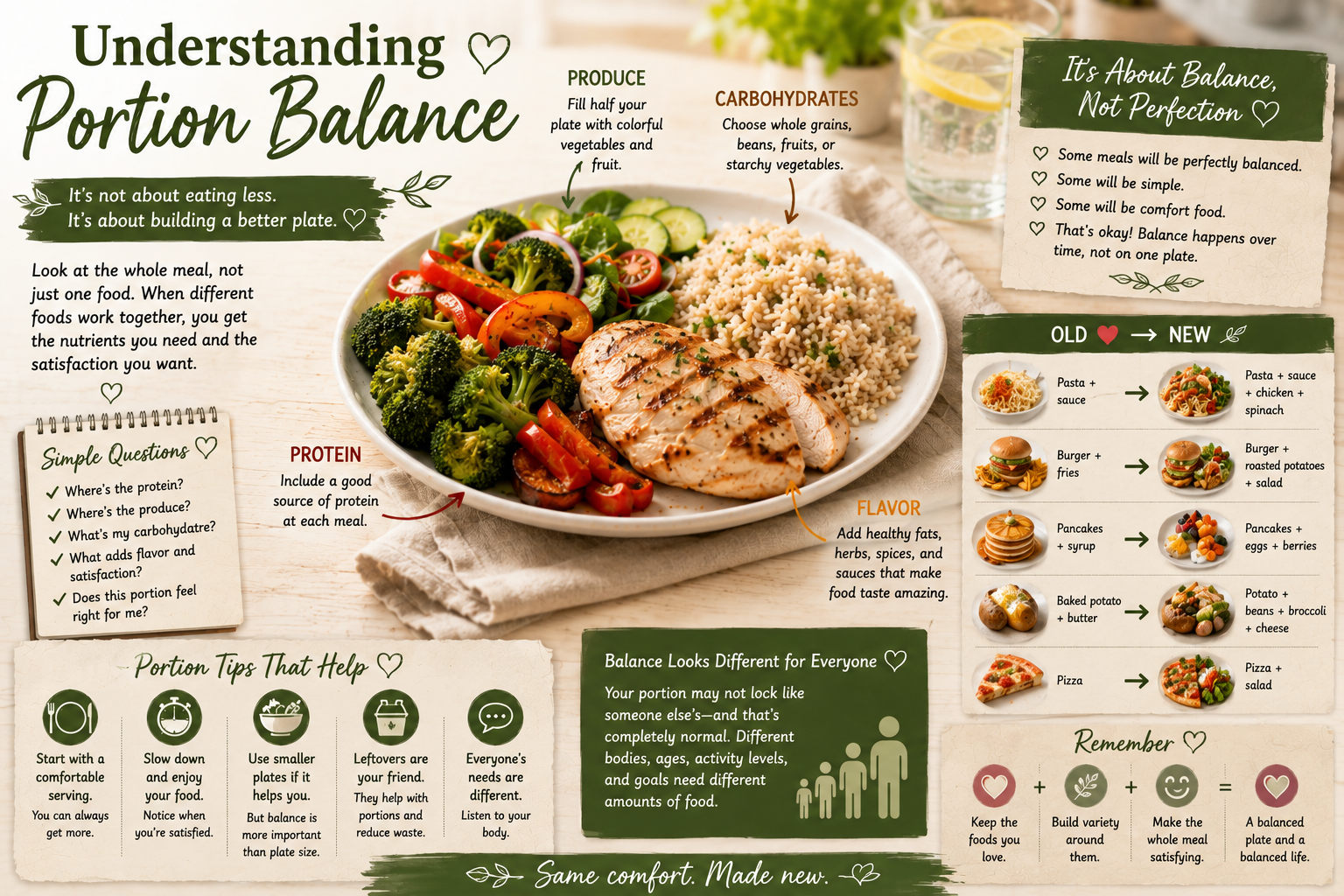
Understanding Portion Balance
Portions can get complicated fast. Use a smaller plate. Measure everything. Weigh your food. Count every bite. Only eat this much pasta. Never eat more than that much rice. Before long, dinner starts feeling less like dinner and more like a math assignment.
At Old2New, we prefer a different idea: portion balance.
Portion balance isn't about seeing how little food you can put on your plate. It's about looking at the whole meal and asking whether the different parts work together. Your pasta can stay. Your potatoes can stay. Your rice can stay. Your tacos can stay. And yes, your mac and cheese can stay too.
Instead of asking "how much am I allowed to eat?" try asking: "what would make this feel like a complete, satisfying meal?" That's a much better place to start.
Portion Control and Portion Balance Aren't the Same Thing
The phrase portion control often sounds like restriction. Less pasta. Less bread. Less potatoes. Less dessert. Less everything. Portion balance approaches the meal differently.
Instead of focusing only on making one food smaller, we look at what else is on the plate. Imagine spaghetti night. You could have a large bowl of spaghetti with tomato sauce. Or you could have spaghetti with meat sauce alongside roasted broccoli, a simple salad, and a little parmesan on top. The spaghetti didn't disappear. It simply isn't responsible for being the entire dinner anymore.
Look at the Whole Meal
One ingredient rarely tells the whole story. Take a baked potato. A potato by itself is simply a potato. Now add chicken, broccoli, cheese, fresh herbs, and maybe some fruit or a salad alongside it. Now you've created a meal with several different components.
The same principle works with rice, pasta, bread, tortillas, and potatoes. Instead of asking whether one food is good or bad, ask: what could I put with it?
A Simple Way to Think About Your Plate
You don't need exact percentages for every meal. But it can help to think about four general components: protein, produce, carbohydrate, and flavor.
Chicken with broccoli, potatoes, and herbs. Salmon with green beans, rice, and lemon. Beef and beans with lettuce, tomatoes, tortillas, and salsa. Eggs with berries, toast, and avocado. Lean meat sauce with spinach over pasta, finished with parmesan. The amounts don't have to be identical. The goal is simply to create a meal with variety.
Start with a Protein
When building a meal, choosing your protein first can make everything else easier. Depending on what you enjoy, that might be chicken, fish, beef, turkey, eggs, beans, lentils, Greek yogurt, cottage cheese, tofu, or another plant-based option. Then ask: what goes well with this?
Chicken? Maybe potatoes and green beans. Fish? Rice and roasted vegetables. Eggs? Toast and fruit. Beans? Rice, vegetables, salsa, and avocado. Now dinner starts building itself.
Give Produce Some Room
Vegetables and fruit can add color, texture, flavor, fiber, and variety. But vegetables don't always need to sit in a separate pile on the side of your plate. Put them inside the food.
Add mushrooms and spinach to pasta sauce. Put lettuce, tomatoes, peppers, and onions in tacos. Add broccoli to mac and cheese. Put vegetables on pizza. Add spinach to eggs. Stir peppers and onions into chili. The meal becomes more balanced without feeling like you're eating an entirely different dinner.
Carbohydrates Belong Here Too
Rice isn't the enemy. Neither are potatoes, pasta, bread, tortillas, oats, or other grains. Carbohydrates are part of many of the foods we love, and completely removing them can sometimes change the identity of the dish entirely.
Instead, look at how they fit into the meal. Rice with chicken and vegetables. Pasta with meat sauce and spinach. Potatoes with fish and green beans. Toast with eggs and fruit. Tortillas with beef, beans, and vegetables. That's balance — the carbohydrate as part of a complete meal rather than the entire meal by itself.
Don't Forget Flavor
A plate can look nutritionally impressive and still be something nobody wants to eat. Flavor matters. Use garlic, onion, fresh herbs, lemon or lime, spices, olive oil, avocado, cheese, nuts, and seeds. Sauces and dressings can have a place too.
We're trying to create meals you'll actually want to make again. Not plates that look impressive and taste like responsibility.
You Don't Need Perfect Fractions
You've probably seen pictures showing a plate divided into exact sections. Those frameworks can be useful as a starting point. But real food doesn't always cooperate. Take lasagna — where exactly are we drawing the lines?
Lasagna might contain pasta, meat, cheese, tomato sauce, and vegetables. Several components are already combined. The same is true for chili, soup, tacos, casseroles, chicken pot pie, and stir fry. Mixed dishes still count. Instead of worrying about perfect sections, look at the ingredients inside the meal.
Sometimes You Transform the Plate, Not the Recipe
This is one of the easiest ways to make comfort food work differently. Suppose you're making meatloaf. You love your meatloaf recipe. Your family loves it. Leave the meatloaf alone. Instead, change what's around it.
The old version: meatloaf and a large serving of mashed potatoes. The new version: meatloaf with mashed potatoes, green beans, and roasted carrots. The comfort food stayed exactly where it belonged. We simply built a different plate around it.
Pasta Can Stay Pasta
The old version: spaghetti with tomato sauce. The new version: spaghetti with lean meat sauce, mushrooms, spinach, and parmesan. You didn't replace the pasta. You added ingredients that made the entire meal more substantial. That's a recurring Old2New idea — don't always subtract. Build.
Pizza Night Still Works
Trying to create more balanced meals doesn't mean Friday pizza disappears. Maybe pizza night becomes pizza alongside a salad and roasted vegetables. Or maybe you put vegetables and protein directly on the pizza. And sometimes it's simply pizza. One meal doesn't need to accomplish every nutrition goal you've ever had.
Taco Night Practically Balances Itself
Tacos are perfect for building meals around individual preferences. Start with tortillas, add a protein — beef, chicken, turkey, fish, beans, or a combination — then put out lettuce, tomatoes, peppers, corn, avocado, cheese, and salsa. Everyone can choose what goes into their tacos. One dinner, lots of possibilities.
Bowls Make Balance Easy
Start with rice or another grain, then add protein, vegetables, beans, fresh toppings, a flavorful sauce, and maybe avocado, cheese, herbs, or seeds. You can adjust each component depending on your appetite and preferences. And leftovers work beautifully in bowls — yesterday's chicken combined with tonight's rice and vegetables suddenly becomes something completely new.
Portion Size Isn't Universal
There isn't one portion size that's right for every person. People have different bodies, ages, activity levels, appetites, schedules, health needs, and goals. Even your own appetite can change from one day to another — a meal that satisfies you after a quiet day may be different from what satisfies you after being active all afternoon. That's normal.
If you have specific nutrition or medical needs, your healthcare professional or registered dietitian can help you determine what's appropriate for you. For everyday cooking, Old2New can help you focus on building variety and balance into familiar meals.
You Can Always Get More
You don't have to predict exactly how hungry you'll be before you start eating. Serve an amount that looks comfortable. Eat. Enjoy it. Still hungry? Get more. That's allowed. Starting with a comfortable serving and checking in with yourself is much easier than trying to determine the perfect portion beforehand.
Slow Down Enough to Actually Eat
We're not going to tell you to chew every bite exactly 37 times. Nobody has time for that. But meals can sometimes happen so quickly that we barely notice them — standing at the counter, looking at the phone, cleaning the kitchen, and somehow dinner disappeared.
When possible, sit down. Taste the food. Talk. Enjoy the meal. Give yourself enough time to notice when you're satisfied. It doesn't have to become a complicated ritual.
Serving From the Kitchen Can Help
You don't always have to put every pot and serving dish directly on the table. Try serving dinner from the kitchen, putting what you want on your plate, and sitting down to eat. Want another serving? Go get one. That little pause gives you a chance to decide: am I still hungry, or was that enough? No rules — just another moment to notice.
Snacks Can Be Balanced Too
Sometimes a snack doesn't satisfy because it's only one thing. Try pairing foods. Apple and peanut butter. Berries and Greek yogurt. Cheese and fruit. Vegetables and hummus. Popcorn and nuts. Hard-boiled egg and fruit. Instead of thinking about making the snack smaller, think about making it more complete.
What About Restaurants?
Restaurant portions can sometimes be much larger than what you'd normally serve at home. That doesn't mean you have to clean the plate. But it also doesn't mean you need to immediately divide everything into exact portions before taking a bite. Eat. Enjoy yourself. Take leftovers home if you want. One restaurant meal doesn't determine your overall eating habits.
Dessert Fits Into Real Life
A birthday cake is not a nutritional emergency. If you want cake at a birthday party, enjoy the cake. You don't need to skip dinner beforehand. You don't need to earn it. And you don't need to punish yourself tomorrow. It's dessert. Dessert can be part of life. Balance happens over time — not because every single plate is perfectly arranged.
Bigger Isn't Automatically More Satisfying
More food doesn't necessarily create more satisfaction. Sometimes a moderate portion of something you genuinely love, surrounded by other foods you enjoy, creates a much better meal. A burger with roasted potatoes and a salad feels more complete than two burgers because the burger was carrying the entire dinner. Pasta with chicken and vegetables satisfies more fully than an enormous bowl of plain pasta. We're not trying to eat as little as possible — we're trying to create meals that feel complete.
Don't Turn Balance Into Another Set of Rules
Portion balance shouldn't become "my plate didn't have enough vegetables, so I failed." Some meals will be beautifully balanced. Some won't. Some nights you'll have chicken, vegetables, potatoes, and salad. Other nights you'll eat a sandwich. Sometimes dinner will be pizza. Sometimes you're going to stand over the kitchen sink eating something because apparently that's where adulthood has brought us.
Healthy eating happens across many meals — not one plate.
Try the "What's Missing?" Test
The next time you're making a meal, stop before changing anything. Look at it. Ask: what's missing? Maybe you have pasta and sauce — a protein and some vegetables might fit. Maybe you have chicken and rice — add broccoli. Maybe breakfast is toast — add eggs and fruit. Maybe you've made tacos filled with beef, beans, lettuce, tomatoes, avocado, cheese, and salsa. You know what? Nothing may be missing. Dinner is done. Not every meal needs fixing.
Balance Should Give You More Options
Instead of thinking less pasta, try: pasta AND chicken AND vegetables. Instead of no pizza, try: pizza AND salad. Instead of no potatoes, try: potatoes AND fish AND green beans. Instead of making your plate smaller and smaller, sometimes the answer is making the meal more varied. That's a very different way to think about portions.
Build a Plate You Actually Want to Eat
The perfect plate doesn't exist. And even if it did, you probably wouldn't want to eat exactly the same proportions every day. Start with familiar food. Add variety. Include foods that support your goals. Choose portions that make sense for your appetite. And adjust when you need to.
Some nights the vegetables might take up a lot of the plate. Some nights the lasagna might. That's life. Portion balance isn't about making every plate identical — it's about understanding how different foods can work together.
Not tiny portions. Not perfect portions. Balanced portions.
FAQ
Do I need to use a food scale or measuring cups? For most people pursuing general health goals, no. Visual awareness of what's on the plate and whether the main components are present is sufficient for everyday cooking. If you have specific medical or nutrition needs, your healthcare provider can advise on whether more precise measurement is appropriate for your situation.
What if I'm still hungry after a balanced meal? Eat more. Portion balance isn't about eating the smallest possible amount — it's about building a complete, satisfying meal. If the meal was balanced and you're still hungry, have more of any component. Hunger is useful information, not a problem to ignore.
How does this work for people with specific health conditions? If you have specific medical or nutrition needs — including diabetes, kidney disease, GLP-1 medication use, or other conditions — work with your healthcare professional or registered dietitian for personalized guidance. The general principles of balance and variety apply broadly, but individual needs vary significantly.
Continue Your Recipe Transformation Journey
Portion balance is where the whole Old2New approach comes together at the plate. These guides will help you build on it:
- How to Eat Healthier Without Giving Up Comfort Food — keeping comfort food while building balance around it
- Easy Ways to Add More Vegetables Without Anyone Noticing — how produce earns its place in every meal
- Simple Ways to Add More Protein — building the protein component that anchors a balanced plate
- Why Small Changes Matter More Than Perfect Diets — why balance over time matters more than perfect individual meals
- Building Healthy Habits That Last — how portion awareness becomes an automatic habit
Old2New — There is good in everything.