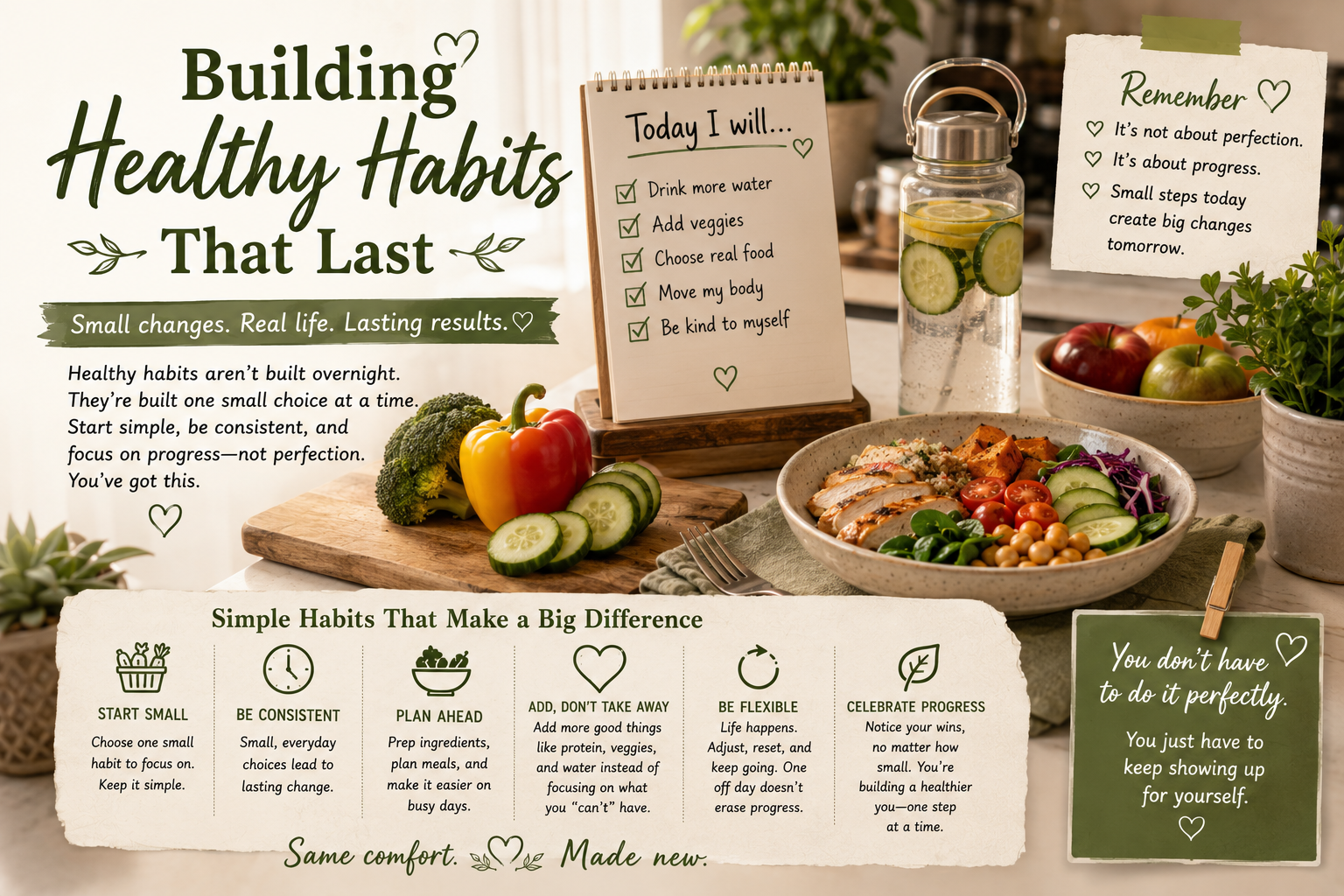
Building Healthy Habits That Last
Starting a healthy habit can feel exciting. You clean out the refrigerator. Buy fresh vegetables. Fill the fruit bowl. Plan the meals. Promise yourself you're going to cook more, drink more water, get more protein, eat more vegetables, and finally stay consistent.
For a few days, everything goes beautifully.
Then life happens. You get home late. The meal plan doesn't work out. Someone wants pizza. You miss a day. And suddenly a little voice says: "Well, I messed it up. I'll start again Monday."
But healthy habits aren't built by doing everything perfectly. They're built by doing simple things often enough that they eventually become part of everyday life. At Old2New, we believe the same thing about healthy habits that we believe about recipes: you don't have to throw everything out and start over. Keep what's already working. Change what makes sense. Build from there.
Start Smaller Than You Think
One of the biggest mistakes when trying to eat differently is changing everything at once. Monday morning suddenly becomes responsible for eating more vegetables, drinking more water, cooking every meal, getting more protein, meal prepping, reducing takeout, eating less sodium, exercising, sleeping better, and somehow organizing the pantry.
That's a lot to ask from a Monday.
Instead, choose one small change. Maybe this week you add a vegetable to dinner three times. That's it. Once that becomes easier, add something else. Small habits aren't insignificant — they're simply easier to repeat, which means they're more likely to actually happen.
Build on Something You Already Do
Creating an entirely new routine takes significant effort. Adding something to an existing routine is much easier.
You already make coffee every morning? Fill your water bottle while the coffee brews. You already make spaghetti? Add mushrooms or spinach to the sauce. You already pack lunch? Add a piece of fruit. You already make tacos every Tuesday? Put black beans and extra vegetables on the table. You already grocery shop once a week? Check the refrigerator before leaving.
You're not reinventing your life. You're improving something that's already happening. The existing habit provides the structure; the addition just rides along.
Make the Better Choice Easier
Willpower gets entirely too much credit. Your environment matters more than most people realize.
If you want to eat more fruit but the apples are hidden in the bottom drawer, you might forget they're there. Put fruit where it can be seen. Want to use vegetables more often? Keep frozen vegetables available for nights when chopping isn't happening. Want to eat leftovers instead of letting them go to waste? Create a Use Me First area in the refrigerator. Want quick protein options? Keep eggs, Greek yogurt, beans, cottage cheese, and cooked chicken visible and accessible.
Sometimes a healthy habit doesn't need more motivation. It needs less friction. The choice that requires zero additional effort is the choice that gets made on a difficult Tuesday.
Prepare Ingredients Instead of Entire Meals
Meal prep doesn't have to mean spending Sunday afternoon making seven identical lunches in matching containers. Preparing ingredients instead of complete meals creates flexibility rather than commitment.
Chop some vegetables. Wash fruit. Cook a batch of chicken. Make rice or another grain. Hard-boil eggs. Wash greens. Now those ingredients can become several completely different meals throughout the week. Chicken can become tacos tonight and a grain bowl tomorrow. Vegetables can go into pasta, eggs, or soup. Rice can become a side dish or the base of a bowl.
You're preparing possibilities, not locking yourself into Thursday's dinner on Sunday afternoon.
Keep a Few Automatic Meals
Decision fatigue is real. You don't need to invent dinner every night.
Create a few meals that happen regularly — Taco Tuesday, spaghetti night, Friday pizza, breakfast for dinner, Sunday soup. These meals don't need to happen on specific days. The point is having several familiar dinners that can be made without searching for a recipe or making a decision at the hardest moment of the day.
Then gradually build better habits into those meals. Taco night gets beans and extra vegetables. Pizza night gets a salad alongside. Spaghetti gets mushrooms and spinach stirred into the sauce. The routine stays familiar. The meal evolves quietly over time.
Add Before You Take Away
Healthy habits often begin with a giant list of things to stop eating. Try something different — ask instead: what could I add?
Add berries to breakfast. Add vegetables to pasta. Add beans to tacos. Add protein to a snack. Add spinach to eggs. Add a salad beside pizza. Add water with lunch. Adding nutritious foods can naturally change the balance of what you're eating without making every meal feel like something was taken away. Addition feels like abundance. Removal feels like loss. The same nutritional outcome is more sustainable when it arrives through one rather than the other.
Keep the Comfort Food
A healthy habit that requires permanently giving up every food you love probably isn't going to feel very sustainable. So keep pizza night. Keep Taco Tuesday. Keep pancakes, burgers, pasta, and mac and cheese. Then decide whether anything around those foods could change.
Pancakes with eggs and berries. Pizza with vegetables and a salad. Burgers with fresh toppings and roasted potatoes. Mac and cheese with chicken and broccoli. The habit isn't "stop eating comfort food" — it's "build around the food I love." That's a fundamentally different instruction, and it's one most people can actually follow.
Create a Minimum Version of Every Habit
This is one of the most effective ways to make a habit survive a busy week: create both a normal version and a minimum version.
Cooking dinner: Normal is a homemade dinner; minimum is assembling something from convenient ingredients. Eating vegetables: Normal is roasting fresh vegetables; minimum is microwaving frozen broccoli. Breakfast: Normal is eggs, toast, and fruit; minimum is Greek yogurt and fruit. Packing lunch: Normal is leftovers with several sides; minimum is a sandwich and a piece of fruit. Meal planning: Normal is planning several dinners; minimum is deciding what's being made tonight.
The minimum version keeps the habit alive. You haven't failed — you've adapted. That's different.
Have a Backup Plan
Plans will fail. That's not pessimism — that's dinner.
The chicken will still be frozen. Someone will get home late. An appointment will run over. You won't feel like cooking. Keep backup foods available: eggs, frozen vegetables, soup, beans, pasta and tomato sauce, rotisserie chicken, whole grain bread, microwaveable rice, a few frozen meals the family enjoys. Your backup plan doesn't need to be perfect. It just needs to make the next choice easier than ordering delivery.
Stop Starting Over
You ordered takeout Tuesday. So? Wednesday still exists. You ate more than planned at a birthday party. Your next meal doesn't need to compensate for it. You didn't cook all week. You can cook tonight.
There is no requirement that healthy habits begin on Monday at 8:00am. You don't need a restart. You simply continue. The habit isn't a streak to protect — it's a practice to return to.
Missing Once Doesn't Erase the Habit
Suppose you're trying to cook at home four nights a week. You cook three. Did you fail? No. You cooked three dinners. That's three times the habit was practiced. Healthy living isn't a pass-or-fail test. Consistency matters more than perfection. And consistency doesn't mean doing something every single time — it means returning to it.
Track What You're Doing Right
Sometimes so much focus goes toward what hasn't been accomplished that what's already changing gets missed. Maybe this month you cooked more often, used leftovers, tried a new vegetable, started eating breakfast, added protein to snacks, drank more water, ordered takeout less often, or stopped throwing away as much produce.
Those things matter. Healthy habits are often quiet. Nobody applauds when you use the spinach before it goes bad. But that's exactly the kind of small, consistent choice that adds up to something meaningful over months and years.
Make Your Kitchen Do Some of the Work
Your kitchen can help support your goals without requiring willpower at every decision point. Keep fruit visible. Put foods that need using toward the front of the refrigerator. Keep easy proteins available. Stock frozen vegetables. Freeze extra portions when cooking. Keep a short list of quick meals somewhere accessible. Store water where it's easy to grab. Put Use Me First foods together where they'll be seen.
A kitchen designed to support better choices reduces the number of active decisions required every day. Fewer decisions means more consistency.
Don't Build Habits Around Foods You Hate
If you hate kale, don't build your entire healthy lifestyle around kale. There are other vegetables. If you don't like cottage cheese, choose another protein source. If brown rice isn't your thing, choose a different grain — or eat regular rice and build the meal around it. If a particular healthy swap consistently produces a meal nobody wants to eat again, try something else.
The habits most likely to last are the ones attached to foods and meals you actually enjoy. Sustainable change doesn't require suffering through food you dislike.
Your Habits Can Change With Your Life
Healthy routines aren't supposed to stay exactly the same forever. A busy work season may require more convenience foods. Summer might mean more grilling. Winter might mean soups and casseroles. A household with young children will have different routines from someone cooking for one. Your schedule may change. Your goals may change. Your preferences may change. Your habits can change too.
Flexibility isn't failure. It's part of making something sustainable long enough to matter.
The Old2New Habit Shift
The old version: buy vegetables with good intentions, forget about them, throw them away. The new version: keep vegetables visible, use frozen options, create a Use Me First area.
The old version: plan seven complicated dinners, get overwhelmed, order takeout. The new version: plan three easy dinners and keep two emergency meals available.
The old version: try to completely change breakfast overnight. The new version: keep your normal breakfast and add a protein or fruit.
The old version: miss one day and decide to start again Monday. The new version: miss one day and continue with the next opportunity.
That's what sustainable change looks like.
Try the One-Habit Challenge
For the next week, choose one — not five, one. Add a vegetable to dinner. Keep a water bottle nearby. Add protein to breakfast. Use leftovers for one lunch. Cook one additional dinner at home. Practice it for a week. Then ask: was this easy enough to keep doing? If yes, keep it. Then consider adding another.
The practice of returning to one small thing, consistently, is the foundation of everything else.
Don't Chase Perfect Days
There will be days when everything works. There will also be days when dinner is a sandwich eaten while standing at the kitchen counter. Both days count.
Healthy living doesn't require a streak of perfect meals. It requires habits flexible enough to survive busy weeks, vacations, holidays, birthdays, work, family, and regular old life.
Think About a Year From Now
Instead of asking "can I do this perfectly for the next seven days?" ask "could I still be doing this a year from now?"
Could you keep frozen vegetables available? Probably. Could you put fruit where you can see it? Sure. Could you add beans to tacos? Absolutely. Could you cook one extra meal at home each week? Maybe.
Those aren't dramatic changes. But imagine repeating them for a year. That's where small habits become something much bigger.
Healthy Should Eventually Feel Normal
That's really the goal. Not healthy eating as a temporary project you're constantly trying to maintain — but healthy habits as just the way things work.
Eventually, keeping vegetables in the freezer is normal. Using leftovers is normal. Adding protein to meals is normal. Drinking water is normal. Transforming a favorite recipe is normal. Having pizza on Friday is also normal. You aren't constantly thinking "I'm being healthy today." You're simply living your life. And your everyday choices have gradually changed.
That's how healthy habits last. Not because you never miss a day. Not because you follow every rule. Not because you eat perfectly. They last because they're realistic enough to keep coming back to.
Start small. Make it easy enough to repeat. Keep what works and build from there.
FAQ
How long does it take to build a healthy habit? Research suggests the average is around 66 days for a new behavior to become automatic, though the range is wide depending on the habit and the person. The practical implication is that the first few weeks of any new habit are the hardest — it gets easier with repetition. Starting with habits small enough to repeat on difficult days makes reaching that automatic stage more likely.
What if I keep starting and stopping? Starting and stopping is part of the process, not evidence that it's not working. Each time you return to a habit, you're practicing it. The goal isn't to never stop — it's to keep coming back. Making the habit smaller and easier so it's more survivable during difficult weeks tends to reduce the frequency of complete stops.
What's the most important first habit to build? Whichever one fits most naturally into your existing life. The habit that's easiest to start is the one most likely to create the momentum for everything else. A perfectly chosen first habit that requires too much change from the current routine is less valuable than a slightly less optimal habit that actually gets practiced.
Continue Your Recipe Transformation Journey
Building habits is where everything in the Old2New approach comes together. These guides will help you put the principles into practice:
- Why Small Changes Matter More Than Perfect Diets — the philosophy behind starting small
- How to Eat Healthier Without Giving Up Comfort Food — keeping comfort food in the habit
- Beginner's Guide to Meal Planning — how planning supports consistency
- How to Organize a Healthy Refrigerator — making the kitchen support your goals
- Easy Weeknight Dinner Strategies — the practical habits that make dinner happen
Old2New — There is good in everything.