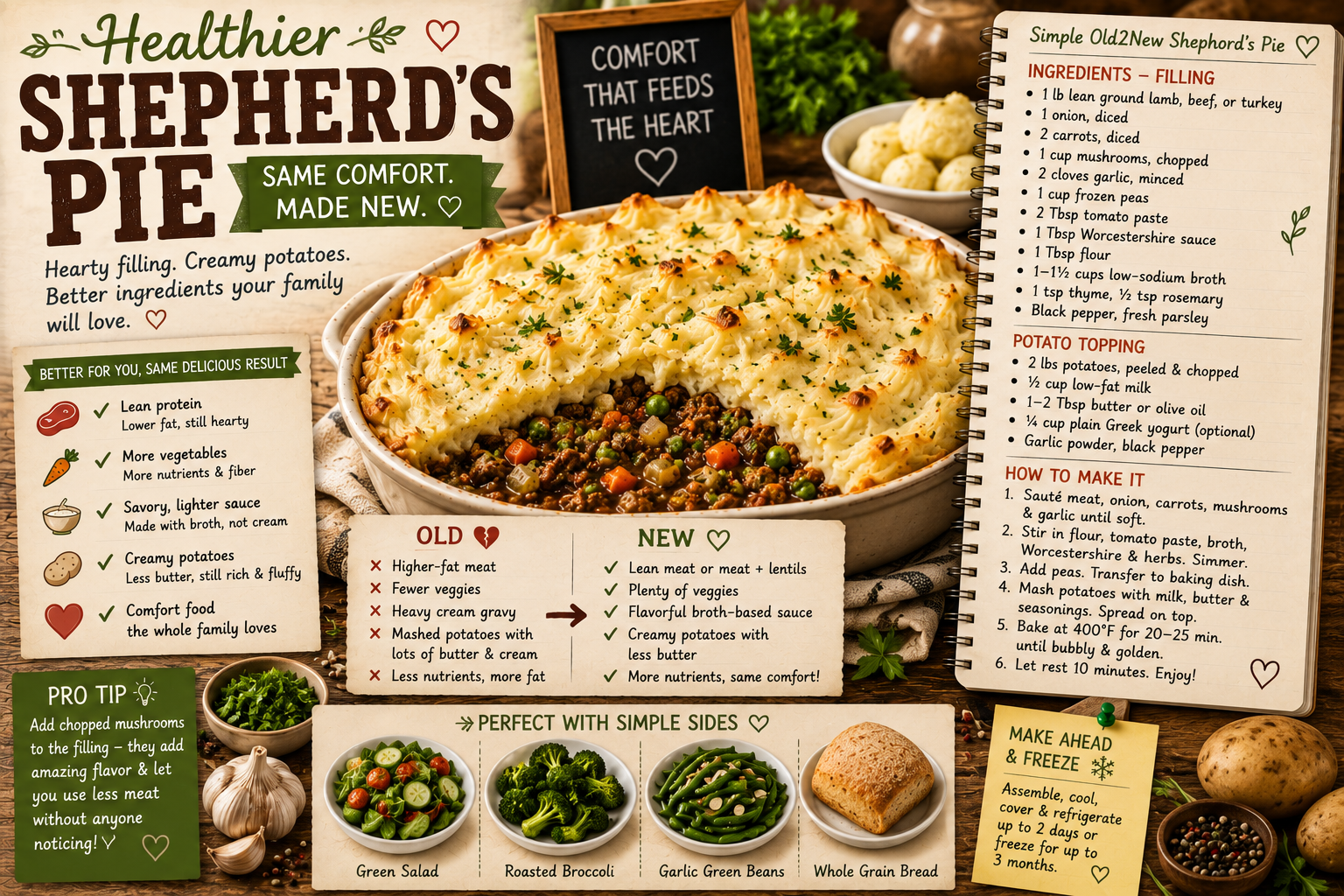
Healthier Shepherd's Pie: Keep the Creamy Potatoes
Shepherd's pie is comfort food from the ground up — a rich, savory filling, tender vegetables, creamy mashed potatoes spread across the top, and those little golden peaks that develop in the oven. It's simple food. Familiar food. The kind of dinner that makes the kitchen smell like you've been cooking all afternoon, even when you haven't.
When people start looking for healthier versions of comfort food, shepherd's pie often gets handled badly. The mashed potatoes disappear and are replaced entirely with cauliflower. The meat becomes lentils. The gravy becomes broth with a vegetable cube. The resulting dish might technically be healthier on paper, but it's no longer shepherd's pie — it's a different dish wearing shepherd's pie's identity without delivering what the name promises.
The potatoes are staying. The savory filling is staying. We're making the filling work harder and preparing the potatoes a little differently, but shepherd's pie should still be shepherd's pie when it comes out of the oven. That's the standard.
Shepherd's Pie or Cottage Pie?
Traditionally, shepherd's pie is made with lamb (shepherd — sheep) while the same dish made with beef is cottage pie. Both names get used interchangeably in most home kitchens today, and recipes appear with lamb, beef, turkey, chicken, lentils, and various combinations.
Use the protein the household enjoys. The Old2New philosophy isn't about enforcing food traditions — it's about making familiar meals work for the people eating them. If the family's version has always been beef, it stays beef. If lamb is what the dish means to this household, use lean ground lamb.
Choose the Right Protein
Lean ground beef (90% or 93% lean) maintains the savory, deeply flavored filling that defines shepherd's pie with less saturated fat than the standard 80% lean often called for. Lean ground lamb — the traditional choice — provides the characteristic flavor that distinguishes the dish from its beef counterpart.
Ground turkey is the most effective protein reduction: it absorbs the Worcestershire, thyme, rosemary, and tomato paste completely and produces a filling that tastes deeply savory without being identifiable as turkey in the finished dish, particularly when mushrooms are included in the filling.
The most useful protein strategy for shepherd's pie is combining lean ground meat with lentils in equal proportion. Half a pound of lean ground beef combined with half a cup of cooked lentils produces a filling that tastes like the beef version because it is the beef version — the lentils add fiber and volume while disappearing into the meat and vegetable mixture. The filling goes further, costs less, and provides meaningfully more fiber per serving without changing the character of the dish.
Load the Filling with Vegetables
Shepherd's pie already welcomes vegetables — carrots, peas, and onion are the classic combination that defines the filling's character. The opportunity is adding more vegetables to increase the vegetable-to-meat ratio without changing what makes the filling recognizable.
Mushrooms are the most valuable addition. Finely chopped and cooked into the meat until their moisture has released and concentrated, they add savory depth that makes the filling taste richer and more complex without anyone identifying mushroom as a specific element. The umami from the mushrooms amplifies the meat flavor and deepens the gravy in a way that more meat alone doesn't achieve.
Celery adds aromatic character and texture during the initial cooking. Corn adds sweetness and visual appeal. Green beans cut small add texture variety. Spinach stirred into the warm filling at the end wilts immediately and adds nutrients without changing the flavor.
The practical guideline: the filling should look and feel like a generous mixture of meat and vegetables in a savory sauce, rather than primarily meat and sauce with a few vegetable pieces. Increasing the vegetable proportion makes every serving more satisfying and more nutritious without requiring more total food in the dish.
Build a Savory Sauce Without Heavy Additions
The filling should be moist and saucy — cohesive and rich rather than dry, but not swimming in heavy gravy that makes the bottom of the potato topping soggy and the filling loose.
Browning the meat first until genuinely browned (not just cooked through — actual color on the meat develops flavor through the Maillard reaction and produces a deeper, more complex sauce) is the most important technique step. Adding the vegetables to the browned meat and cooking them until softened follows. A tablespoon of flour stirred in and cooked for a minute creates the thickening base that holds the sauce together.
Tomato paste — two tablespoons cooked into the meat and vegetable mixture before the liquid goes in — adds concentrated richness and depth. Worcestershire sauce adds a layered savory quality that a straightforward broth-based sauce lacks. Low-sodium beef or chicken broth provides the liquid base. These elements together produce a filling that tastes like something that has been developing flavor for much longer than it has, without any heavy additions.
Let the filling simmer uncovered for 10 to 15 minutes after the broth is added — the sauce should thicken to a consistency that just barely covers the meat and vegetables rather than being loose. A filling that's too wet makes the potato topping slip and the dish lose its structure.
The Herbs Make the Dish
Shepherd's pie has a specific flavor profile defined by thyme and rosemary — the combination of these two herbs with garlic, Worcestershire, and the savory meat produces the characteristic smell and taste that makes the dish recognizable before anyone takes a bite.
Both dried and fresh work: dried herbs (one teaspoon of thyme, half a teaspoon of rosemary) go in earlier in the cooking process where they have time to hydrate and develop; fresh herbs benefit from being added later to preserve their brightness. Garlic — two or three cloves minced — is essential. Black pepper generously. Fresh parsley stirred in at the end adds brightness that lifts the whole filling.
Good seasoning is what separates a shepherd's pie that people finish and want again from one that satisfies the hunger but doesn't leave an impression. Tasting and adjusting before the potato topping goes on ensures the filling is seasoned correctly rather than hoping it will improve during baking.
Keep the Mashed Potatoes
The potato topping stays. Potatoes provide potassium, complex carbohydrates, and the specific creamy, slightly starchy quality that makes the topping of shepherd's pie taste the way it does. Replacing them entirely with cauliflower produces a different dish that may be good but isn't shepherd's pie.
The adjustment is in the preparation. Traditional mashed potatoes for shepherd's pie can call for substantial butter and cream — which produces the richness that makes them genuinely good but also makes them heavier than necessary. A preparation using low-fat milk, a reasonable amount of butter (one to two tablespoons for two pounds of potatoes provides meaningful flavor without excess), and optional Greek yogurt for creaminess produces mashed potatoes that taste like mashed potatoes and sit correctly on top of the filling.
Greek yogurt stirred into the warm mashed potatoes adds creaminess and protein while providing a subtle tang that some people find actually improves the potatoes. The tanginess is mild enough that most people don't identify it as yogurt — they just notice the potatoes taste good.
The Cauliflower Option — As a Blend
If adding cauliflower to the potato topping appeals to the household, the approach that works is blending rather than replacing: three parts potato to one part cauliflower, cooked together and mashed as one mixture.
This ratio produces a topping that tastes like mashed potatoes with a slightly lighter texture and additional vegetable content. The cauliflower flavor doesn't assert itself over the potato flavor at this ratio, and the texture is similar enough to pure mashed potato that most people don't notice the difference until told.
The ratio can be adjusted over time if the household responds positively — moving gradually toward half-and-half produces a topping that's meaningfully different from pure potato while still delivering the creamy, starchy quality the dish requires. But starting at three parts potato to one part cauliflower produces the most successful introduction because it doesn't ask anyone to accept a dramatically different experience from what they expected.
The Golden Potato Top
Spreading the mashed potatoes across the filling and using a fork to create ridges and peaks across the surface produces the characteristic brown tips and golden edges that make shepherd's pie look like shepherd's pie. The ridges create more surface area for browning and develop a slightly crispy quality that contrasts pleasantly with the creamy interior of the potato layer.
A light brush of olive oil or melted butter across the top before baking accelerates the browning and produces a more golden, caramelized surface in less time. This adds very little total fat while significantly improving the visual and textural result of the topping.
Baking at 400°F produces the bubbling, golden topping that makes shepherd's pie visually satisfying. A brief broil in the final two to three minutes of baking intensifies the browning for households that want particularly golden, slightly caramelized potato peaks — worth doing when watching carefully to prevent burning.
A Simple Old2New Shepherd's Pie
Ingredients (serves 6)
For the filling:
- 1 lb lean ground lamb, beef, or turkey
- 1 medium onion, diced
- 2 carrots, diced
- 1 cup mushrooms, finely chopped
- 2 cloves garlic, minced
- 1 cup frozen peas
- 2 tbsp tomato paste
- 1 tbsp Worcestershire sauce
- 1 tbsp flour
- 1 to 1½ cups low-sodium broth
- 1 tsp dried thyme
- ½ tsp rosemary
- Black pepper to taste
- Fresh parsley (optional)
For the potato topping:
- 2 lbs potatoes, peeled and chopped
- ½ cup low-fat milk, warm
- 1 to 2 tbsp butter or olive oil
- ¼ cup plain Greek yogurt (optional)
- Garlic powder to taste
- Black pepper to taste
Instructions
Preheat oven to 400°F.
Boil potatoes until fork-tender, about 15 to 20 minutes. Drain and return to the pot.
Meanwhile, brown the ground meat in a large skillet over medium-high heat until genuinely browned. Drain excess fat. Add onion, carrots, and mushrooms and cook until softened, about six minutes. Add garlic and cook one minute. Stir in tomato paste, Worcestershire, thyme, rosemary, and black pepper. Sprinkle flour over the mixture and stir to coat. Gradually add broth while stirring. Simmer uncovered until the sauce thickens and just covers the meat, about 10 minutes. Stir in peas and parsley. Taste and adjust seasoning.
Transfer filling to a 9x13 baking dish or individual ramekins.
Mash potatoes with warm milk, butter or olive oil, optional Greek yogurt, garlic powder, and black pepper until smooth and creamy. Adjust consistency with additional warm milk if needed.
Spread mashed potatoes evenly across the filling. Use a fork to create ridges across the surface. Brush lightly with olive oil if desired.
Bake 20 to 25 minutes until the filling is bubbling at the edges and the potato tops begin to turn golden. Broil two to three minutes for more pronounced browning if desired. Rest 10 minutes before serving.
Make It Ahead
Shepherd's pie is genuinely well-suited for advance preparation. Assemble the filling and add the potato topping, cover tightly, and refrigerate for up to 24 hours before baking. Add 10 to 15 minutes to the baking time to account for the cold starting temperature.
This makes shepherd's pie realistic for weeknight dinners — the assembly happens when time is available rather than when everyone is hungry, and dinner is a matter of putting the dish in a preheated oven when the evening starts rather than beginning the cooking then.
Freeze One for Later
Shepherd's pie freezes well and is worth making in double batches. Two smaller dishes assembled simultaneously — one baked tonight, one frozen unbaked — produce two dinners from one cooking session. The frozen version bakes from frozen at 375°F, covered, for 45 to 60 minutes, then uncovered for an additional 15 to 20 minutes to brown the top.
FAQ
Should the potatoes be completely smooth or a little chunky? Either works depending on preference. Completely smooth potatoes spread more easily and hold their shape better on top of the filling. Slightly chunky potatoes have a more rustic quality that some households prefer. Using a potato ricer or food mill produces the smoothest possible result; a hand masher produces a more textured, slightly chunkier mash. Avoid using a food processor or blender, which overworks the starch and produces gluey rather than creamy potatoes.
Can I use sweet potatoes instead of white potatoes? Sweet potatoes work as a topping variation — they produce a lighter, slightly sweeter layer that pairs particularly well with ground turkey or lamb. The technique is identical. The result is a different dish that's worth exploring if the household enjoys sweet potatoes. Combining half white potato and half sweet potato produces an interesting middle ground with both flavors.
Is shepherd's pie appropriate for people on GLP-1 medications? The combination of lean protein, fiber-rich vegetables, and the moderate starch from the potato topping makes a well-built shepherd's pie a satisfying meal. The key is the filling proportion: a filling heavy with vegetables and lean protein alongside a reasonable amount of potato topping produces genuine satiety. The make-ahead nature also makes portioning natural.
Continue Your Recipe Transformation Journey
Shepherd's pie is one of the most satisfying comfort food transformations because the improvements are invisible under the potato topping. These guides will help you build on it:
- What Can I Make with Potatoes? — the full guide to potatoes and their best applications
- Easy Ways to Add More Vegetables Without Anyone Noticing — how mushrooms and vegetables disappear into the filling
- What Can I Make with Lentils? — how lentils extend the meat in shepherd's pie
- How to Freeze Meals Successfully — how to freeze a second pan for a future dinner
- How to Make Your Favorite Recipes Healthier Without Starting Over — the philosophy behind every swap
Old2New — There is good in everything.