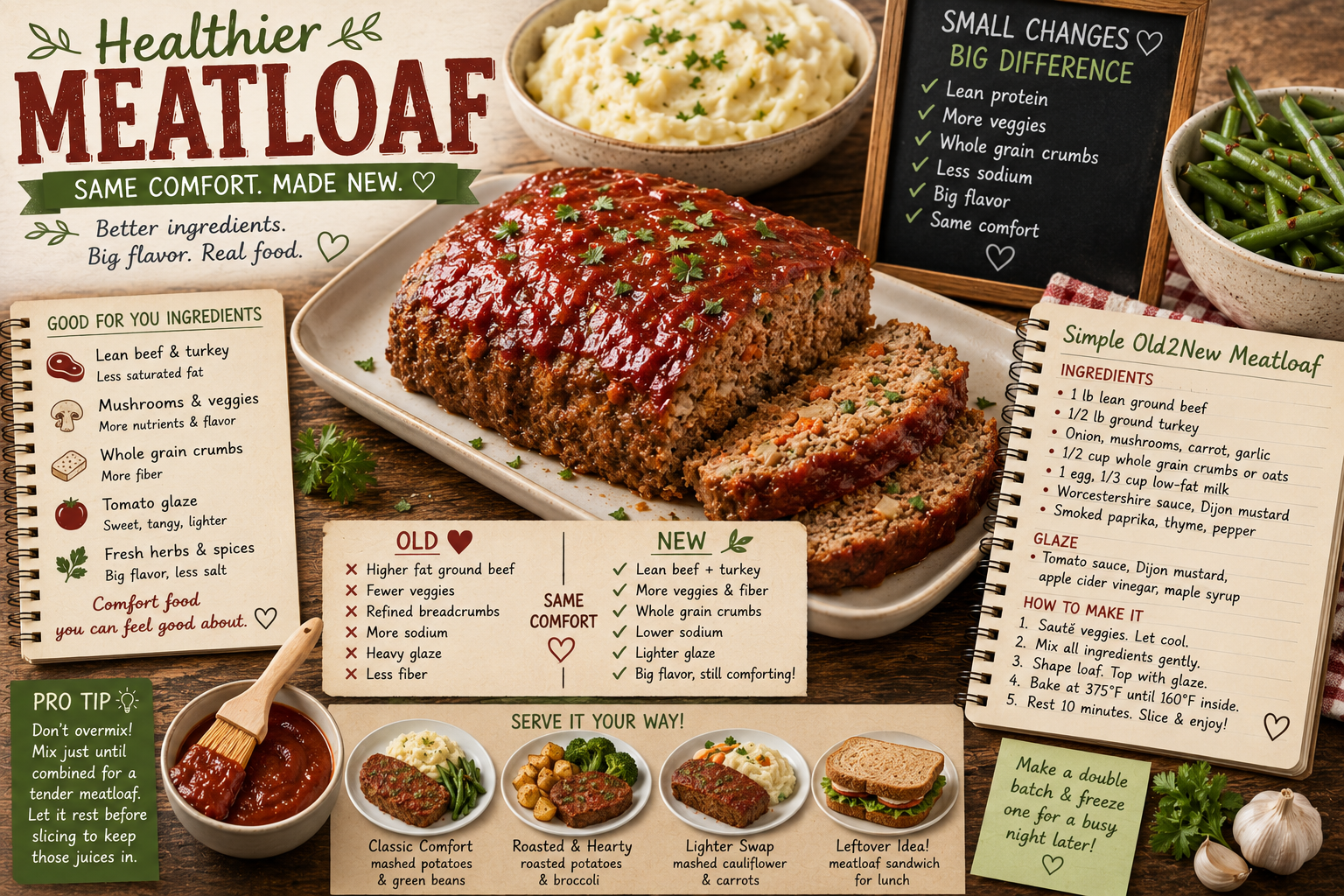
Healthier Meatloaf: Keep the Sunday-Dinner Comfort
Meatloaf doesn't need to be fancy. It needs to be good — tender in the middle, caramelized around the edges, covered with that slightly sweet tangy tomato glaze, and served beside mashed potatoes and green beans. That's meatloaf. That's what people mean when they say they want it for dinner.
So when the goal is a healthier version, we're not replacing the meat with something unrecognizable or serving a thin dry slice and calling it dinner. We're keeping the comfort. We're keeping the glaze. We're keeping the sides. We're simply looking at where better ingredients can fit into the recipe without changing what makes it worth making in the first place.
Meatloaf is exactly the kind of recipe Old2New is built for: familiar, nostalgic, affordable, and easier to improve than most people expect.
Start with Leaner Meat — But Don't Go Too Lean
Traditional meatloaf is often made with 80% lean ground beef, and the choice makes sense — the fat provides moisture and flavor that keeps the loaf from being dry. Choosing a leaner ground beef (90% or 93% lean) reduces the saturated fat while keeping the familiar beef flavor that defines classic meatloaf. The adjustment is straightforward and the finished dish is indistinguishable from the higher-fat version when the other moisture sources are in place.
The caveat is important: going extremely lean without compensating elsewhere produces dry meatloaf, and dry meatloaf is a failed experiment regardless of its nutritional profile. The vegetables, egg, milk, and cooking technique all work together to maintain the moisture that very lean meat alone doesn't provide.
Combining lean ground beef with ground turkey is the middle path that most households find easiest to accept: the beef keeps the classic meatloaf flavor and character, the turkey lightens the mixture, and the combination produces a loaf that tastes like meatloaf to people accustomed to the original. A half-and-half ratio (one pound of lean beef, half a pound of turkey) is a practical starting point. An all-turkey meatloaf is achievable with sufficient vegetables and moisture, but requires more deliberate attention to seasoning because ground turkey's milder flavor needs more support from the aromatics and spices.
Vegetables Are the Secret Weapon
Finely chopped vegetables serve two purposes in meatloaf: they add moisture that compensates for leaner meat, and they add nutrition and flavor that the meat alone doesn't provide. Used well, they're invisible in the finished loaf — integrated completely into the mixture rather than existing as identifiable vegetable chunks that change the texture of every bite.
The key to invisible vegetables in meatloaf is the prep: chop everything very finely (a food processor makes this easy for anyone who doesn't enjoy knife work), and sauté the vegetables before adding them to the raw meat mixture. The sautéing step softens them, releases their moisture so it doesn't pool in the meat mixture during baking, and concentrates their flavor. Vegetables added raw to the mixture can release liquid during baking that steams the loaf from within and produces an unappealing texture.
Mushrooms are the most valuable addition for meatloaf specifically. Finely chopped and sautéed until their moisture has cooked off, they contribute a deeply savory umami quality that makes the beef taste meatier and richer without anyone identifying mushroom as a specific flavor. A cup of finely chopped mushrooms in a two-pound meatloaf adds no detectable mushroom flavor but meaningfully improves the savory depth of the finished loaf.
Grated carrot adds moisture and a subtle sweetness. Finely diced onion is essential and goes in regardless of other vegetable additions. Bell pepper adds color and mild sweetness. Zucchini grated and squeezed dry contributes moisture without flavor. Celery adds aromatics. Any combination of these, finely prepared and sautéed, improves both the nutrition and the texture of the finished meatloaf.
Rethink the Breadcrumbs
Breadcrumbs aren't filler in meatloaf — they're functional. They absorb moisture during mixing and release it during baking, which is part of what keeps the loaf tender rather than dense. Removing them entirely produces a meatloaf that's tight and dry; replacing them with a better option produces the same textural benefit with more nutritional value.
Whole wheat breadcrumbs are the most direct substitute and work identically to standard breadcrumbs in the loaf. Whole wheat panko adds a slightly coarser texture that some people find improves the interior texture of the finished loaf. Quick oats are a useful alternative when breadcrumbs aren't available — they hydrate in the moisture from the meat and milk and become completely indistinguishable in the finished loaf, adding fiber without any oat flavor.
The amount matters as much as the type: a half cup to three-quarters cup of breadcrumbs or oats for a two-pound loaf is enough to provide the binding and moisture benefits without making the loaf feel like a breadcrumb delivery system.
Add Moisture Without Heavy Ingredients
Dry meatloaf is the most common failure mode of the dish and the reason people abandon making it — when it comes out of the oven and slices into something dense and dusty rather than tender and juicy, the motivation to make it again disappears.
Moisture in meatloaf comes from multiple sources working together: fat from the meat, liquid from the egg and milk, moisture from the vegetables, and the resting period after baking that allows juices redistributed by the heat to settle back into the meat.
Low-fat milk adds enough liquid to the mixture that the breadcrumbs can absorb it and create a tender texture without requiring higher-fat meat to provide the same moisture. A third cup of low-fat milk for a two-pound loaf is sufficient. Low-sodium broth can substitute in households that avoid dairy. The egg provides binding and some fat that contributes to tenderness.
The resting period after baking deserves emphasis because it's frequently skipped: letting the meatloaf rest for 10 minutes before slicing allows the juices that have migrated to the surface during baking to redistribute through the meat. Cutting immediately releases those juices onto the cutting board rather than keeping them in the loaf. Ten minutes of patience produces a noticeably juicier result.
Build Flavor Before Reaching for Salt
A well-seasoned meatloaf is a satisfying meatloaf. The seasoning work happens in the mixture rather than at the table, which means getting it right before the loaf goes into the oven.
Worcestershire sauce is the single most useful seasoning for meatloaf because a small amount — one to two tablespoons — adds a layered, savory depth that functions as umami amplification rather than a specific flavor anyone can identify. It makes the beef taste more intensely beefy, the mushrooms taste more savory, and the overall loaf taste more complex and developed. It's a background ingredient that people notice as "this tastes really good" rather than "I can taste Worcestershire."
Dijon mustard in the meat mixture (as opposed to just the glaze) adds a sharp, complex note that doesn't read as mustard in the finished loaf but contributes to the overall depth of flavor. Smoked paprika adds warmth and a slight smokiness that complements beef naturally. Garlic — either fresh or powder — is essential. Black pepper generously. Fresh or dried herbs (thyme, parsley, Italian seasoning) add brightness.
Keep the Tomato Glaze
The tomato glaze is non-negotiable. That sticky, slightly sweet, tangy topping is what makes meatloaf recognizable as meatloaf and what provides the caramelized exterior that people reach for specifically in each slice.
A lighter glaze requires only minor adjustment from the traditional version. A base of lower-sugar ketchup or plain tomato sauce combined with Dijon mustard, a small amount of natural sweetener (maple syrup or brown sugar, one to two teaspoons), and a splash of apple cider vinegar produces a glaze with the full range of sweet, tangy, and savory that makes it worth keeping.
The application matters: a thin layer applied before baking sets the base, and a second thin layer applied in the last 10 to 15 minutes of baking caramelizes and creates the glossy, slightly sticky exterior that makes meatloaf visually appealing. Two thin layers produce better results than one thick layer, which can remain wet and sweet rather than developing the caramelized quality that makes the topping genuinely good.
Don't Overmix
This is the technique note that has nothing to do with making meatloaf healthier and everything to do with making it better. Overworked ground meat develops a dense, tight texture that resembles compressed protein rather than tender meatloaf. The goal is combining the ingredients just enough that everything is distributed — not so much that the mixture becomes elastic and dense.
Mix by hand rather than with a mixer. Combine the wet ingredients and add-ins first (vegetables, egg, milk, Worcestershire, seasonings), then add the meat and mix with a light hand until just incorporated. Shape the loaf gently without compressing it. The result is a tender, open texture that slices cleanly and eats well.
Baking on a Sheet Pan
A loaf pan is traditional, but shaping the meatloaf free-form on a parchment-lined baking sheet produces a different and often better result: more surface area for the exterior to brown and caramelize, less steam from fat accumulating at the bottom, and significantly more of the caramelized edge that's arguably the best part of meatloaf.
The sheet pan version also allows the glaze to set on all sides rather than just the top, and it's easier to transfer and slice than a loaf pan version. If the favorite part of meatloaf is the caramelized, glazed exterior, the sheet pan approach is worth trying.
Mini meatloaves — the mixture divided into individual portions and shaped as smaller loaves on the sheet pan — cook faster than a single large loaf (typically 30 to 35 minutes rather than 50 to 60), produce even more caramelized exterior per serving, are easy to portion, and make excellent lunches. Children often respond better to an individual-sized meatloaf than a slice from a larger one.
A Simple Old2New Meatloaf
Ingredients (serves 6)
- 1 lb lean ground beef (90% or higher)
- ½ lb lean ground turkey
- 1 small onion, finely diced
- 1 cup mushrooms, finely chopped
- 1 small carrot, finely grated
- 2 cloves garlic, minced
- ½ cup whole wheat breadcrumbs or quick oats
- 1 egg
- ⅓ cup low-fat milk
- 1 tbsp Worcestershire sauce
- 1 tbsp Dijon mustard
- 1 tsp smoked paprika
- ½ tsp dried thyme
- Black pepper to taste
- Fresh parsley, chopped (optional)
For the glaze:
- ⅓ cup lower-sugar ketchup or tomato sauce
- 1 tsp Dijon mustard
- 1 tsp apple cider vinegar
- 1 to 2 tsp maple syrup (optional)
Instructions
Preheat oven to 375°F. Sauté the onion, mushrooms, carrot, and garlic in a small amount of olive oil over medium heat until softened and the mushroom moisture has cooked off, about eight minutes. Let cool slightly.
In a large bowl, combine all ingredients except the meat and glaze. Add the cooled vegetable mixture and stir to distribute. Add the ground beef and turkey and mix gently with hands until just combined — do not overwork.
Shape into a loaf on a parchment-lined baking sheet or place loosely in a loaf pan. Mix the glaze ingredients and spread half across the top.
Bake for 45 to 55 minutes until the internal temperature reaches 160°F. Apply the remaining glaze in the last 10 to 15 minutes of baking. Rest 10 minutes before slicing.
What Goes Beside It
The sides are where the comfort food meal gets completed — and where there's no need to sacrifice the dishes people look forward to.
Mashed potatoes alongside meatloaf is one of the most satisfying food pairings in American comfort cooking and there's no reason to eliminate it. The adjustment that adds vegetable volume without replacing what people love: blending steamed cauliflower into the mashed potatoes at a ratio of roughly one part cauliflower to two parts potato produces a creamy mash that tastes like mashed potato and carries some extra vegetable without the texture or flavor being noticeably different. Or leave the mashed potatoes entirely as they are and serve roasted broccoli or green beans on the side.
The plate with healthier meatloaf, standard mashed potatoes, and roasted green beans is a genuinely balanced, nutritious meal that looks and tastes like the Sunday dinner it's supposed to be.
Leftovers Worth Looking Forward To
Cold meatloaf is underrated. Sliced and served on whole grain bread with lettuce, tomato, and Dijon mustard, it's one of the better sandwiches available from leftover dinner protein. Crumbled into tomato sauce and served over pasta, it becomes a quick meat sauce that tastes like it was made deliberately rather than assembled from whatever was in the refrigerator. Diced and added to a breakfast hash with potatoes, peppers, and eggs, it produces a complete breakfast that uses the last of the meatloaf without feeling like eating the same meal again.
FAQ
Why does my meatloaf fall apart when I slice it? The most common causes are too little binder (not enough egg or breadcrumb relative to the amount of meat), too much moisture without enough binder to absorb it, or not enough resting time after baking. Ensure the breadcrumb-to-meat ratio is appropriate, let the loaf rest for at least 10 minutes before cutting, and use a sharp knife rather than sawing to prevent the slices from crumbling.
How do I know when meatloaf is done without cutting into it? A digital instant-read thermometer inserted into the thickest part of the loaf should read 160°F for a loaf containing beef, or 165°F for an all-turkey version. This is more reliable than cooking time alone because the shape and thickness of the loaf affects how quickly it cooks through.
Can I freeze meatloaf? Yes — both raw and cooked meatloaf freeze well. Raw meatloaf can be shaped, frozen before baking, and baked directly from frozen at a lower temperature for longer. Cooked meatloaf can be sliced and frozen in individual portions for lunches and quick dinners. Wrap tightly to prevent freezer burn and label with the date.
Continue Your Recipe Transformation Journey
Meatloaf is one of the most naturally improvable comfort food recipes because its texture and flavor come from technique as much as ingredients. These guides will help you build on it:
- Easy Ways to Add More Vegetables Without Anyone Noticing — how mushrooms, carrots, and zucchini disappear into meatloaf
- How to Make Your Favorite Recipes Healthier Without Starting Over — the philosophy behind every swap
- What Can I Make with Carrots? — the full guide to using carrots as a hidden vegetable in savory dishes
- How to Cook Once and Eat Twice — how a double batch of meatloaf becomes a week of different meals
- How to Freeze Meals Successfully — how to freeze a second meatloaf for a future busy night
Old2New — There is good in everything.