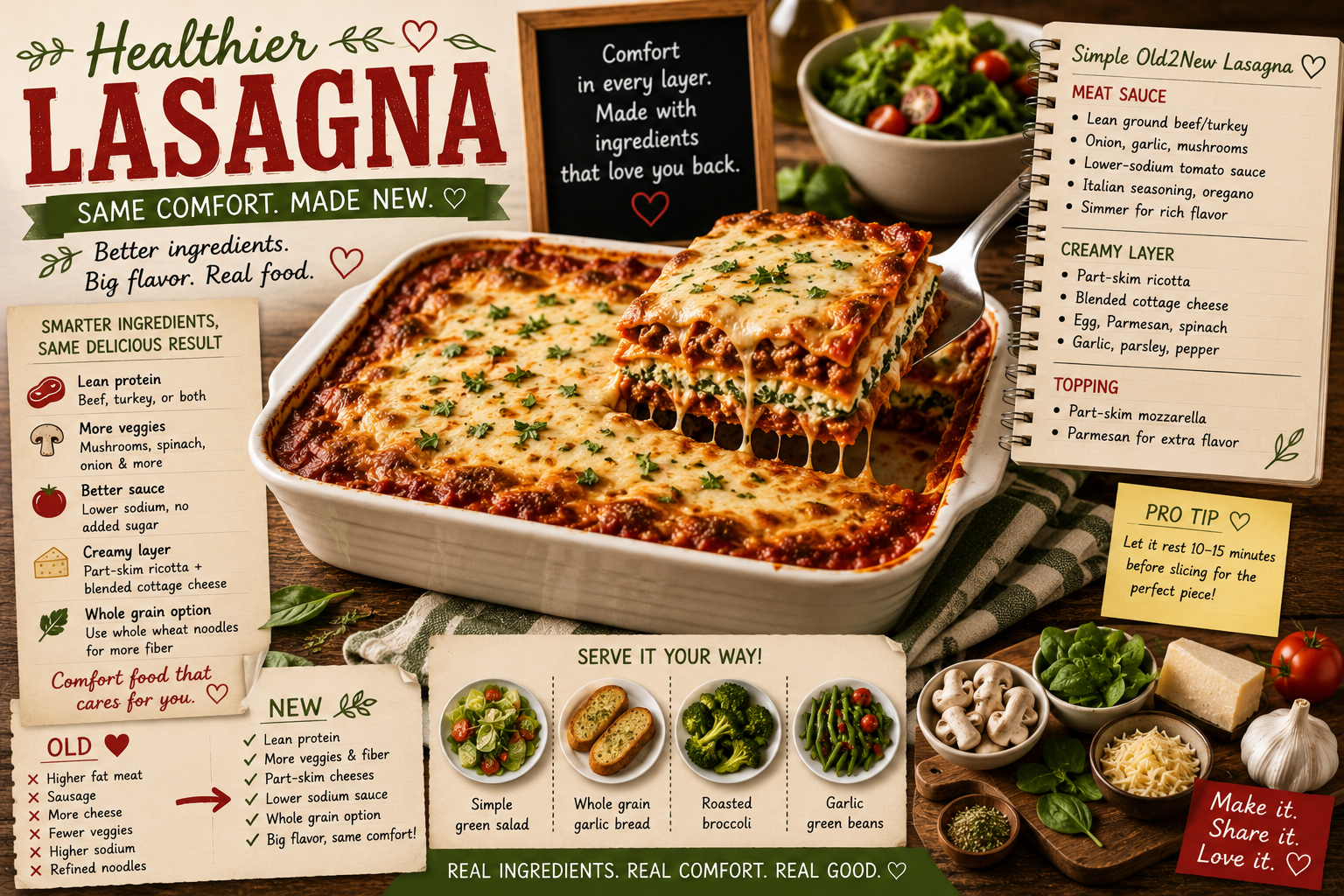
Healthier Lasagna: Layers of Comfort, Made New
There aren't many foods that say comfort quite like lasagna. A bubbling casserole dish coming out of the oven. Layers of pasta, rich tomato sauce, savory meat, creamy ricotta, and mozzarella stretching from the first piece you lift onto the plate. That's lasagna. That's the specific thing people mean when they say they want it for dinner.
Making lasagna healthier doesn't mean replacing every noodle with zucchini, eliminating the cheese, or producing something that resembles lasagna conceptually but delivers a completely different experience. The pasta stays. The mozzarella stays. The bubbling cheesy top stays. We're looking at each layer individually and deciding where thoughtful changes can make the whole dish work a little better — without taking away what makes it worth the effort of assembling.
Because if someone asks for lasagna, they should receive lasagna. That's the standard.
Keep the Lasagna Noodles
Regular lasagna noodles belong in the recipe. Zucchini casserole can be genuinely delicious, but it's not the same dish as lasagna and shouldn't be positioned as its direct replacement when what someone wants is the real thing.
If more fiber is a priority, whole wheat lasagna noodles are the direct substitute and work identically in assembly and baking. They have a slightly nuttier flavor that pairs well with a well-seasoned meat sauce and is largely undetectable in the finished dish. Higher-protein lasagna noodles made from chickpea or lentil pasta exist and work for households that want the protein benefit.
But regular lasagna noodles — the ones that have always gone in the recipe — are perfectly capable of staying in the dish. Sometimes the smartest approach isn't replacing the pasta. It's improving what surrounds it.
Build a Better Meat Sauce
The meat sauce is where the most meaningful improvement typically happens, and where the finished dish changes the least visibly.
Lean ground beef at 90% or 93% provides the beef flavor that classic lasagna requires with significantly less saturated fat than the 80% lean often called for in traditional recipes. The difference is imperceptible in a well-seasoned tomato sauce where the spices, onion, garlic, and tomatoes are doing most of the flavor work.
Ground turkey is the other common substitution — it absorbs the Italian seasoning, garlic, and tomato flavors completely and produces a sauce that most people can't identify as turkey when it's well made. Combining lean ground beef and ground turkey at equal ratios is the middle path: the beef provides flavor and character, the turkey lightens the overall mixture.
The most useful addition to any meat sauce for lasagna is finely chopped mushrooms. A cup of mushrooms cooked down with the meat until their moisture evaporates adds savory depth that makes the sauce taste meatier and richer without being identifiable as mushroom in the finished dish. The mushrooms release their liquid, cook down to a fraction of their original volume, and become indistinguishable from the meat in the sauce. The flavor result is a sauce that tastes more developed and complex than a standard meat sauce, and that allows using slightly less total meat without the sauce feeling lean.
Add Vegetables to the Sauce
Lasagna is one of the most effective vehicles for hidden vegetables because they're surrounded by strongly flavored sauce, pasta, and cheese — a combination that thoroughly obscures any individual vegetable's identity.
Finely diced or grated carrot added with the onion at the beginning of cooking adds natural sweetness that balances the acidity of the tomatoes and cooks down into the sauce completely. Diced bell pepper adds color and sweetness. Diced or grated zucchini adds moisture and volume. Spinach stirred into the sauce near the end adds iron and nutrients without affecting the flavor at all.
The important technique for any water-releasing vegetable (zucchini, mushrooms, spinach) is cooking it down before it joins the lasagna — either in the sauce itself or separately. Watery vegetables added raw to the layers release their moisture during baking and can produce a loose, soupy lasagna where the layers don't hold their structure. Taking five minutes to cook out the excess moisture produces a lasagna that slices cleanly and holds its layers.
Choose Tomato Sauce Thoughtfully
A flavorful tomato sauce carries the entire dish — it's the liquid element that binds the other components together and penetrates the pasta during baking. Whether homemade or jarred, the quality and flavor of the sauce determines more about the finished lasagna than almost any other ingredient.
Homemade tomato sauce — onion and garlic sautéed in olive oil, canned tomatoes simmered with Italian herbs for 30 minutes — is demonstrably better than most jarred options and worth making when time allows. When time doesn't allow, comparing jarred sauces for simpler ingredient lists, lower sodium, and less added sugar produces meaningfully better options than buying whatever is cheapest. A sauce where the first ingredient is tomatoes rather than water, with a relatively short ingredient list and recognizable components, performs better than heavily processed alternatives.
Using both a jarred sauce and a can of no-salt-added diced tomatoes extends the sauce, adds texture from the diced tomatoes, and reduces the overall sodium of the dish.
Keep the Ricotta Layer — and Improve It
The ricotta layer is staying. It's the creamy, herb-flecked element between the pasta and the sauce that provides the texture contrast and dairy richness that defines lasagna's specific eating experience. Removing it produces something else.
Part-skim ricotta reduces the fat content without changing the texture or flavor meaningfully — it's the most seamless single adjustment in the cheese layer. Blended cottage cheese combined with part-skim ricotta is the more substantial improvement: cottage cheese blended completely smooth in a blender or food processor becomes indistinguishable from ricotta in terms of texture, adds significantly more protein per serving, and disappears into the mixture without affecting the flavor.
A half-and-half combination of part-skim ricotta and blended cottage cheese produces a cheese layer that tastes like the ricotta everyone expects while delivering considerably more protein per serving. Combined with egg (for binding), parmesan (for flavor), garlic, black pepper, and fresh or dried herbs, the mixture is flavored and substantial enough that no one asks what's in it — they just eat it.
Add Spinach to the Cheese Layer
Spinach in the ricotta mixture is the classic addition that Italian-American lasagna has always accommodated and that most families accept without significant negotiation. Fresh spinach wilted and squeezed dry, or frozen spinach thawed and squeezed very dry, stirred into the ricotta mixture adds iron, vitamins, and visual appeal to the cheese layer.
The squeezing step is non-negotiable: spinach contains substantial water that, if not removed, releases into the cheese layer during baking and produces a wet, loosely set lasagna rather than the firm, layered result that slices well. A clean kitchen towel or several layers of paper towel, the spinach bundled inside and wrung firmly over the sink, removes the moisture that would otherwise compromise the dish.
Finely chopped spinach distributed evenly through the ricotta mixture is less detectable than roughly chopped large leaves that create visible green patches. Either works; the fine chop integrates more seamlessly for households where the spinach addition might otherwise generate commentary.
Keep the Mozzarella
The golden, melted mozzarella topping is the visual and textural signature of lasagna and it's not being removed. It's being used intentionally rather than automatically.
Part-skim mozzarella shredded over the top of the lasagna produces the same golden, stretchy result as whole milk mozzarella with less saturated fat. The flavor difference between part-skim and whole milk mozzarella is minimal in a dish where the topping is combined with well-seasoned tomato sauce and ricotta.
Parmesan distributed across the top alongside the mozzarella amplifies the cheesy flavor disproportionately to the quantity used — parmesan is intensely flavored and a small amount contributes significantly to the perception of a richly cheesy dish. A quarter cup of parmesan over the top of a full 9x13 baking dish adds flavor that would otherwise require significantly more mozzarella to achieve.
The practical approach: use enough mozzarella to create the full, satisfying cheesy top that makes lasagna look and taste like lasagna — typically one to one and a half cups for a standard baking dish — while relying on parmesan for additional flavor rather than simply adding more mozzarella.
A Simple Old2New Lasagna
Ingredients (serves 8)
- 9 to 12 lasagna noodles (regular or whole wheat)
- 1 lb lean ground beef or turkey (or ½ lb each)
- 1 small onion, diced
- 1 cup mushrooms, finely chopped
- 2 cloves garlic, minced
- 3 cups lower-sodium tomato sauce
- 1 can no-salt-added diced tomatoes (optional)
- 1 tsp Italian seasoning
- ½ tsp dried oregano
- Black pepper to taste
Cheese layer:
- 1 cup part-skim ricotta
- 1 cup low-fat cottage cheese, blended smooth
- 1 egg
- ¼ cup parmesan, grated
- 1 to 2 cups spinach, squeezed dry and chopped
- Fresh or dried parsley
- Black pepper
Topping:
- 1 to 1½ cups part-skim mozzarella, shredded
- Additional parmesan
- Fresh basil for serving
Instructions
Preheat oven to 375°F. Cook lasagna noodles according to package directions unless using oven-ready.
Brown the meat in a large skillet. Add onion and mushrooms and cook until softened, about five minutes. Add garlic and cook one minute until fragrant. Add tomato sauce, diced tomatoes if using, Italian seasoning, oregano, and black pepper. Simmer 15 to 20 minutes.
Combine ricotta, blended cottage cheese, egg, parmesan, spinach, parsley, and black pepper in a bowl.
Spread a thin layer of meat sauce on the bottom of a 9x13 baking dish. Layer noodles, ricotta mixture, meat sauce. Repeat layers. Finish with remaining sauce and mozzarella and parmesan across the top.
Cover tightly with foil and bake 40 minutes. Uncover and bake 10 to 15 minutes more until the cheese is golden and bubbling.
Rest 10 to 15 minutes before slicing. The kitchen smells extraordinary during this wait. It's worth it.
Build the Rest of the Plate Simply
Lasagna is a substantial dish that doesn't need elaborate accompaniments. A simple green salad with vinaigrette alongside the lasagna provides acid and freshness that complement the richness of the pasta. Roasted broccoli, green beans, or zucchini adds vegetables to the meal without duplicating what's already in the lasagna. A small piece of whole grain garlic bread for households where garlic bread is part of the tradition is completely reasonable — the entire meal's nutritional balance matters more than optimizing any single element.
Lasagna Is Built for Batch Cooking
Lasagna takes meaningful effort to assemble, which makes it particularly worth making in quantity. Assembling two smaller pans at once — one to bake tonight, one to freeze — turns the assembly session into two dinners from the same effort. A frozen unbaked lasagna can go from freezer to oven (allow extra baking time and begin covered) for a future dinner that required no day-of work.
Baked lasagna portions into individual containers for freezing and reheating, producing single-serving comfort food that reheats beautifully with a splash of water added before microwaving. The effort of making lasagna on a Sunday evening is one of the best cooking investments of the week when it produces multiple future meals alongside tonight's dinner.
Let the Recipe Evolve
If the family's lasagna recipe has been made the same way for years — possibly from a handwritten card or a cookbook that pre-dates this one — it doesn't require replacement. It requires looking at each layer and asking where one change would make a meaningful difference.
Maybe the ground beef becomes leaner. Maybe mushrooms join the meat in the sauce. Maybe a cup of blended cottage cheese goes into the ricotta layer. Maybe the sauce comparison at the grocery store produces a lower-sodium option that doesn't change the flavor anyone notices. Maybe the spinach goes into the ricotta and nobody mentions it at dinner.
One layer at a time. The lasagna evolves rather than being replaced. The people eating it notice it's good rather than noticing what's different.
FAQ
How long should I let lasagna rest before cutting? At least 10 minutes, ideally 15. During baking, the layers are loosened by the heat and the moisture is distributed throughout the dish. Resting allows the structure to set — the cheese firms slightly, the pasta layers stabilize, and the sauce thickens enough to hold the layers together when cut. Cutting too soon produces a delicious pile of components that no longer resembles the layered dish it was in the pan.
Can I make lasagna ahead of time? Yes — lasagna is an ideal make-ahead dish. Assemble completely, cover tightly, and refrigerate for up to 24 hours before baking. Add 10 to 15 minutes to the covered baking time to account for the cold temperature at the start. The rested, assembled lasagna often produces cleaner slices than one baked immediately after assembly.
Does the cottage cheese make the lasagna watery? Not if it's blended smooth and the moisture from the spinach is removed before adding. Blended cottage cheese has a similar moisture content to ricotta. The spinach is where excess moisture most commonly comes from — squeezing it very dry before adding is the step that prevents a loose lasagna.
Continue Your Recipe Transformation Journey
Lasagna is one of the most satisfying comfort food transformations because the improvements are genuinely invisible in the finished dish. These guides will help you build on it:
- How to Make Creamy Recipes Without Heavy Cream — how blended cottage cheese works as a ricotta extender
- Easy Ways to Add More Vegetables Without Anyone Noticing — how spinach and mushrooms disappear into lasagna
- What Can I Make with Pasta? — the complete guide to pasta and its best applications
- How to Freeze Meals Successfully — how to freeze a second pan of lasagna for a future dinner
- Building a Family Recipe Binder — where to keep both the original and the new version
Old2New — There is good in everything.