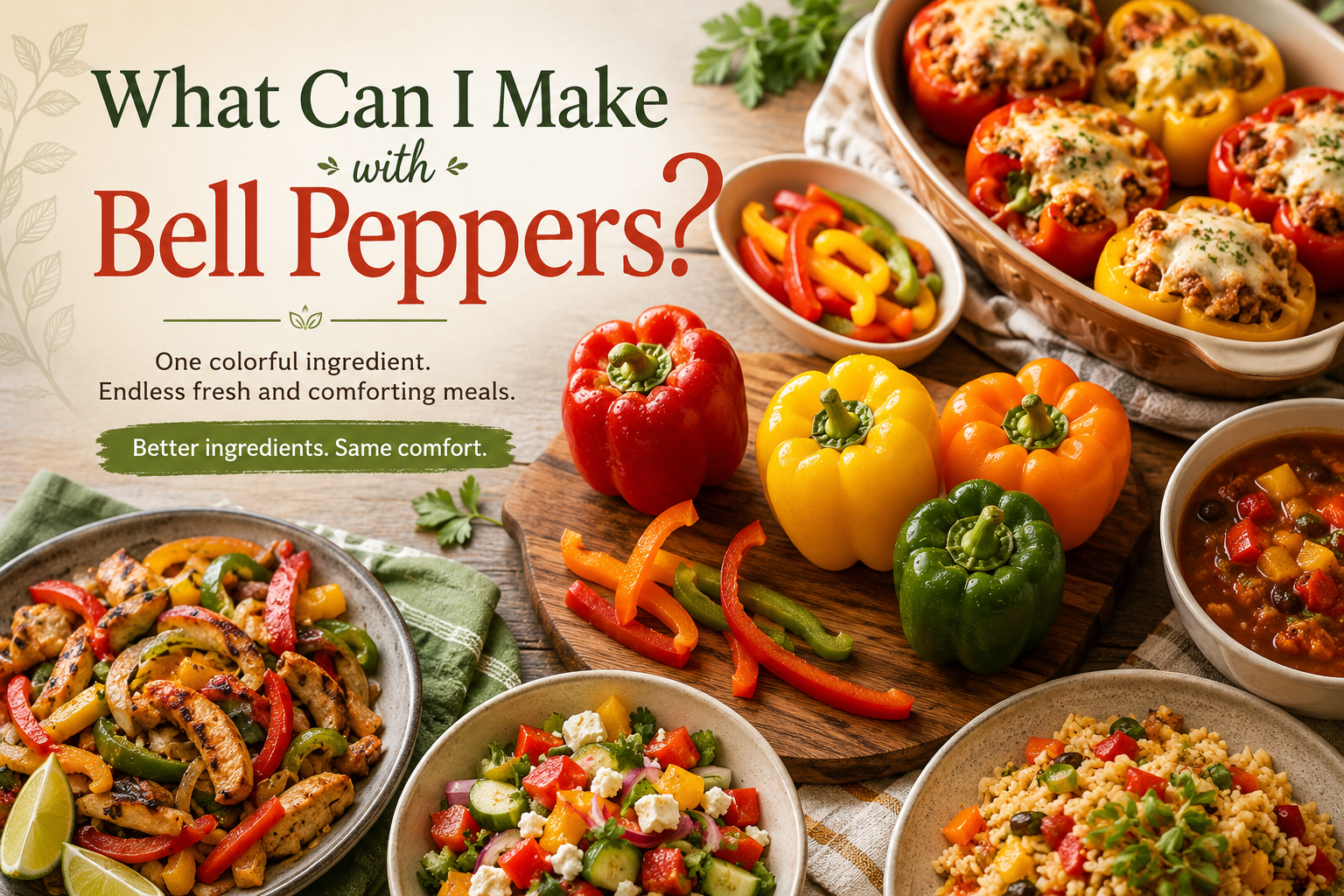
What Can I Make with Bell Peppers?
Bell peppers are one of the most visually generous ingredients in the kitchen. They're the reason a stir fry looks as good as it tastes, the ingredient that makes a simple omelet look intentional, and the vegetable that adds crunch and sweetness to dishes that would otherwise feel flat.
They're also remarkably versatile in a way that isn't always obvious. Most people think of bell peppers in fajitas or stuffed for dinner — and both of those are great — but bell peppers work equally well raw in salads and snack plates, roasted into something deeply sweet and silky, diced into sauces and soups, and folded into egg dishes at breakfast. Red peppers are the sweetest and work beautifully roasted or raw. Green peppers have a mild bitterness that holds up in cooked applications. Yellow and orange fall somewhere in the middle and are excellent for snacking and salads.
If you've got bell peppers and you're wondering what to make, here's where to start.
Why Bell Peppers Belong in Every Kitchen
Bell peppers are naturally sweet, low in calories, rich in vitamins C and A, and packed with colorful antioxidants that vary depending on the color of the pepper — which is a good reason to use a mix. They're one of the few vegetables that are genuinely excellent both raw and cooked, which means they work at every meal and in almost every preparation. They add color, crunch, and flavor to dishes without adding fat or significant calories, and they make everyday meals look more appealing just by being there.
For anyone cooking more intentionally — whether that's managing portions, eating more whole foods, or supporting GLP-1 medication — bell peppers are one of the most useful tools in the kitchen. They add volume and satisfaction to meals without caloric load, and their natural sweetness makes them an easy addition to dishes where you want to reduce heavier ingredients without losing flavor.
Breakfast
Bell peppers at breakfast add color, crunch, and a natural sweetness that makes egg dishes feel more complete and satisfying.
Veggie Omelets — Diced bell pepper sautéed with onion, mushrooms, and spinach, then folded into eggs with a little feta or goat cheese. The pepper adds color and a subtle sweetness that balances the savory egg beautifully. A breakfast that looks like it took effort and takes about ten minutes.
Breakfast Burritos — Scrambled eggs, diced bell pepper, black beans, salsa, and a little shredded cheese in a whole wheat tortilla. The pepper adds crunch and color that makes the whole burrito feel more substantial. Easy to make in batches and freeze for the week.
Egg Muffins — Whisk eggs with diced bell pepper, onion, spinach, and a little cheese and bake in a muffin tin at 350°F for 18 minutes. A portable, protein-rich breakfast that holds in the refrigerator all week and reheats in 30 seconds. One of the most practical meal prep breakfasts there is.
Breakfast Hash — Diced bell peppers cooked with potatoes, onion, garlic, and your choice of protein — chicken sausage, turkey, or just eggs cracked in at the end. The pepper sweetens as it cooks and adds color that makes a simple hash look restaurant-worthy.
Frittata — Sautéed bell peppers, onion, and spinach covered with whisked eggs and finished in the oven at 375°F until set and golden. A frittata made with bell pepper holds in the refrigerator for four days and reheats perfectly — one of the most versatile meal prep breakfasts in the kitchen.
Breakfast Tacos — Scrambled eggs with diced bell pepper, black beans, fresh salsa, and avocado in warm corn tortillas. The pepper adds crunch and brightness that elevates a simple breakfast taco into something worth looking forward to.
Scrambled Eggs with Peppers — Bell pepper and onion sautéed until just softened, then scrambled eggs folded in and cooked gently. Season with fresh herbs and a pinch of smoked paprika. A five-minute breakfast that's better than it has any right to be.
Lunch
Bell peppers add crunch, color, and natural sweetness to lunches in a way that makes everything from wraps to grain bowls feel more complete.
Stuffed Bell Peppers for Lunch — Halved bell peppers filled with a mixture of tuna salad, chicken salad, or cottage cheese with herbs. No cooking required — the pepper is the vessel and the filling does the work. A fast, protein-rich lunch that looks elegant and takes five minutes.
Chicken Wraps — Grilled chicken, sliced raw bell pepper, spinach, avocado, and a little hummus in a whole wheat tortilla. The raw pepper adds crunch that makes the wrap feel more substantial than a standard chicken wrap.
Garden Salads — Sliced bell pepper adds color, crunch, and sweetness to any green salad. It pairs particularly well with cucumber, red onion, cherry tomatoes, and a simple vinaigrette. Use multiple colors for the best visual impact.
Pasta Salad — Whole grain pasta with diced bell pepper, cherry tomatoes, cucumber, olives, and a simple vinaigrette. The pepper holds its texture well as the salad sits and adds color that makes the dish more appealing for meal prep.
Grain Bowls — Roasted bell pepper over farro or quinoa with chickpeas, cucumber, fresh herbs, and a lemon-tahini dressing. Roasted red pepper is one of the best grain bowl components — sweet, silky, and deeply flavorful.
Mediterranean Bowls — Sliced raw bell peppers alongside hummus, cucumber, olives, feta, and whole grain pita. A lunch that comes together from pantry staples and requires no cooking at all.
Veggie Quesadillas — Whole wheat tortillas with sautéed bell pepper, onion, black beans, and a light layer of cheese. Cook until crispy and serve with Greek yogurt and fresh salsa. A fast, filling lunch that works for adults and kids equally.
Dinner
Bell peppers are one of the most versatile dinner vegetables — equally at home in a slow-simmered stew and a 20-minute sheet pan meal.
Stuffed Peppers — Whole bell peppers filled with a mixture of lean ground turkey or beef, brown rice or cauliflower rice, diced tomatoes, garlic, Italian seasoning, and a little cheese on top. Baked at 375°F for 35 minutes until the peppers are tender and the filling is cooked through. A complete, self-contained dinner in one tidy vessel.
Fajitas — Sliced bell peppers and onions cooked in a very hot cast iron skillet with olive oil until charred and softened, then loaded into corn tortillas with seasoned chicken or turkey and fresh toppings. The char on the pepper is the defining element of a good fajita — don't rush it.
Stir Fry — Bell peppers cut into strips alongside broccoli, snap peas, and your choice of protein in a sauce of low-sodium soy sauce, garlic, ginger, and sesame oil. Over brown rice. The pepper adds sweetness and color that makes this one of the most visually appealing stir fries possible.
Chicken and Peppers — Bone-in chicken thighs roasted with sliced bell peppers, onion, garlic, olive oil, and Italian herbs at 425°F for 45 minutes. The peppers soften and caramelize underneath the chicken and absorb the drippings. A complete dinner with almost no cleanup.
Sausage and Peppers — Sliced chicken or turkey sausage with bell peppers and onions cooked together in olive oil until everything is caramelized and golden. Serve over whole grain pasta, brown rice, or in a whole grain hoagie roll. A classic combination that always delivers.
Chicken Cacciatore — Chicken thighs braised in a tomato sauce with bell peppers, onion, mushrooms, olives, capers, and fresh herbs. The pepper softens completely into the sauce and becomes part of its flavor rather than a separate element. A slow-simmered dinner that fills the house with an incredible smell.
Chili — Diced bell peppers sautéed with onion and garlic as the base of the chili, then built up with ground turkey, kidney beans, black beans, canned tomatoes, and chili spices. The pepper adds sweetness and body to the chili and becomes completely integrated into the flavor.
Pasta Primavera — Whole grain pasta with sautéed bell peppers, zucchini, cherry tomatoes, garlic, olive oil, and fresh basil. A spring and summer pasta that's as light as it is colorful. Finish with a little parmesan and a squeeze of lemon.
Sheet Pan Fajita Bowls — Bell peppers, onions, and chicken or shrimp tossed with fajita seasoning and olive oil, roasted on a sheet pan at 425°F for 25 minutes. Serve over cauliflower rice or brown rice with avocado, salsa, and Greek yogurt. All the flavor of fajitas with minimal hands-on work.
Vegetable Curry — Bell peppers simmered in a spiced coconut milk and tomato sauce with chickpeas, potatoes, and spinach. Over brown rice. The pepper holds up through the long simmer and adds sweetness that balances the spices beautifully.
Kabobs — Bell pepper chunks alternated with chicken or lean beef, zucchini, onion, and cherry tomatoes on skewers, grilled or broiled until charred and cooked through. A summer dinner that requires no cleanup and looks great on the table.
Side Dishes
Roasted Bell Peppers — Whole peppers roasted directly over a gas flame or under the broiler until charred on all sides, then placed in a covered bowl to steam. The charred skin peels off to reveal sweet, silky pepper underneath. Dress with olive oil, garlic, and fresh herbs. One of the most transformative preparations in the kitchen — raw pepper and roasted pepper taste like completely different ingredients.
Grilled Peppers — Bell pepper halves or quarters brushed with olive oil and grilled until charred and tender. A side dish that pairs with any grilled protein and takes about eight minutes total.
Pepper and Onion Mix — Sliced bell peppers and onions sautéed in olive oil with garlic and Italian seasoning until caramelized and tender. A versatile side that goes alongside chicken, fish, sausage, eggs, or grain bowls — and holds well in the refrigerator for three days.
Mediterranean Vegetables — Bell peppers, zucchini, eggplant, and cherry tomatoes roasted together with olive oil, garlic, and fresh herbs. A colorful side dish that works alongside almost any protein and gets better as it sits.
Air Fryer Peppers — Bell pepper strips in the air fryer at 400°F for 10 minutes with olive oil and seasoning. Slightly charred, tender, and ready faster than oven roasting. A weeknight side that requires almost no preparation.
Stuffed Mini Peppers — Mini sweet peppers halved and filled with herbed cream cheese or a mixture of cottage cheese, herbs, and garlic, then baked at 375°F for 15 minutes. An appetizer that works as a side dish or a party snack.
Snacks and Appetizers
Bell Pepper Slices with Hummus — Sliced raw bell pepper with a generous scoop of hummus. One of the best snack combinations for crunch, fiber, and protein in a no-prep package. Red and yellow peppers are the sweetest and most appealing for snacking.
Stuffed Mini Peppers — Mini sweet peppers filled with herbed cottage cheese, cream cheese, or tuna salad. A two-bite appetizer that looks elegant, requires no cooking, and can be assembled ahead of time.
Veggie Trays — Bell pepper strips alongside carrot sticks, cucumber, celery, and cherry tomatoes with a Greek yogurt dip or hummus. The bell pepper is the most colorful and visually appealing element of any vegetable tray — use multiple colors for maximum impact.
Fresh Salsa — Diced red or green bell pepper, tomato, onion, jalapeño, cilantro, and lime juice combined fresh. The pepper adds crunch and sweetness that balances the acidity of the tomato. Ready in five minutes and infinitely better than jarred salsa.
Pepper Boats — Halved mini peppers or quartered regular peppers filled with a mixture of avocado, lime juice, and diced tomato — essentially guacamole served in a pepper. A fresh, colorful appetizer that requires no chips.
Bell Peppers as a Recipe Transformation Tool
Many beloved comfort food recipes already include bell peppers as a supporting ingredient. Old2New can help you lean into that and transform the dishes further with swaps that keep the flavor and comfort:
- Stuffed peppers — cauliflower rice or quinoa instead of white rice, lean ground turkey instead of beef, stretch the filling with black beans
- Fajitas — use half the meat and double the peppers and onions, serve in corn tortillas instead of flour
- Chili — add extra diced bell peppers to stretch the dish and add sweetness without extra meat
- Spaghetti sauce — dice red bell pepper into the sauce for natural sweetness that reduces the need for added sugar
- Meatloaf — finely diced pepper mixed into the meat adds moisture and flavor while extending the dish
- Fried rice — load it with bell peppers, peas, and carrots to make the rice a vehicle for vegetables rather than the main event
The pepper stays. The comfort stays. The recipe just works a little better.
How to Choose and Store Bell Peppers
Red, orange, and yellow bell peppers are riper versions of green peppers and are sweeter as a result — they also tend to cost a little more. Green peppers are harvested earlier and have a slightly bitter, more vegetal flavor that works well in cooked applications like stir fries, fajitas, and stuffed peppers. Red peppers are the sweetest and most versatile — excellent raw and roasted. Yellow and orange are mild and sweet, great for snacking and salads. Using a mix of colors adds visual appeal and slight flavor variation to any dish.
Look for peppers that feel firm and heavy with smooth, shiny skin. Avoid any with soft spots, wrinkled skin, or dark patches. Store whole peppers in the refrigerator crisper drawer where they'll keep for up to a week. Sliced or diced peppers go in an airtight container and hold for three to four days.
Bell peppers freeze beautifully without blanching — slice or dice, spread on a sheet pan to freeze individually, then transfer to a bag. Frozen peppers go directly into soups, stir fries, casseroles, fajita mixes, and pasta sauces straight from the freezer. One of the most convenient freezer shortcuts available.
Don't Let Bell Peppers Go to Waste
Bell peppers that are beginning to soften are still completely usable for cooking — they just need heat to bring them back. A softening pepper roasts beautifully into something sweet and silky. Dice it into a soup or stew. Sauté it with onion for a fajita mix. Add it to scrambled eggs. The pepper that's no longer crisp enough for a snack plate is often at its sweetest and most flavorful for cooking.
Even peppers that have gone past their peak for most uses can go into a blended sauce or soup where the texture doesn't matter — roast them first for the best flavor, then blend into a smooth red pepper sauce that's genuinely excellent over pasta, chicken, or eggs.
FAQ
What's the difference between green, red, yellow, and orange bell peppers? They're all the same plant at different stages of ripeness. Green peppers are harvested earliest and have a slightly bitter, more vegetal flavor. As they ripen to yellow, orange, and red, they become progressively sweeter and higher in vitamins C and A. Red peppers have the most nutrients and the most sweetness. The color you choose should depend on the application — green for cooked dishes where you want a more savory flavor, red and yellow for raw applications and roasting.
Are bell peppers good for people on GLP-1 medications? Bell peppers are high in water content and fiber with very few calories — which makes them one of the best vegetables for anyone managing portions or appetite. They add volume and satisfaction to meals without caloric load, and their natural sweetness makes them useful for adding flavor without heavier ingredients. The vitamin C content is also exceptionally high — one red bell pepper has more vitamin C than an orange.
Can I substitute bell peppers for each other in recipes? Yes in most cooked applications — the flavor difference between colors is primarily sweetness, and all colors hold up to heat similarly. In raw applications like salads and snack plates, red, yellow, and orange peppers are preferable for sweetness if that's a priority.
How do I roast bell peppers at home? Place whole peppers directly over a gas flame or under a broiler set to high, turning occasionally with tongs, until the skin is charred on all sides — about 10 to 15 minutes. Transfer to a bowl, cover tightly with plastic wrap or a plate, and let steam for 15 minutes. The skin will peel off easily, revealing sweet, silky pepper underneath. Store in olive oil in the refrigerator for up to a week.
Continue Your Recipe Transformation Journey
Bell peppers are one of the most colorful and versatile ingredients for building healthier comfort food. If you're expanding what's possible in your kitchen, these are worth reading next:
- What Can I Make with Onions? — the most natural partner to bell peppers in fajitas, stir fries, and sautés
- What Can I Make with Zucchini? — another versatile vegetable that pairs naturally with bell peppers across dozens of recipes
- What Can I Make with Tomatoes? — the foundation of stuffed pepper fillings, chili, and pasta sauces
- How to Make Comfort Food Healthier — the bigger picture behind every swap
- What Can I Make with Black Beans? — a natural pairing for bell pepper-based Mexican-inspired meals
Old2New — There is good in everything.