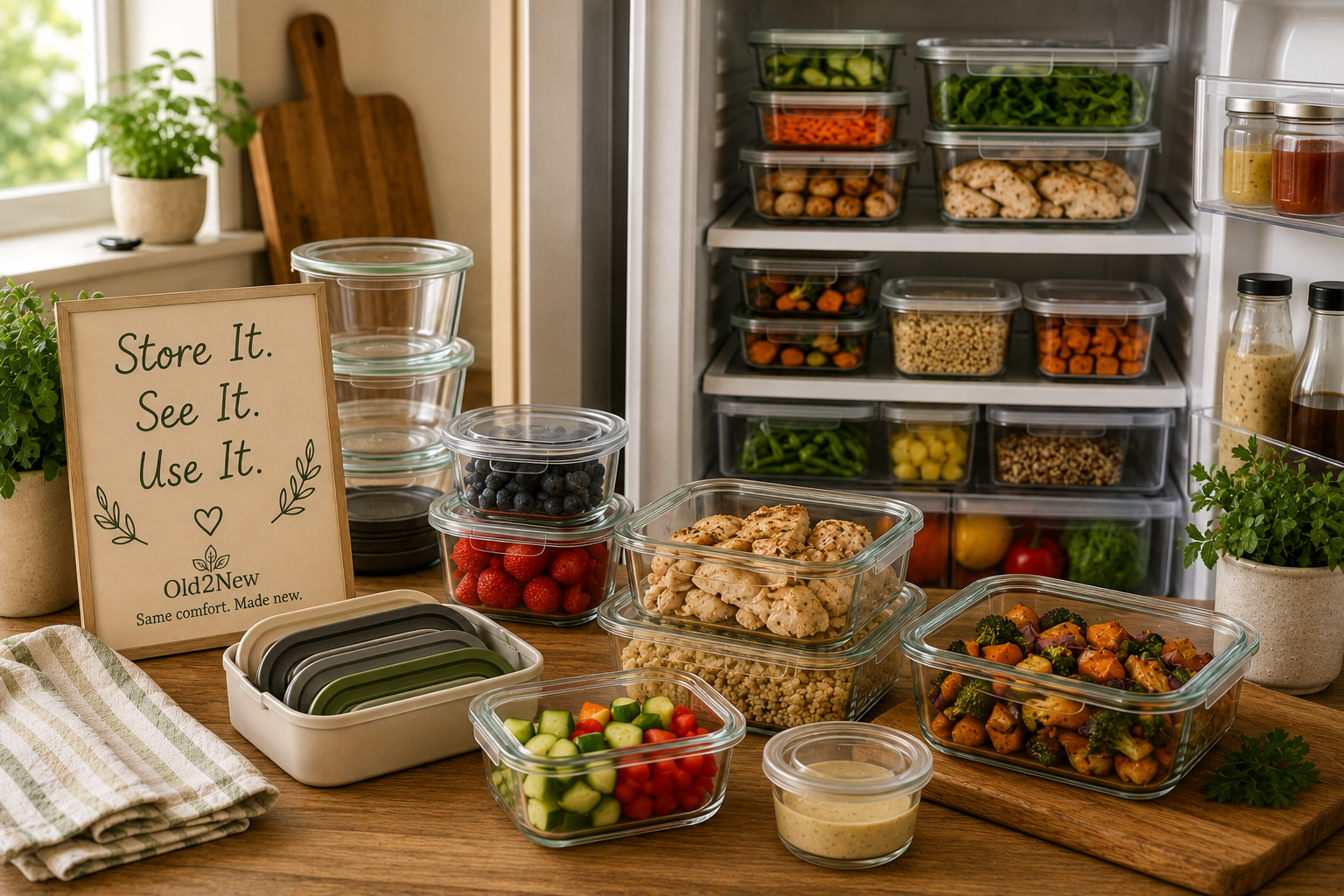
Meal Prep Containers Worth Buying
Open almost any kitchen cabinet and you'll encounter some version of the container situation: a stack of containers on one side, a completely separate pile of lids on the other, and somehow very few of them actually belong together. Somewhere in the back is a container from a takeout order three years ago. There's a cracked lid that gets kept out of misplaced optimism. And there's the good container — the one everyone fights for — that never has a matching lid when it's needed.
The right food storage containers are not an exciting purchase. They sit in cabinets and refrigerators and freezers doing quiet work. But that quiet work — keeping food visible, accessible, and usable rather than forgotten and eventually wasted — is directly connected to cooking more at home, eating more of what's been prepared, and getting more value from every grocery trip.
This isn't about buying the prettiest system or the most impressive matching set. It's about buying containers that solve the actual problems that make food storage annoying, so that storing and using leftovers and prepped ingredients is easier than not doing it.
Start with What You Already Have
Before buying anything, pull out every container in the kitchen and match the lids. This exercise consistently reveals two things: that there are more complete, usable containers than remembered, and that there are a surprising number of orphaned lids and lidless containers that can be recycled or repurposed.
Once the surviving matched sets are identified, the question becomes what's actually missing rather than what a comprehensive storage system should look like. Maybe the gap is large containers for family-sized leftovers. Maybe it's small containers for sauces and dressings. Maybe the existing collection is surprisingly adequate once the lid situation is resolved.
Buying containers to solve a specific identified problem is more useful than buying containers to create a complete, organized storage system that looks good on a shelf. The system that works is the one that addresses the actual friction points in how the household stores and uses food.
Glass or Plastic — When Each Makes Sense
Both materials have legitimate applications in a food storage collection, and the right choice depends on the intended use.
Glass containers are the better choice for leftovers and meals that will be stored for several days and reheated — glass doesn't absorb food odors or stains the way plastic does over time, and most glass containers are oven-safe (within the manufacturer's temperature guidelines), microwave-safe, and dishwasher-safe in ways that make them genuinely versatile across the full storage-to-reheating workflow. Being able to transfer a container directly from the refrigerator to the oven or microwave without transferring the food to another vessel is a meaningful convenience that reduces friction and dishes.
Glass containers are heavier than plastic and will break if dropped — considerations that matter most for people carrying meals to work or school daily, where the weight accumulates and the drop risk is real.
Plastic containers are lighter, less breakable, and less expensive — advantages that make them better suited for packed lunches, cold snacks, portioned produce for the week, and any application where mobility and portability are the priority. Look for containers labeled as food-safe for storage and follow manufacturer instructions about microwaving, as some plastics are not suitable for heating.
The practical approach is maintaining a small collection of both: glass for leftovers, meal prep components, and food that will be reheated; plastic for lunches, snacks, cold storage, and portability.
Choose Clear Containers
The most important single quality in a food storage container is visibility — whether you can see the contents without opening it. This is not aesthetic; it's functional.
The leftover chicken that's visible in a clear container gets considered for tomorrow's dinner when the refrigerator is opened in the evening. The same chicken in an opaque container gets forgotten until it's past its window. The cooked rice visible in a clear container goes into a grain bowl because it presented itself as available. The same rice out of sight goes unremembered until it's been there too long.
Visible food gets eaten. The connection between visibility and food waste reduction is direct enough that choosing clear containers over opaque ones is the single most impactful container choice available, more than size or material.
Prioritize Leak-Resistant Lids for Liquids
A container that leaks in a lunch bag or spills in the refrigerator is worse than useful — it creates cleanup, ruins other food, and removes confidence in using that container for the applications where it most needs to work.
For soups, chilis, sauces, dressings, yogurt, and anything with significant liquid content, containers with specifically designed leak-resistant or leak-proof lids are worth seeking out. The mechanism varies by brand — snap locks on four sides, a gasket that creates a seal, a locking tab — but what matters is the practical test: filled with liquid and inverted or transported sideways, does it leak?
Test new liquid-storage containers at home before trusting them alongside a phone or laptop in a bag. A few seconds of testing prevents the kind of spill that ruins a day and damages more expensive items.
Buy a Range of Sizes
A uniform container collection — all the same size — doesn't match the range of things that need to be stored. Two tablespoons of salad dressing in a large container slides around, doesn't seal effectively, and wastes space. Family-sized chili in a small container doesn't fit, requires multiple containers, and creates extra lids and matching overhead.
A practical collection covers three size ranges: small containers (four to eight ounces) for sauces, dressings, dips, nuts, seeds, and toppings that accompany larger meals; medium containers (16 to 32 ounces) for individual lunch portions, chopped vegetables, cooked grains, and single-serving leftovers; and large containers (48 ounces and up) for family-sized leftovers, batch-cooked ingredients, and larger meal prep components.
The specific quantities within each size depend on household size and cooking habits. Two people who cook and eat leftovers regularly need different numbers of each size than a family of five doing weekly batch cooking.
Prioritize Stackability
Containers spend more time stored in cabinets and refrigerators than they spend being used, which means stackability is a practical quality that affects the kitchen's usability every day. Square and rectangular containers use storage space more efficiently than round ones because they pack without gaps. Containers within the same collection that share lid sizes reduce the complexity of the lid situation.
Some container systems are designed with nested sizing — multiple container sizes that share a single lid design, so one lid size fits several container sizes — which is the most efficient approach to the lid organization problem. Having two or three lid shapes rather than fifteen reduces the time spent finding the right lid to a few seconds rather than a frustrating search.
Have Freezer-Safe Options
The freezer is one of the most effective food waste prevention tools available, and containers that are explicitly freezer-safe enable the full range of freezer storage without concerns about cracking, seal failure, or food safety issues at freezer temperatures.
Not all plastic containers tolerate freezer temperatures well — some become brittle and crack, others lose their seal at cold temperatures. Glass containers that are specifically labeled as freezer-safe handle the thermal stress of freezing and thawing reliably; not all glass is designed for this, and the distinction matters.
For freezer storage specifically: leave room at the top of liquid containers because liquids expand when frozen. Label everything going into the freezer with the contents and date — frozen tomato sauce and frozen chili look identical after six weeks. And consider freezing some liquids and soups flat in freezer bags before transferring to upright storage, which dramatically improves freezer organization by creating stackable, uniform packages that use space efficiently.
Divided Containers: Useful for Specific Situations
Divided containers — those with internal compartments that separate different foods — solve the specific problem of lunch packing where multiple components need to stay separate until eating. A compartment for protein, a compartment for grain, a compartment for vegetables, and a small compartment for sauce or dressing keeps everything organized and prevents sogginess until the meal is ready.
For households that pack structured lunches regularly, divided containers are genuinely useful. For households where stored food is primarily single-component (a container of soup, a container of cooked rice, a container of roasted vegetables), divided containers take up cabinet space without being used to their purpose.
The test before buying: think about the three or four foods most commonly stored in containers in this household. If they're mixed dishes, soups, and large components that fill a single space, standard containers serve better. If they're multiple components kept separate, divided containers earn their keep.
Label Everything Going Into the Freezer
The most functional labeling system for most households is also the cheapest: a roll of removable tape and a permanent marker, applied to every container before it goes into the freezer. The label includes what's in the container and the date it was made — two pieces of information that take five seconds to write and prevent the frozen mystery problem.
Containers from October labeled "Chicken Chili — Oct 12" are consulted in January with accurate information about what they contain and approximately how long they've been frozen. Unlabeled containers from October become uncertain objects in January — something that might still be good, something that requires opening to identify, something that gets passed over when other clearer options are available.
The labeling habit is most critical for the freezer because the timelines are longer. In the refrigerator, contents can be identified by smell if necessary and the window is short enough that identity is usually recoverable. In the freezer, the window is months and identification by smell isn't possible.
Create a Container Home
Containers that don't have a designated storage location end up wherever there's space, which produces the cabinet-as-puzzle problem that makes retrieving one container a 90-second archaeology project.
Giving containers one consistent home — a specific cabinet or section of cabinet — and establishing the habit of returning them there after washing makes finding them fast and returning them straightforward. Storing lids separately in a small vertical organizer (a file holder, a shallow drawer insert, or a wire divider) eliminates the lid-searching problem.
The organization that supports the container system is often more valuable than the containers themselves. A small collection of well-organized containers that can be found in seconds is more useful than a large collection scattered through multiple cabinets.
How Many Containers to Start With
The most common container purchasing mistake is buying more than needed based on what a complete meal-prep system looks like rather than what a specific household's cooking habits actually require. Twelve matching containers of the same size are the right answer to a very specific storage problem. They're the wrong answer to most other storage problems.
A practical starting point for most households: two to three large containers for family-sized leftovers and batch cooking; four to six medium containers for lunches, individual portions, and ingredient storage; and four to six small containers for sauces, dressings, dips, and toppings. This is enough to support a week of cooking and meal prep without overwhelming the cabinet or the budget.
Using the collection for two to three weeks reveals what's missing — the constant need for more medium containers, the rarely touched large ones, the discovery that one more small container would complete the sauce-portioning workflow — better than any pre-purchase assessment.
FAQ
Are expensive container brands worth it? The most important qualities — clarity, secure lid seal, and appropriate temperature ratings — are available across a range of price points. Some higher-end brands offer better lid designs (particularly for leak resistance), more reliable temperature tolerances, and longer product lifespans. For glass containers specifically, the investment in a reputable brand that clearly labels oven-safe and freezer-safe tolerances is worthwhile. For plastic containers used for cold food and packed lunches, mid-range options typically perform as well as premium ones.
How do I get rid of food smells from plastic containers? Baking soda paste (baking soda mixed with water to a paste consistency) applied to the container and left for 24 hours before washing removes most food odors. Leaving the container in direct sunlight for a few hours also helps, as UV light breaks down odor-causing compounds. Tomato-based foods and curry are the most persistent; for containers used regularly for these foods, glass is the better long-term choice because it doesn't absorb odors.
Can I microwave glass containers? Glass containers labeled as microwave-safe can be microwaved according to the manufacturer's instructions. Not all glass is microwave-safe — some tempered glass is not rated for microwave use, and glass with metallic trim or lids with metal components cannot go in the microwave. Always check the manufacturer's guidance for the specific container.
How long do meal-prepped foods last in the refrigerator? Most cooked proteins and complete meals keep for three to four days. Cooked grains keep for five to six days. Chopped raw vegetables keep for three to five days depending on the vegetable. Cut fruit keeps for two to four days. Soups and stews keep for three to four days. Labeling containers with the date they were prepared makes these timelines easy to track.
Continue Your Recipe Transformation Journey
The right storage system makes cooking at home more sustainable and more efficient. These guides will help you put your containers to work:
- How to Use Leftovers Creatively — how stored food becomes tomorrow's meal
- How to Organize a Healthy Refrigerator — how to store containers so food gets seen and used
- Healthy Freezer Staples — what's worth freezing and how to freeze it well
- How to Cook Once and Eat Twice — the cooking strategy that makes containers most valuable
- Beginner's Guide to Meal Planning — how storage and planning work together
Old2New — There is good in everything.