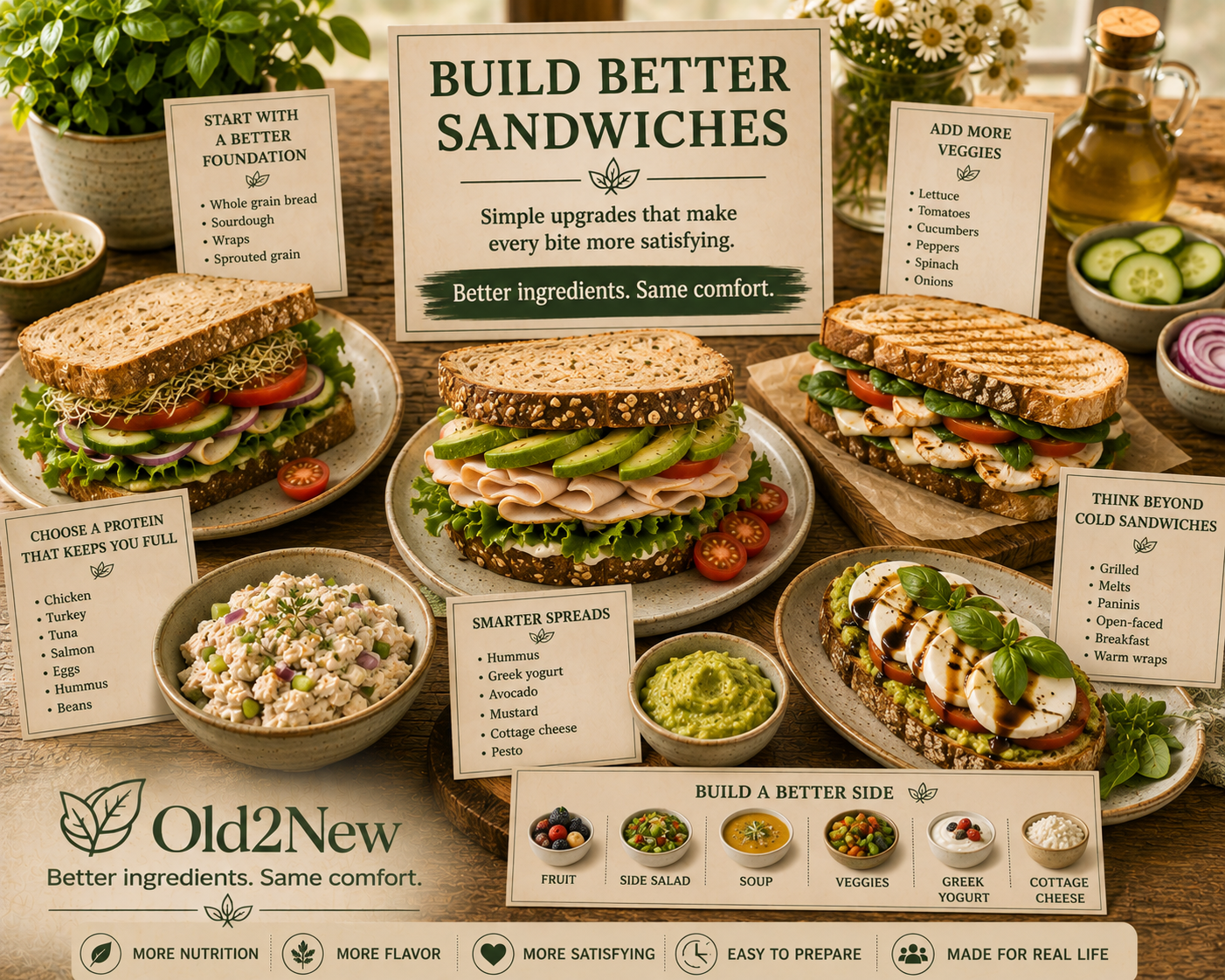
How to Build Better Sandwiches
A sandwich is one of the most quietly perfect meals in existence. It's fast, portable, infinitely customizable, and requires almost no cooking on most days. It works for breakfast, lunch, and dinner. It feeds one person or ten. It uses up leftovers, clears the refrigerator, and still manages to feel like comfort food when it's done right.
It also doesn't need to be fixed — it needs to be built better. Not by removing things that make it satisfying, but by adding things that make it more so. A handful of spinach. A smear of hummus instead of a heavy spread. A few slices of avocado that add healthy fat and creaminess. A stronger-flavored cheese used in smaller quantity than a mild one piled high. These additions don't change what a sandwich is — they make it more of what it already is.
Here's how to think about building a sandwich that delivers on every front.
Start with a Better Foundation
Bread is where a sandwich begins, and the choice matters more than most people think — not because some breads are forbidden and others are allowed, but because the bread sets the flavor and texture tone for everything that goes on top of it.
Whole grain bread adds fiber and a slightly nuttier flavor that pairs particularly well with bold fillings — turkey, tuna, and grilled chicken all work beautifully on a hearty whole grain. Sourdough adds tang and a chewy texture that holds up to wetter fillings like roasted vegetables and pesto without falling apart. Whole wheat wraps are the most portable option and work for anything that would otherwise spill out of a sandwich. Rye bread has a distinctive flavor that pairs naturally with lean beef, turkey, and mustard. Sprouted grain bread is denser and more filling than standard whole wheat. Whole grain sandwich thins are a good option when you want the bread to take less of a role and the filling to be the focus. Whole wheat pita pockets are excellent for Mediterranean-style fillings and hold everything together in a self-contained package.
The best bread is the one you actually enjoy eating, built into a sandwich you'll actually make. Choose from that list and build from there.
Choose a Protein That Keeps You Full
The protein is what determines whether a sandwich holds you through the afternoon or leaves you reaching for something else an hour later. A sandwich built on a meaningful protein is a complete meal. One built primarily on bread and condiment is a snack.
Grilled chicken is the most versatile sandwich protein — mild enough to work with any flavor profile and filling enough to make a sandwich genuinely satisfying. Turkey breast is lean, widely available, and works in everything from a simple turkey and avocado to a more elaborate club-style sandwich. Lean roast beef pairs naturally with mustard, horseradish, and strong cheese on rye or sourdough. Tuna mixed with Greek yogurt instead of mayo delivers the same creamy texture with significantly more protein per serving. Salmon — either canned or leftover baked — makes one of the most nutritionally complete sandwiches available. Eggs in any form — hard boiled, fried, or scrambled — add protein and work for breakfast sandwiches and lunch alike.
For plant-based protein, hummus is the most practical — it functions as both spread and protein source and pairs with almost any vegetable combination. Black beans mashed with lime and cumin make a sandwich filling that's satisfying and genuinely flavorful. Lentil patties function like a burger but with more fiber and less saturated fat. Cottage cheese blended with herbs makes a protein-rich spread that works under vegetables and alongside greens.
Add More Vegetables
This is where sandwiches show their full potential. Most sandwiches are underloaded with vegetables — a single leaf of iceberg lettuce and one tomato slice when the same sandwich could hold three times as much produce without becoming unwieldy.
Fresh lettuce and spinach add crunch and iron. Spinach is the better nutritional choice and wilts slightly under warm fillings in a way that makes it less detectable for people who might otherwise object. Thick-sliced ripe tomato is one of the best sandwich additions in any season — the acidity brightens everything around it. Cucumber adds crunch and freshness that works particularly well in Mediterranean and grain-based sandwiches. Bell peppers — raw for crunch or roasted for sweetness — add color and vitamins that make a sandwich look as good as it tastes. Red onion adds sharpness that cuts through rich proteins and creamy spreads. Mushrooms — either raw for a meaty texture or roasted for concentrated flavor — add umami to vegetarian sandwiches.
Avocado deserves its own mention because it functions as both vegetable and spread — mashed, it replaces mayo entirely and adds healthy fat and creaminess that holds the sandwich together. Sliced, it adds richness and a buttery texture that makes a simple turkey sandwich feel considerably more indulgent. Shredded carrot adds sweetness, crunch, and color to any sandwich that needs more texture. Pickles add acid that brightens the whole sandwich and cuts through richness in a way that nothing else quite replicates.
You don't need to use all of them. One or two well-chosen vegetables make a meaningfully better sandwich than a single limp lettuce leaf.
Make Cheese Work Harder
Cheese adds comfort, richness, and flavor to a sandwich — but most sandwiches use it as a volume ingredient rather than a flavor one. Two thin slices of a strongly flavored cheese contribute more to the overall flavor of a sandwich than four thick slices of a mild one, and they do it with less saturated fat.
Sharp cheddar, aged gouda, gruyère, and pecorino are all stronger-flavored options that go further per slice. Feta crumbled over a Mediterranean-style sandwich adds salty, tangy flavor that a full slice of mild mozzarella can't match. Fresh mozzarella on a caprese sandwich works because it's paired with acid from tomato and balsamic — the brightness of those elements makes the mild cheese taste more present than it would on its own.
Cottage cheese blended into a spread with herbs and garlic becomes a protein-rich, creamy alternative to cream cheese that works under smoked salmon, alongside vegetables, or as the primary spread on an open-faced sandwich. The flavor is milder than cream cheese and the protein content is significantly higher.
Smarter Spreads
The spread is what ties a sandwich together — it adds moisture, flavor, and the layer that keeps everything from sliding around. Most traditional spreads are primarily fat with limited flavor. There are better options that deliver more.
Hummus is the most useful sandwich spread available — it adds protein, fiber, and a savory depth that pairs with virtually any filling. A thick layer of hummus replaces mayo and adds something to the sandwich rather than just moisture. Avocado mashed with lemon and salt functions similarly and adds healthy fat and creaminess. Greek yogurt spreads — blended with herbs, garlic, lemon, or cucumber — deliver creaminess with significantly more protein than sour cream or cream cheese. Mustard in any form adds flavor with almost no calories and pairs particularly well with turkey, lean beef, and sharp cheese. Pesto adds a deeply savory, herby richness that makes a simple grilled chicken sandwich taste like something from a restaurant. Salsa adds acid and vegetables simultaneously and works particularly well in breakfast sandwiches and anything with beans or eggs. Olive tapenade adds briny, savory depth to Mediterranean-style sandwiches and requires only a thin layer to contribute significant flavor.
Think Beyond Cold Sandwiches
A cold sandwich is fast and practical, but a warm sandwich is comfort food. The same ingredients that go into a lunch sandwich become something different when they're heated — cheese melts, bread crisps, flavors deepen and integrate.
Grilled chicken sandwiches — chicken breast grilled or pan-seared and served on toasted whole grain bread with avocado, spinach, and mustard — are complete dinners as much as lunches. Turkey melts with sharp cheddar on sourdough, pressed in a skillet until golden and the cheese is bubbly, are one of the fastest satisfying weeknight dinners available. Veggie paninis with roasted vegetables, pesto, and fresh mozzarella pressed until crispy are elegant enough for company and fast enough for a Tuesday. Tuna melts on whole grain bread with sharp cheddar and tomato are a comfort food classic that delivers significant protein. Open-faced sandwiches — a single slice of bread topped with a generous pile of ingredients and served with a fork — allow more toppings than a standard two-slice sandwich and present beautifully for a sit-down meal.
Breakfast sandwiches deserve a longer moment — an egg with spinach, tomato, and avocado on a whole grain English muffin is one of the most nutritionally complete breakfasts you can assemble in ten minutes, and it travels well enough to eat on the way to wherever the morning takes you.
Great Sandwich Combinations to Try
Sometimes the most useful thing is a starting point. These combinations work reliably and can be adjusted based on what's available.
Turkey and Avocado — Sliced turkey, mashed avocado, baby spinach, thick-sliced tomato, and a smear of mustard on whole grain bread. The avocado functions as the spread and the protein provides the staying power. One of the most consistently satisfying lunch sandwiches there is.
Mediterranean Chicken — Grilled chicken, thick-sliced cucumber, tomato, spinach, a generous smear of hummus, and a little crumbled feta in a whole wheat pita. The hummus ties everything together and the pita keeps it portable.
Veggie Delight — Hummus spread on whole grain bread with roasted red peppers, cucumber, spinach, shredded carrot, and sprouts. A vegetarian sandwich that's filling because of the hummus protein and fiber, not despite the lack of meat.
Tuna Crunch — Tuna mixed with Greek yogurt, Dijon, celery, and red onion on whole grain bread with crisp lettuce and thick-sliced tomato. The Greek yogurt delivers the creaminess of mayo with significantly more protein.
Caprese on Sourdough — Fresh mozzarella, thick-sliced ripe tomato, fresh basil, and a drizzle of balsamic glaze on toasted sourdough. A sandwich that requires the best tomatoes you can find and rewards the effort completely.
Breakfast Sandwich — A fried or scrambled egg with baby spinach, sliced tomato, and avocado on a toasted whole grain English muffin. The combination of egg protein, healthy fat from avocado, and fiber from the spinach and muffin makes this one of the most sustaining breakfast options available.
Grilled Vegetable Sandwich — Roasted zucchini, mushrooms, bell peppers, and onions with pesto and fresh mozzarella on ciabatta or sourdough. A meatless sandwich that delivers genuine satisfaction from the roasted vegetable flavor and the richness of the pesto.
Greek Yogurt Chicken Salad — Shredded or diced chicken mixed with Greek yogurt, grapes, celery, walnuts, and a little Dijon on whole grain bread with lettuce. All the comfort of a classic chicken salad with more protein and less saturated fat.
Meal Prep for Fast Sandwiches
The reason most people reach for something less intentional at lunch is that a good sandwich takes more time than they have in the moment. Meal prepping the components solves this completely — when the ingredients are washed, sliced, and ready, building a sandwich takes two minutes.
Wash and dry lettuce and spinach at the start of the week and store in a container lined with a paper towel. Slice tomatoes, cucumbers, and bell peppers and keep in separate containers. Cook a batch of chicken breast or turkey and slice or shred it — it holds in the refrigerator for four days and goes into sandwiches, salads, wraps, and grain bowls equally. Hard-boil eggs and keep them in the shell until needed. Mix tuna or salmon salad and store in the refrigerator for up to three days.
With these components ready, a complete sandwich takes less time than waiting for a microwave meal to heat up — and it's genuinely better.
FAQ
Is it better to assemble sandwiches ahead of time or prep the ingredients separately? Ingredients separately, almost always. A fully assembled sandwich gets soggy within a few hours as the bread absorbs moisture from the tomatoes and spread. Prepping the components and assembling right before eating gives you the convenience of meal prep with the texture of a freshly made sandwich.
What's the best way to keep avocado from browning in a sandwich? Squeeze lemon or lime juice over the cut surface of the avocado before adding it to the sandwich. The acid slows oxidation significantly. Assembling the sandwich right before eating is the most reliable method — avocado holds best when it's not exposed to air for extended periods.
How do I make a sandwich filling enough to be a complete meal? The combination of protein, healthy fat, and fiber is what makes a sandwich genuinely satisfying rather than just temporarily full. Protein from the meat, eggs, or legumes; healthy fat from avocado, olive oil, or nuts; and fiber from whole grain bread and vegetables work together to slow digestion and sustain energy. A sandwich with all three components holds you for hours.
What's the best bread for meal prep sandwiches? Heartier breads hold up better to moisture and storage than soft white bread. Sourdough, rye, whole grain, and sprouted grain breads all hold their structure better than standard sandwich bread when the sandwich is assembled and needs to travel. Keeping the spread on one piece of bread and the wet ingredients (tomato, cucumber) on the other, with lettuce as a barrier between the bread and the wet ingredients, helps significantly.
Continue Your Recipe Transformation Journey
Building better sandwiches is one of the fastest ways to improve everyday eating without changing much about how you cook. These articles will help you go further:
- How to Make Your Favorite Recipes Healthier Without Starting Over — the bigger principle behind every upgrade
- What Can I Make with Avocados? — the most versatile sandwich addition
- What Can I Make with Tomatoes? — the ingredient that makes every sandwich better
- What Can I Make with Spinach? — the easiest vegetable to add to any sandwich
- What Can I Make with Cottage Cheese? — a protein-rich spread and filling option worth knowing
Old2New — There is good in everything.