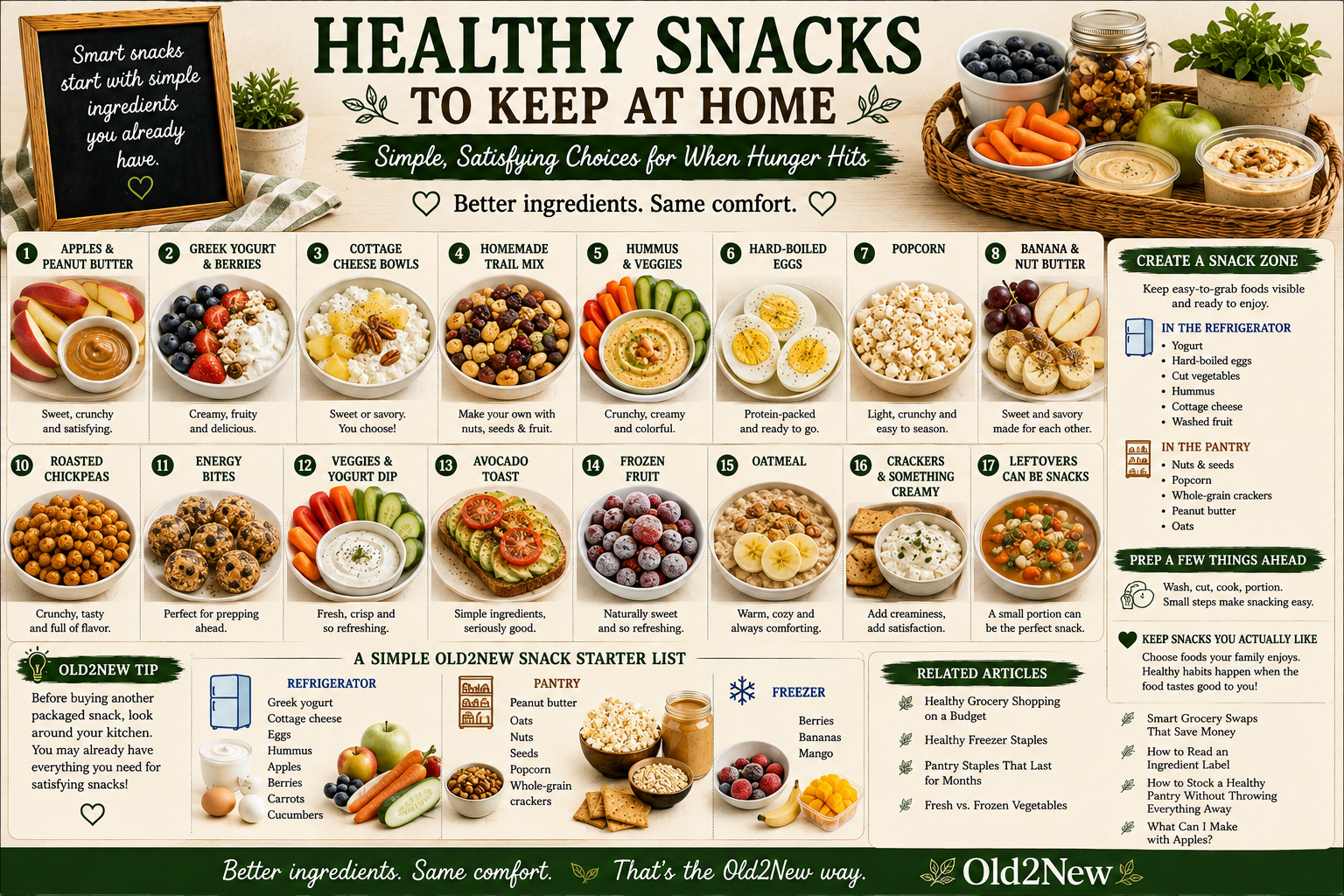
Healthy Snacks to Keep at Home
The snack problem isn't usually a lack of knowledge about what to eat. It's a lack of ready options at the moment hunger arrives. Standing in front of an open refrigerator at 3pm, nothing assembled and nothing appealing, leads to the same outcome every time — whatever is most convenient wins, which is rarely what anyone would have chosen with five more minutes of thought.
The fix isn't complicated. It's keeping a small selection of snacks that actually taste good, that don't require cooking, and that are visible and accessible when hunger shows up between meals. An apple and a jar of peanut butter on the counter. A container of Greek yogurt at eye level in the refrigerator. A bowl of trail mix on the kitchen table. Hard-boiled eggs made on Sunday and ready all week.
None of these require a special shopping trip or a new approach to eating. They require keeping the right things around and having them ready in a form that's easy to reach for.
What Makes a Snack Actually Satisfying
A snack that holds you until the next meal is almost always one that combines more than one macronutrient — typically protein, fiber, or healthy fat alongside whatever carbohydrate is providing the immediate energy. A piece of fruit alone is pleasant but doesn't stay with you the way that same fruit paired with peanut butter or cottage cheese does.
This doesn't require nutritional calculation. It just requires thinking about snacks as combinations rather than single ingredients: something crunchy plus something creamy, something sweet plus something with staying power. Apple plus peanut butter. Greek yogurt plus berries. Crackers plus hummus. Vegetables plus yogurt dip. Cottage cheese plus fruit. These combinations produce the experience of being satisfied rather than just briefly fed.
Apples and Peanut Butter
This combination has staying power for good reason. The apple provides fiber, natural sweetness, and crunch. The peanut butter provides protein, healthy fat, and richness. Together they produce a snack that satisfies in a way that either component alone doesn't, and that tastes like something worth looking forward to rather than something chosen reluctantly.
The variations are nearly endless with minimal effort: swap the apple for a banana, a pear, or celery sticks. Add a sprinkle of cinnamon and chopped walnuts over the peanut butter. Use almond butter instead of peanut butter for a slightly different flavor. The core combination stays the same; the specific version changes based on what's available.
Having an apple bowl on the counter and a jar of peanut butter within reach makes this snack genuinely the easiest thing to grab — which means it actually gets eaten rather than being passed over for whatever else requires less effort.
Greek Yogurt and Berries
Plain Greek yogurt with berries is one of the most nutritionally complete snacks available in the simplest possible form. The yogurt provides 15 to 17 grams of protein per cup and the creamy, slightly tangy base that accepts any topping. The berries provide fiber, antioxidants, and natural sweetness that removes any need for added sugar.
The toppings that make it more interesting without making it more complicated: a drizzle of honey, a handful of granola for crunch, a sprinkle of chia seeds, a pinch of cinnamon, a few chopped walnuts. Any one of these turns a plain yogurt bowl into something that feels more deliberate and more satisfying.
Frozen berries work as well as fresh — thaw slightly and the juices create a naturally fruity topping that's actually more flavorful than fresh berries in winter when out-of-season berries are pale and mealy. Having a bag of frozen berries permanently in the freezer means this snack is available regardless of what's fresh.
Cottage Cheese Bowls
Cottage cheese is one of the most versatile snack ingredients in the refrigerator — it goes sweet or savory with equal success, provides a significant amount of protein per serving, and has a mild enough flavor that it takes on whatever is added to it.
Sweet: cottage cheese with sliced peaches or nectarines and a pinch of cinnamon. Cottage cheese with blueberries and a drizzle of honey. Cottage cheese with diced apple and walnuts. Cottage cheese with banana slices and a sprinkle of granola. Any of these work as a dessert as well as a snack.
Savory: cottage cheese with sliced cucumber, cherry tomatoes, fresh dill, and a crack of black pepper. Cottage cheese with avocado and red pepper flakes. Cottage cheese with everything bagel seasoning and sliced radish. The savory direction is less familiar to most people but equally satisfying and often more so for people who don't want something sweet in the afternoon.
Homemade Trail Mix
Store-bought trail mix is convenient but often contains more candy pieces, sweetened dried fruit, and salt than the simple mixture it's supposed to be. Making your own takes five minutes, uses exactly what you enjoy, and produces a snack that's genuinely better than the packaged version.
A simple combination: almonds, walnuts, pumpkin seeds, unsweetened dried cranberries or raisins, and a small amount of dark chocolate chips. Mix in a jar at the beginning of the week and portion from it as needed. The ratio is flexible — adjust to whatever balance of nuts, seeds, fruit, and chocolate works for your household.
The value of trail mix is portability and shelf stability — it goes in a bag or container without refrigeration and is available anywhere. Portioning into individual servings before the week starts removes the decision-making from the moment of hunger.
Hummus and Vegetables
Hummus transforms raw vegetables from something people eat out of obligation into something genuinely appealing. The creamy, savory, slightly earthy flavor of good hummus paired with the crunch of fresh vegetables covers the same protein-fat-fiber combination as other satisfying snacks and requires almost no preparation.
The vegetables worth keeping cut and ready in the refrigerator: carrots (either baby carrots or carrot sticks), cucumber rounds or spears, bell pepper strips in multiple colors, celery sticks, and cherry tomatoes. Having these washed and cut and visible in a container makes them easy to reach for alongside the hummus rather than requiring prep at the moment of hunger.
Hummus also pairs with whole grain crackers and pita bread for a more substantial snack that works as a light lunch with additional toppings.
Hard-Boiled Eggs
A few hard-boiled eggs in the refrigerator on any given week represent one of the most reliable high-protein snack options available — no cooking required, portable, satisfying, and ready to eat in seconds. Boiling a half dozen eggs at the start of the week and storing them unpeeled (they keep better in the shell) means they're available for five days of grab-and-go protein.
A hard-boiled egg alone is a sufficient snack for many people. Paired with a piece of fruit, a few crackers, or a slice of whole grain toast, it becomes more complete. Sliced over avocado toast it becomes a light meal. The versatility is one of the best qualities of an ingredient that requires six minutes of active cooking and no additional thought.
Popcorn
Popcorn from kernels rather than microwave bags is one of the most economical and versatile snack ingredients available. A quarter cup of popcorn kernels costs almost nothing and produces enough popped corn for a generous snack. Air-popped or popped in a small amount of olive oil in a covered pot, it's ready in five minutes with minimal cleanup.
The flavor direction is entirely customizable: garlic powder and parmesan for a savory version that rivals movie theater popcorn. Cinnamon and a drizzle of honey for something slightly sweet. Smoked paprika and black pepper for a smoky, spicy version. Nutritional yeast for a dairy-free cheesy flavor. Italian seasoning and olive oil for something herbaceous. The plain base accepts any seasoning, which means the same snack can taste different every time without buying a new product.
Banana with Nut Butter
Few snacks are easier or more satisfying than a banana with peanut or almond butter. The banana provides natural sweetness, potassium, and quick energy. The nut butter provides protein and healthy fat that extends the staying power well beyond what the banana provides alone.
Additions that make it more interesting: a sprinkle of cinnamon, a few chia seeds, a small handful of chopped walnuts, or a drizzle of honey. Any of these can go directly on the banana and nut butter combination or on a slice of whole grain toast with the same combination spread across it.
Roasted Chickpeas
The can of chickpeas in the pantry can become a crunchy, protein-rich snack with about 30 minutes of oven time and almost no active work. Drain and rinse a can of chickpeas, pat them thoroughly dry (this is the most important step for achieving crispiness), toss with olive oil and seasoning, spread on a sheet pan in a single layer, and roast at 400°F for 20 to 30 minutes until golden and crunchy.
Seasoning directions that work well: garlic powder and smoked paprika for a savory version. Cumin and chili powder for a southwest direction. Italian herbs and parmesan for something Mediterranean. Cinnamon and a pinch of sugar for a sweet variation.
Roasted chickpeas also work as a salad topping and a grain bowl component — a batch made for snacking doubles as a crunchy protein addition to several lunches during the week.
Energy Bites
Homemade energy bites require no baking, come together in ten minutes, and hold in the refrigerator for a week — making them one of the most practical make-ahead snack options for people who want something portable and satisfying that doesn't come from a package.
A simple version: one cup old-fashioned oats, half a cup of peanut butter, three tablespoons of honey, two tablespoons of chia seeds, and a teaspoon of cinnamon mixed together until combined, then rolled into small balls and refrigerated. Customizations that add interest without adding complexity: a handful of dark chocolate chips, a quarter cup of unsweetened shredded coconut, a tablespoon of flaxseed, or a few tablespoons of mini chocolate chips in place of the chia seeds for a different texture.
The combination of oats, nut butter, and honey creates a no-bake bar texture that's genuinely satisfying as a snack and substantial enough to work as a quick breakfast when nothing else is available.
A Snack-Ready Refrigerator
The most effective change for building better snacking habits is organizing the refrigerator so that healthy snacks are the most visible and most accessible things inside it. Whatever is at eye level and in clear view gets eaten; whatever is buried in the back doesn't.
Dedicate one section or shelf to ready-to-eat snack components: a container of Greek yogurt, a bowl of washed fruit, cut vegetables in a clear container, hard-boiled eggs in a small bowl, a container of hummus, and cottage cheese. Keep these visible and at the front. When the refrigerator is opened, these items present themselves as options before anything else.
In the pantry, keep nuts, seeds, popcorn kernels, whole grain crackers, and peanut butter where they're visible and easy to access. A bowl of fruit on the counter and a jar of peanut butter on the counter alongside it removes every barrier between hunger and the combination that satisfies it.
Prep a Few Things After Grocery Shopping
Ten minutes of preparation immediately after grocery shopping removes most of the friction between bringing food home and actually eating it.
Wash and dry fruit so it's ready to eat without additional steps. Cut vegetables and store in a clear container in the refrigerator where they're visible. Boil eggs and store in the shell in the refrigerator. Portion trail mix into small containers. Make a batch of yogurt dip. These simple steps convert groceries into snacks — which is a meaningful distinction when hunger is the variable and available time is short.
FAQ
What's the most satisfying snack for managing hunger between meals? Snacks that combine protein with fiber tend to produce the longest-lasting satiety — Greek yogurt with berries, cottage cheese with fruit or vegetables, apple with peanut butter, hard-boiled eggs with crackers, or hummus with vegetables. The protein slows digestion and the fiber provides physical fullness that keeps hunger at bay longer than carbohydrates alone.
Are packaged snacks always a worse choice than homemade? Not always — some packaged snacks are genuinely good options when the ingredient list is straightforward and the nutritional profile is reasonable. The question is whether a packaged product is being chosen for convenience when a homemade version would be equally fast and significantly better. A bag of mixed nuts from a package is excellent. A packaged snack bar with fifteen ingredients including several forms of sugar is a different calculation than a handful of nuts and an apple.
How do I stop eating snacks out of boredom rather than hunger? Keeping genuinely satisfying snacks available helps — boredom eating often goes to whatever requires the least thought, and if what requires the least thought is a nutritious combination that provides real satiety, the result is better than if it's an empty-calorie packaged option. It's also worth noting that some snacking out of boredom is normal and not a problem to solve — the goal is having good options available for all the reasons people eat between meals, not eliminating snacking.
Is it better to have set snack times or eat when hungry? Either approach can work depending on the person and the schedule. Scheduled snack times help some people avoid grazing throughout the day and keep hunger from building to the point where dinner choices become reactive. Eating when hungry — rather than by the clock — works better for people who are attentive to their hunger signals. The more important factor than timing is having genuinely satisfying options available for whenever eating happens.
Continue Your Recipe Transformation Journey
Building a snack-ready kitchen is one of the simplest ways to support better eating throughout the day. These guides will help you keep the right ingredients stocked:
- Pantry Staples That Last for Months — the long-lasting ingredients that anchor snack options
- Healthy Freezer Staples — frozen fruit and other freezer staples that make snacking easier
- What Can I Make with Apples? — the most versatile snack fruit in the kitchen
- What Can I Make with Greek Yogurt? — everything Greek yogurt can become as a snack base
- What Can I Make with Oats? — the pantry staple behind energy bites, granola, and oatmeal snacks
Old2New — There is good in everything.