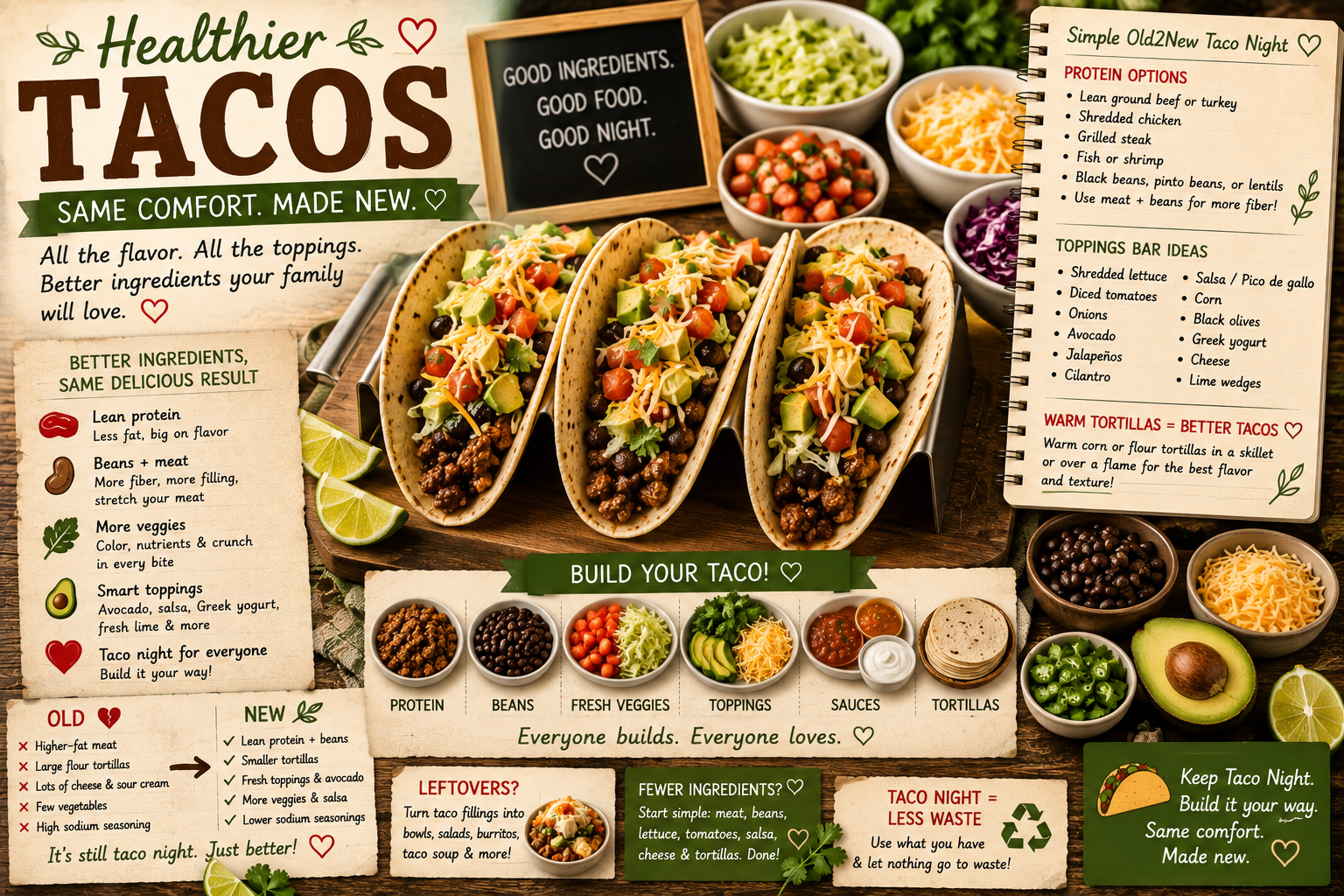
Healthier Tacos: Keep Taco Night on the Menu
Taco night is one of those dinners that almost everybody can get behind. Warm tortillas. Seasoned meat. Cheese. Salsa. Fresh toppings. Everyone builds their own, nobody's plate has to look exactly the same, and dinner feels a little more celebratory than a regular Tuesday deserves.
When the goal is making tacos healthier, the temptation is to start removing things — the tortilla becomes a lettuce wrap, the cheese disappears, the sour cream is gone, the seasoned meat becomes a small pile of something lean and austere. The result might technically be lower in calories. It also doesn't produce the taco experience that made taco night worth having in the first place, and it creates the dynamic where "healthy dinner" becomes something the household tolerates rather than requests.
The approach here is different. The tortillas stay. The cheese stays. The toppings stay and multiply. We're making the filling work harder, adding more fresh vegetables to the table, and building a taco bar format that lets every person at the table make exactly the taco they want.
Start with the Protein
Ground beef is the classic taco filling and it doesn't have to leave. Lean ground beef (90% or 93%) provides the familiar beef flavor that makes tacos taste like tacos, seasoned well with a homemade blend that controls the salt level better than most packaged mixes.
The homemade seasoning blend worth having in the rotation: two teaspoons of chili powder, one and a half teaspoons of cumin, one teaspoon of smoked paprika, half a teaspoon of garlic powder, half a teaspoon of onion powder, half a teaspoon of dried oregano, and black pepper. This is more flavorful and less salty than most packaged taco seasoning mixes and takes 30 seconds to assemble.
Ground turkey absorbs taco seasoning just as completely as beef and produces a filling most people can't distinguish from the beef version when well seasoned. Shredded chicken — either from a rotisserie chicken or batch-cooked — is one of the fastest taco fillings available. Fish and shrimp tacos produce a lighter, fresher result that's particularly good in summer. Black beans or pinto beans serve as a complete standalone filling for vegetarian households or as a supplement to meat for everyone else.
Stretch the Meat with Beans
One of the highest-return adjustments in taco filling is combining seasoned ground meat with a can of drained and rinsed black or pinto beans. The result is a filling where one pound of lean ground beef feeds six to eight people rather than four, with meaningfully more fiber per serving and a heartier, more substantial texture.
The integration technique matters: after browning the meat and adding the seasoning, add the drained beans and cook them together for several minutes so they absorb the surrounding spices. Lightly mashing some of the beans into the meat mixture — pressing them against the side of the pan until they break down partially — produces a cohesive filling where the beans become part of the mixture rather than a separate component. The filling tastes like taco filling; the beans are present without being identifiable as a separate ingredient.
This combination is one of the most effective budget strategies in taco cooking. The same grocery spending produces significantly more food when the meat is extended with beans, and the fiber content per serving increases in a way that makes the meal more filling and sustaining.
Keep the Tortillas
The tortillas stay. Removing the tortilla from tacos doesn't create a healthier taco — it creates a different dish that makes everyone wish they had a tortilla. The tortilla is structurally and experientially essential to what tacos are.
Corn tortillas are the traditional choice and provide a slightly thicker, more satisfying texture than flour. They're also naturally gluten-free and have a slightly lower calorie count than flour tortillas, making them a good default when the household is open to either. Warming them briefly in a dry skillet or directly over a gas flame transforms them from slightly dry and stiff into pliable, fragrant, deeply satisfying vehicles for whatever goes inside.
Whole wheat flour tortillas add fiber compared to standard flour tortillas and work identically in preparation. Smaller tortillas — street taco size — are worth trying because the two-taco format with focused toppings produces a more composed eating experience than one large taco trying to hold too much.
Whatever tortilla the household prefers is the right tortilla for taco night.
Load the Table with Fresh Toppings
The taco bar is where the most meaningful improvement happens without changing anything about how the tacos feel. Putting more fresh toppings on the table doesn't reduce anyone's enjoyment — it expands the options and naturally produces tacos with more vegetables simply because they're available and appealing.
The produce worth having on the table: shredded lettuce or thinly sliced cabbage (cabbage has more crunch and holds up better under warm fillings), diced tomatoes or halved cherry tomatoes, diced white or red onion, sliced jalapeños, fresh cilantro, sliced or diced avocado, roasted or fresh corn, and sliced bell pepper. Any combination of these adds color, crunch, freshness, and nutrition to every taco without requiring negotiation.
Fresh lime wedges squeezed over a finished taco brighten every element — the meat, the cheese, the vegetables, the salsa — in a way that's difficult to achieve any other way. This is one of the simplest and most impactful finishing touches available for taco night.
Keep the Cheese — Used Intentionally
Cheese is staying on taco night. It provides the saltiness, richness, and flavor binding that make tacos taste complete, and removing it produces tacos that most households find noticeably less satisfying.
The practical approach is choosing a strongly flavored cheese rather than a large amount of a mild one. Sharp cheddar delivers more flavor per gram than mild cheddar. Cotija — the crumbly, salty Mexican cheese traditionally used for tacos — provides intense flavor in a small amount that goes much further than the same quantity of shredded mild cheese. Pepper jack adds heat alongside the cheese flavor. Monterey Jack melts well and pairs naturally with the spices in taco filling.
Setting the cheese out in a bowl for people to add themselves produces better results than pre-adding it to assembled tacos — people take what they want, and those who want less take less while those who want more can take more. The taco bar format naturally calibrates each person's meal to their preferences without requiring separate preparations.
Greek Yogurt as Sour Cream
Plain Greek yogurt is the most successful single swap in taco toppings. It provides the same cool, creamy contrast against warm taco filling that sour cream provides, looks identical when spooned onto a taco, and adds protein that sour cream doesn't have. A squeeze of fresh lime stirred into the yogurt before it goes on the table adds a brightness that makes it taste less like yogurt and more like a specifically prepared taco topping.
If the household genuinely prefers sour cream and notices the difference, use sour cream. This is taco night, not a nutritional audit. The goal is making taco night slightly better in ways that don't undermine its enjoyment, not proving a point about dairy product substitutions.
The Taco Bar Format
Setting everything out separately and letting each person build their own tacos is the most practical format for taco night with a household that has varying preferences — and it's also the format that most naturally produces healthier individual meals without requiring anyone to eat differently from what they want.
The person who wants mostly meat and cheese can make exactly that. The person who wants extra vegetables, minimal cheese, and Greek yogurt builds that taco. The vegetarian in the household gets the bean filling. The person who wants to try a little of everything loads their tortilla with a bit of every topping. One dinner, one cooking session, multiple genuinely different meals assembled from the same components.
The taco bar also makes the vegetables appealing in a way that serving them as a side dish doesn't — when the avocado, the pico de gallo, the shredded cabbage, and the roasted corn are presented as taco toppings rather than a separate dish requiring separate attention, they become part of the taco experience rather than something adjacent to it.
A Simple Old2New Beef and Bean Tacos
Ingredients (serves 6)
- 1 lb lean ground beef or ground turkey
- 1 can black or pinto beans, drained and rinsed
- 1 small onion, diced
- 1 bell pepper, diced (optional)
- 2 cloves garlic, minced
- 1 tbsp chili powder
- 1½ tsp cumin
- 1 tsp smoked paprika
- ½ tsp dried oregano
- ½ tsp onion powder
- Black pepper to taste
- ½ cup lower-sodium tomato sauce or salsa as needed
- 8 to 12 small corn or whole wheat tortillas
For the taco bar:
- Shredded lettuce or cabbage
- Diced tomatoes
- Salsa or pico de gallo
- Avocado, sliced or diced
- Shredded sharp cheddar or crumbled cotija
- Plain Greek yogurt or sour cream
- Fresh cilantro
- Sliced jalapeños
- Lime wedges
Instructions
Heat a large skillet over medium-high heat. Add ground meat and cook until browned through, breaking into small pieces as it cooks. Drain excess fat if necessary.
Add onion and optional bell pepper and cook until softened, about five minutes. Add garlic and all spices and stir until fragrant, about one minute. Add beans and mash some of them lightly into the meat mixture. Add enough tomato sauce or salsa to keep the filling moist and cohesive. Simmer five minutes until everything is combined and the flavors have developed. Taste and adjust seasoning.
Warm the tortillas in a dry skillet or briefly over a flame. Set the filling in a bowl and arrange the toppings on the table. Let everyone build.
Using Leftovers
Leftover taco filling is one of the most versatile refrigerator assets available for the days following taco night. Warmed over scrambled eggs in corn tortillas it becomes breakfast tacos. Mixed with chicken broth, diced tomatoes, and broth it becomes taco soup in 20 minutes. Used as the filling in stuffed bell peppers with cheese on top it becomes a different dinner entirely. Served over brown rice or quinoa with fresh toppings it becomes a taco bowl for lunch. Rolled in a larger flour tortilla with rice and cheese it becomes a burrito.
The taco filling that felt like leftovers transforms into something genuinely different in each new format — which makes cooking a larger batch than needed for taco night a reliable strategy for producing two or three subsequent meals from the same cooking session.
Taco Night and Food Waste
Taco night is one of the best formats for using small amounts of ingredients before they go to waste. Half an onion in the refrigerator gets diced and sautéed into the filling. One bell pepper past its crunchiest goes into the meat and beans. A small amount of leftover roasted corn becomes a topping. Half an avocado that needs to be used today gets sliced and served. The small amounts that would otherwise sit in the refrigerator until they're discarded find a natural home in the taco bar without requiring a specific recipe that calls for exactly those quantities.
FAQ
Is homemade taco seasoning significantly better than packaged? For sodium control, yes — most packaged taco seasoning mixes contain 300 to 400mg of sodium per serving, while a homemade blend uses no salt or a small amount of your choosing. The flavor can also be customized: more cumin for earthiness, more smoked paprika for depth, more chili powder for heat. Once you've made a batch of the homemade blend, the difference in time is negligible and the control over the finished flavor is significant.
Can I make taco filling ahead? Yes — taco filling holds in the refrigerator for three to four days and reheats quickly in a skillet or microwave. Making it Sunday evening and using it for taco night during the week, then repurposing the remainder for lunch bowls or breakfast tacos, produces three to four different meals from one 20-minute cooking session. It also freezes well for up to three months.
Is taco night appropriate for people on GLP-1 medications? The taco bar format is particularly well-suited for anyone managing portions or appetite. The build-your-own structure means servings are naturally calibrated to individual hunger rather than a fixed portion. Corn tortillas, lean protein, beans, and generous fresh vegetable toppings together produce a satisfying meal with meaningful protein and fiber. The format also makes it easy to adjust the ratio of protein, vegetables, and tortilla based on what's most needed.
Continue Your Recipe Transformation Journey
Taco night is one of the most naturally adaptable comfort food formats. These guides will help you build on it:
- What Can I Make with Black Beans? — the full guide to beans as a taco filling and extender
- What Can I Make with Avocados? — everything avocado can do as a taco topping
- How to Use Leftovers Creatively — how taco filling becomes four different meals
- How to Cook with Herbs and Spices — how to build a homemade taco seasoning blend
- Beginner's Guide to Meal Planning — how taco night as a weekly theme simplifies planning
Old2New — There is good in everything.