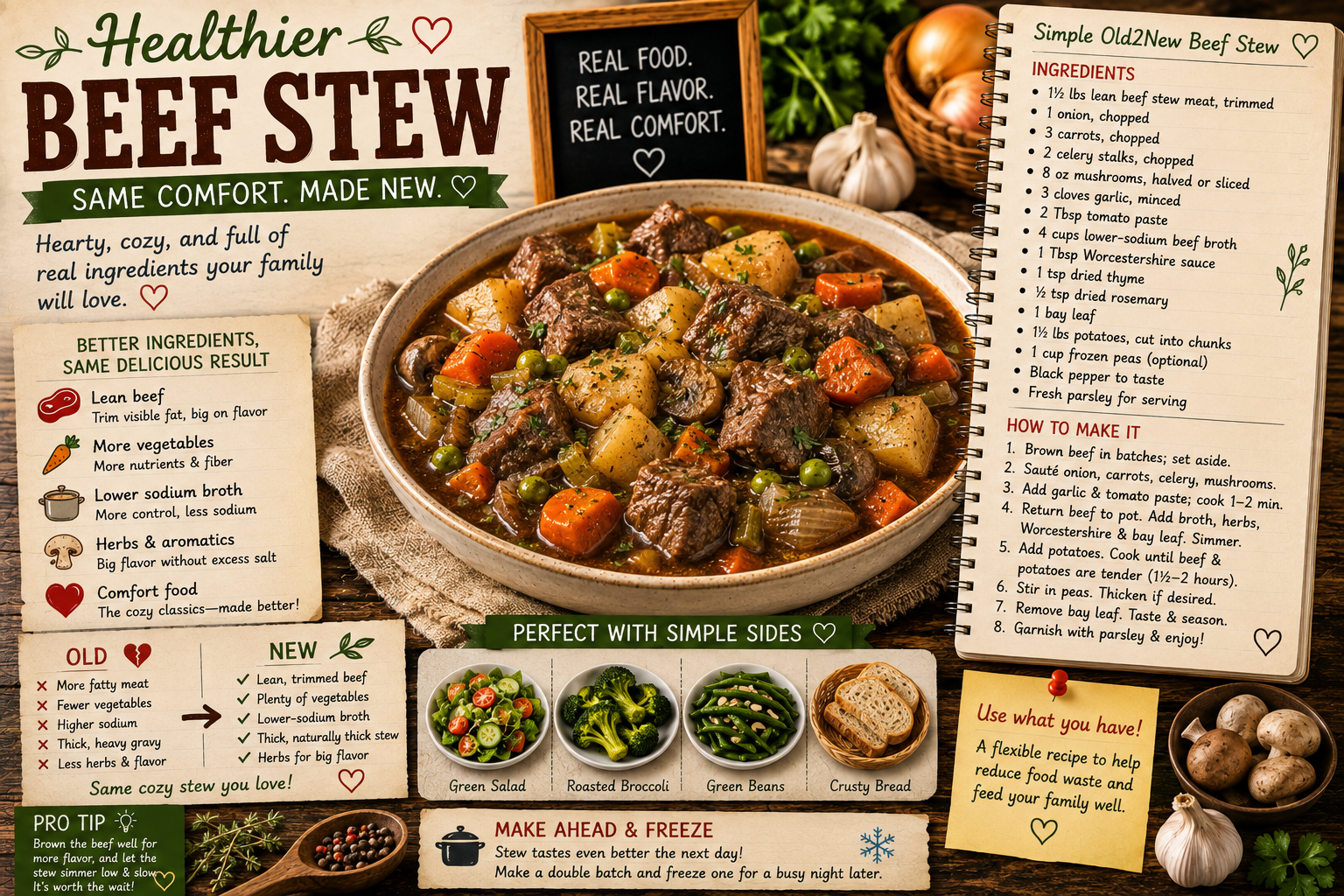
Healthier Beef Stew: A Cozy Classic Made New
There are certain meals you can smell before you even walk into the kitchen. Beef stew is one of them — tender pieces of beef, potatoes, carrots, onions, and a rich savory broth that's been simmering long enough for everything to come together. It's warm, hearty, and familiar in a way that reminds most people of a specific kitchen in a specific season of their life.
Here's the good news: beef stew is already pretty close to where we want it to be. The foundation is built on real ingredients — beef, potatoes, root vegetables, herbs, and broth. We're not replacing the potatoes, eliminating the beef, or turning it into a bowl of broth with three carrots floating around. We're keeping the classic stew and making a few thoughtful adjustments that improve it without changing what makes it worth making on a cold evening.
Start with the Beef
Beef is the heart of beef stew, and it's staying. The practical adjustment is choosing a relatively lean stew meat or trimming visible excess fat before cooking. Chuck roast — the traditional choice — becomes remarkably tender during low, slow cooking as the collagen in the connective tissue converts to gelatin, thickening the broth and making the beef surrender to a fork. The fat that renders out during browning can be poured off before the vegetables and liquid go in.
The amount of beef matters less than most recipes suggest when the stew also contains meaningful quantities of vegetables and potatoes. A pound and a half of lean stew beef in a stew that's also loaded with potatoes, carrots, mushrooms, onion, celery, and peas produces six generous servings with satisfying protein in each bowl. The beef doesn't need to dominate the dish to make the dish taste like beef stew.
Don't Skip Browning the Beef
Browning the beef before it goes into the stew is the technique step that separates a deeply flavorful stew from a competent but flat one. The Maillard reaction — the browning of proteins under high heat — creates hundreds of new flavor compounds that slow simmering in liquid alone doesn't produce. The fond (the browned bits left on the bottom of the pot after browning) becomes part of the stew when the broth is added and deglazed, contributing concentrated savory flavor that permeates the entire pot.
The technique requires patience: pat the beef completely dry with paper towels (moisture prevents browning and causes steaming instead), work in batches to avoid crowding (crowded meat steams rather than browns), and resist the urge to move the meat before it releases naturally from the surface (meat sticks when it needs more time and releases when the crust has formed). Each batch takes three to four minutes per side. The total time investment is 15 minutes and the flavor improvement is significant.
A healthier recipe shouldn't sacrifice the cooking techniques that make food taste better. Browning the beef is one of those techniques.
Keep the Potatoes
Potatoes belong in beef stew. They provide potassium, vitamin C, complex carbohydrates, and the specific starchy, hearty quality that makes a bowl of stew feel like a complete meal rather than soup with meat in it. Any argument for removing them from beef stew is making the dish worse in exchange for a nutritional adjustment that's not necessary when the rest of the ingredients are in good proportion.
Yukon Gold potatoes hold their shape during extended simmering better than russets and have a naturally buttery flavor that works beautifully in stew broth. Red potatoes are the other reliable option — waxy enough to remain intact through long cooking. Russets tend to fall apart, which can work if a thicker stew is the goal (the starch from dissolved potato pieces naturally thickens the broth) but may not be preferred if distinct potato pieces are wanted.
Cutting potatoes into larger pieces — one and a half to two inch chunks — helps them maintain structure through the cooking time rather than turning to mush.
Load It with Vegetables
Traditional beef stew vegetables — carrots, onions, celery — are already good. The opportunity is using generous quantities of them and adding one or two more vegetables that deepen the stew's flavor and nutritional profile without changing its character.
Mushrooms are the most valuable addition for beef stew specifically. Halved or quartered mushrooms add umami and a meaty, satisfying texture that makes the stew taste richer and more substantial. Their savory depth amplifies the beef flavor in a way that's been recognized in cooking for centuries — the combination of beef and mushroom produces a synergistic flavor effect where both taste more intensely of themselves.
Parsnips are the root vegetable worth trying if they're available — they add a slightly sweet, earthy flavor that pairs naturally with beef and thyme and becomes indistinguishable from the other root vegetables in the finished stew. Frozen peas stirred in during the last five minutes of cooking add color and a pop of sweetness that brightens the overall bowl.
Build Flavor with Aromatics Before Adding Liquid
The sequence of cooking matters for flavor development. After browning the beef and removing it, the vegetables go into the same pot — the carrots, onions, celery, and mushrooms cooking in the fond from the beef and absorbing its flavor as they soften. Then the garlic and tomato paste cook against the hot surface of the pot for a minute or two, the tomato paste darkening slightly and developing a concentrated depth that raw tomato paste added directly to liquid doesn't achieve.
This sequence — vegetables, then aromatics, then liquid — produces a stew that tastes layered and developed rather than assembled. Each ingredient contributes its flavor at the right point in the process rather than all being added simultaneously to cold liquid and hoping for the best.
Choose Broth Carefully
Broth is where sodium can accumulate quickly in a stew — standard beef broth contains 800 to 900mg of sodium per cup, and a stew using four cups of broth can easily approach the full daily recommended sodium intake before any additional seasoning. Low-sodium or no-salt-added beef broth contains 70 to 140mg per cup and provides full control over the final seasoning of the dish.
The flavor difference between standard and low-sodium broth in a well-seasoned stew is imperceptible because the herbs, aromatics, Worcestershire, and long cooking time provide the flavor that high-sodium broth was compensating for. Tasting and seasoning near the end of cooking — when the flavors are fully developed — produces a stew seasoned to its actual needs rather than the broth's predetermined sodium level.
Herbs and Seasoning
Beef stew's flavor profile is defined by thyme and rosemary — the woody, earthy herbs that have paired with beef and root vegetables for centuries. A bay leaf simmered in the broth adds a subtle herbal background note. Worcestershire sauce contributes a complex, savory depth from its fermented, layered ingredients. Black pepper generously. Fresh parsley added at the end brightens the whole bowl with color and a fresh herbal note.
These seasonings together produce the specific smell and taste that makes a pot of beef stew recognizable from the hallway. Getting them right is more important than any ingredient substitution.
You Don't Need Heavy Gravy
The broth should be rich and slightly thickened — coating the beef and vegetables rather than pooling thinly at the bottom of the bowl. It doesn't need to be dense gravy that sits heavily on the spoon.
Several approaches to thickening produce different results. Lightly coating the beef in flour before browning — two tablespoons of flour tossed with the beef pieces before they go into the hot oil — adds thickening that develops gradually as the stew cooks. A cornstarch slurry (one tablespoon of cornstarch dissolved in two tablespoons of cold water, stirred into the simmering stew in the last 15 minutes) thickens quickly and produces a glossy, clear sauce. Mashing two or three of the cooked potato pieces against the side of the pot and stirring them into the broth is the most natural approach — the potato starch thickens the broth and integrates seamlessly rather than adding any thickener.
A Simple Old2New Beef Stew
Ingredients (serves 6)
- 1½ lbs lean beef stew meat, trimmed and cut into 1½-inch chunks
- 1 tbsp olive oil
- 1 medium onion, chopped
- 3 carrots, cut into chunks
- 2 celery stalks, chopped
- 8 oz mushrooms, halved
- 3 cloves garlic, minced
- 2 tbsp tomato paste
- 1½ lbs Yukon Gold or red potatoes, cut into chunks
- 4 cups low-sodium beef broth
- 1 tbsp Worcestershire sauce
- 1 tsp dried thyme
- ½ tsp dried rosemary
- 1 bay leaf
- Black pepper to taste
- 1 cup frozen peas (optional, added near end)
- 1 to 2 tbsp flour or cornstarch for thickening if needed
- Fresh parsley for serving
Instructions
Pat the beef dry with paper towels and season with black pepper. Heat olive oil in a large Dutch oven over medium-high heat. Brown the beef in batches without crowding, three to four minutes per side, until genuinely browned. Transfer to a plate.
Add onion, carrots, celery, and mushrooms to the same pot. Cook over medium heat until softened, about six minutes. Add garlic and tomato paste and cook two minutes until the paste darkens slightly and becomes fragrant.
Return the beef and any accumulated juices to the pot. Add broth, Worcestershire, thyme, rosemary, and bay leaf. Bring to a gentle simmer, partially cover, and cook over low heat for 45 minutes.
Add the potatoes and continue cooking until both beef and potatoes are fork-tender, about 30 to 45 minutes more. Add peas in the last five minutes if using.
If the broth needs thickening, mash a few potato pieces into the liquid, or stir in a cornstarch slurry and simmer five minutes. Remove the bay leaf. Taste and adjust seasoning. Serve in deep bowls with fresh parsley.
The Slow Cooker Version
Beef stew and slow cookers were practically designed for each other. Browning the beef before adding it to the slow cooker produces the best flavor — the fond and the Maillard reaction flavors develop on the stovetop and carry through the long slow cook. For days when stovetop browning isn't realistic, adding the beef directly to the slow cooker still produces a good stew; it simply has a slightly less developed, less complex flavor than the browned version.
Layer the vegetables in the slow cooker, add the browned beef or raw beef, pour in the broth with the seasonings, and cook on low for eight to ten hours or high for four to five hours until the beef is tender enough to break apart with a fork. Add potatoes for the last three to four hours on low so they don't become mushy through the full cooking time.
Make a Double Batch
Beef stew is genuinely better the next day — the overnight rest allows the flavors to continue developing and the beef to absorb more of the surrounding broth, producing a more integrated, richer tasting stew than the same day's version. This makes beef stew one of the best candidates for double batch cooking: the cooking time and effort are the same regardless of quantity, and the second batch produces a future dinner or a week of lunches that are arguably the best version of the stew.
Beef stew freezes exceptionally well for up to three months. The potato texture changes slightly through freezing — it becomes more mealy — so adding potatoes specifically to the portion intended for eating fresh and omitting them from the batch designated for freezing, then adding fresh potatoes when reheating the frozen portion, produces the best result.
A Note on Comfort and Complexity
Beef stew earns its place on the comfort food list through simplicity rather than complexity. Real ingredients — beef, potatoes, root vegetables, herbs, and broth — simmered together until everything is tender and unified. The technique (browning the beef, building the aromatics, giving it time) matters more than any ingredient substitution.
Sometimes the most honest thing about a traditional recipe is that it doesn't need dramatic transformation — it needs better ingredients chosen thoughtfully and a technique that respects what the dish is trying to be. Leaner beef, lower-sodium broth, more vegetables, and the patient cooking that converts tough cuts into something remarkable. That's enough.
FAQ
What cut of beef is best for stew? Chuck roast is the standard choice because its high collagen content converts to gelatin during slow cooking, producing both tender beef and a naturally rich, slightly thickened broth. Chuck also has enough fat to stay moist through the long cooking time without becoming dry. Brisket and short rib are other excellent options. Lean cuts like sirloin and tenderloin don't have enough collagen and become dry and chewy in long-cooked stew — they're better suited for quick cooking methods.
How do I know when the beef is done? Stew beef is done when it's tender enough to break apart easily with a fork — not just cooked through, but fully softened through the collagen conversion that takes time and low heat. This typically takes 90 minutes to two hours of gentle simmering. Rushing with high heat produces tough, chewy beef rather than the tender, yielding result that makes beef stew worth the time.
Can I add wine to beef stew? A half cup of dry red wine added after the aromatics cook and before the broth is added adds a depth and complexity that beef broth alone doesn't provide. The alcohol cooks off during the long simmering time, leaving behind the wine's flavor compounds. Beef stew without wine is excellent; beef stew with wine is often noticeably richer and more complex.
Continue Your Recipe Transformation Journey
Beef stew is one of the most naturally balanced comfort foods — real ingredients, simple technique, and time produce something genuinely good. These guides will help you build on it:
- What Can I Make with Potatoes? — the full guide to potatoes and why they belong in stew
- What Can I Make with Carrots? — how carrots contribute to stew and other slow-cooked dishes
- How to Cook with Herbs and Spices — the seasonings that make beef stew taste the way it should
- How to Freeze Meals Successfully — how to freeze a second batch for a future dinner
- Healthy One-Pan Meals — the Dutch oven as the ultimate one-pot cooking vessel
Old2New — There is good in everything.